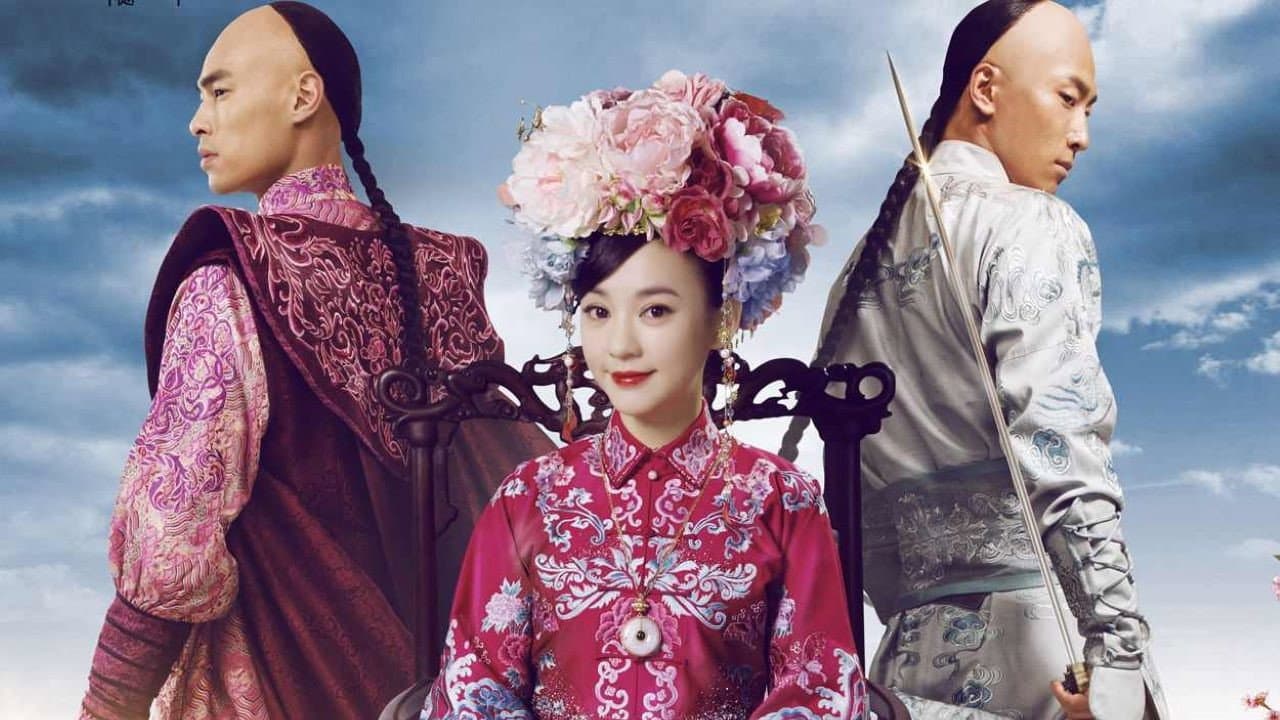







The Story of Time to Love: Romance Across Centuries
Time to Love tells the story of Zhang Xiaowen, a single, modern-day city girl whose ordinary life gets upended when she's mysteriously transported back to the Qing Dynasty. Once there, she becomes Ruoxi—a woman caught in the glittering, dangerous world of Emperor Kangxi's imperial court. What begins as a disorienting displacement becomes a genuine romance, though not without complications. She's pulled into the swirling politics of the palace, where love and power are inseparable, and every gesture carries weight. The film sits at the intersection of fantasy, historical drama, and romance, asking what happens when someone from the modern world—with modern sensibilities and emotional expectations—finds herself navigating the rigid hierarchies and calculated alliances of dynastic China.
The premise isn't entirely new to the romance-fantasy space, but there's something compelling about the fish-out-of-water setup combined with genuine historical setting. Zhang Xiaowen's journey from confusion to adaptation to genuine emotional investment forms the emotional spine of the narrative. She doesn't just fall in love; she has to reckon with the fact that her presence, her knowledge of a future that hasn't happened yet, and her outsider perspective all complicate what should be a straightforward romance.
Behind the Making of Time to Love: Production and Cast
Time to Love was produced by Huashi Media Investment Co. and S&C Pictures, two significant players in Chinese film and television production. The 2015 release arrived during a period of growing international interest in Chinese historical dramas and time-travel narratives—a trend that'd accelerate significantly in the years following. The film clocks in at 110 minutes, a runtime that allows for character development without excessive padding, though critics would later debate whether the pacing always served the story. With an IMDb rating of 5.1/10, the film has proven divisive among viewers, suggesting that while some audiences connected deeply with its romantic and historical elements, others found its execution uneven.
The production values reflect a mid-budget Chinese production focused on period authenticity—the Qing Dynasty costumes and palace sets are detailed and visually immersive, even if the overall cinematic polish doesn't quite match major studio releases. The cast brought competence to their roles, though the film didn't attract A-list international recognition that might have boosted its profile on streaming platforms worldwide. What's striking is how the film positions itself: it's neither a big-budget spectacle nor an indie experiment, but rather a solid mid-tier production betting on the strength of its romantic and historical premises to carry audiences through its two-hour runtime. Movie OTT tracks where titles like this land across streaming services, since their distribution patterns often differ from theatrical releases.
What Makes Time to Love Stand Out: Performance and Emotional Stakes
The performances in Time to Love anchor what could've been a purely fantastical premise in genuine human emotion. The lead actress carries the film's central tension—that dissonance between a modern woman's expectations and a dynastic court's rigid realities. There's a scene early on where she's being fitted for traditional Qing Dynasty clothing, and her visible discomfort, her internal resistance, reads as authentic rather than played for comedy. That specificity matters. She's not a fish out of water played for laughs; she's someone genuinely displaced, grieving her old life even as she's drawn into a new one.
What works about the film—and what critics who gave it middling scores likely missed—is its willingness to treat the romance seriously without dismissing the political intrigue surrounding it. Emperor Kangxi isn't just a love interest; he's a ruler with competing loyalties, advisors whispering in his ear, and a nation to govern. The emotional conflict isn't just "will they end up together?" but "can they end up together given everything they represent to each other and to the empire?" That's a more interesting question than it first appears. The film doesn't always nail the execution, granted. The pacing can feel uneven, and some plot threads don't resolve with the clarity they deserve. But when it lands—when the romance and the history and the personal stakes all align—there's real poignancy there. It's the kind of film that, as Movie OTT's streaming guides often note, tends to find its most devoted audience not on opening weekend but months later, when someone stumbles across it and finds exactly what they needed.
Where to Stream Time to Love Online
Time to Love is currently available on major OTT services, making it accessible to viewers across multiple platforms. Rather than hunting through different apps, you can check the Where to Watch widget at the top of this page to see exactly which streaming service has it available in your region right now. Streaming availability shifts frequently—a title might be on one platform this month and migrate elsewhere next month—so that real-time widget is your most reliable resource. The film's 110-minute runtime makes it a solid evening watch, and its blend of fantasy, historical drama, and romance appeals to viewers who enjoy period pieces with a speculative twist. Whether you're a fan of time-travel narratives or Qing Dynasty historical fiction, you'll find the film's premise worth exploring.
Frequently Asked Questions
Q: Is Time to Love based on a true story?
No, Time to Love is a fictional fantasy-romance. While it's set during the Qing Dynasty and features the real historical figure Emperor Kangxi, the plot—particularly the time-travel element and the romance itself—is entirely invented. The film uses historical setting as backdrop rather than constraint.
Q: Who directed Time to Love?
The film was directed by a team working under Huashi Media Investment Co. and S&C Pictures. While the director's name isn't as widely known internationally as some other Chinese filmmakers, the production itself reflects solid craftsmanship in period drama and romance storytelling.
Q: What's the runtime of Time to Love?
Time to Love runs 110 minutes, which gives the story room to develop both the romantic relationship and the political intrigue without excessive length. It's a comfortable length for a single sitting without feeling rushed.
Q: Why does Time to Love have a low IMDb rating?
With a 5.1/10 rating on IMDb, the film clearly divides audiences. Some viewers find the time-travel premise gimmicky or the pacing uneven, while others appreciate its earnest approach to romance and historical drama. Critical reception tends to be more favorable than user ratings, suggesting it's a film that works better for some sensibilities than others.
Q: Is Time to Love available with English subtitles?
Most major OTT platforms that carry Time to Love offer multiple language options including English subtitles, though availability can vary by region. Check your specific streaming service's listing to confirm subtitle options before starting.
Who Should Watch Time to Love
Time to Love is for viewers who love time-travel narratives with genuine romantic stakes, who aren't afraid of historical settings, and who can appreciate a film that swings for something ambitious even if it doesn't always connect perfectly. If you've enjoyed other Qing Dynasty dramas or time-travel romance films, this one's worth your 110 minutes. It's not flawless—the pacing stumbles occasionally, and the third act doesn't quite stick the landing—but it's earnest, visually immersive, and genuinely interested in exploring what happens when two people from different worlds (and different centuries) fall in love against impossible odds. That's enough reason to give it a shot.