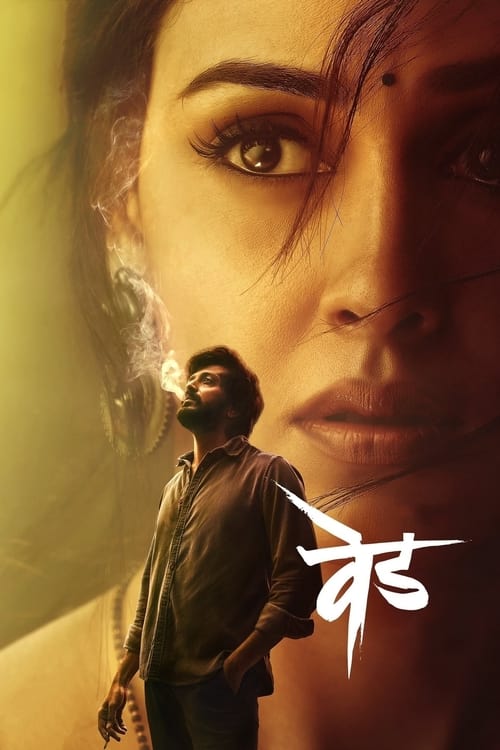
The story of Toh, Ti Ani Fuji: Love in the age of algorithms
Toh, Ti Ani Fuji begins in Pune, India, in a world where romance itself has been quantified. Love is filtered, scored, predicted—reduced to data points and compatibility percentages. Into this sterile landscape crashes a couple whose connection arrives with the force of something primal and uncontrollable. What starts as urgency and desire, the kind that feels like it could burn forever, gradually reveals its fragility. Time intrudes. Ambition shifts. Affection turns conditional. The infinite becomes bruised. The story doesn't end there—it pauses, fractures, and then resumes seven years later on the slopes of Mount Fuji in Japan, where the air is thinner and the world is quieter. They meet again as strangers wearing their own lives, their own scars, their own carefully constructed versions of who they've become. The central question that drives the entire narrative is both simple and devastating: Can love survive its own history, or does it merely haunt those who try to return to it?
Behind the making of Toh, Ti Ani Fuji
Produced by Platoon One Films, Toh, Ti Ani Fuji represents an ambitious entry into contemporary romance cinema—a 134-minute meditation that refuses to settle for easy answers about love and memory. The film's decision to split its narrative across two countries and seven years speaks to a deliberate formal choice, one that demands patience from viewers but rewards that investment with thematic resonance. The production team crafted a world where technology and emotion collide, where the promise of algorithmic matching sits uneasily against the messy reality of human connection. Movie OTT tracks the film's availability across major streaming platforms, making it accessible to audiences worldwide as of 2026. What's striking about the film's ambition is that it doesn't treat its premise as gimmick—the world of quantified romance isn't window dressing but rather the very air the characters breathe. The runtime allows the filmmakers to resist compression, to let scenes breathe, to show us not just the moments of connection but the long stretches of disconnection that define real relationships. The film's visual language shifts between the vibrant, chaotic energy of Pune and the austere, contemplative beauty of Japan, using geography as both setting and metaphor.
What makes Toh, Ti Ani Fuji stand out as a contemporary romance
Honestly, what's most striking about this film is its refusal to sentimentalize either the beginning or the reunion. The early romance in Pune isn't presented as destiny or soulmate mythology—it's presented as what it actually is: two people colliding, wanting each other fiercely, believing in the permanence of that want. The fracturing that follows doesn't happen because of a single dramatic betrayal or misunderstanding, but because of the thousand small ways that people change, drift, prioritize differently. I keep coming back to how the film treats memory itself as an unreliable narrator. The tagline—"What if we both have different memories?"—isn't just a marketing hook; it's the emotional core of the entire second half. When they meet again beneath Mount Fuji, they're not just meeting each other; they're meeting different versions of the same past. Their memories don't align. What she remembers as a moment of connection, he might remember as a moment of distance. That asymmetry, that fundamental inability to access each other's interior experience, becomes far more devastating than any conventional plot obstacle. The performances carry this weight—the actors don't play reconciliation or closure, they play the vertigo of standing in front of someone you once knew completely and realizing you don't know them at all. Movie OTT's streaming availability makes this intimate, challenging film accessible to viewers seeking something beyond conventional narrative satisfaction.
How to watch Toh, Ti Ani Fuji online
Toh, Ti Ani Fuji is currently available on major OTT services, with the complete Where-to-Watch widget displayed at the top of this page showing you exactly which platforms carry it in your region. The film's 134-minute runtime suggests you'll want to carve out an uninterrupted block of time—this isn't a movie you'll want to pause and resume across multiple days, though nothing prevents you from doing so. The cinematography, particularly the Mount Fuji sequences, deserves to be seen on the largest screen available to you, and the sound design carries emotional weight that benefits from decent audio. Streaming availability can shift, so if you're planning to watch, checking the widget before you settle in ensures you don't waste time hunting for the right platform.
Frequently asked questions
Q: Is Toh, Ti Ani Fuji based on a true story?
No, Toh, Ti Ani Fuji is an original fictional work created by Platoon One Films. The story was written specifically for the screen and isn't adapted from a novel, play, or real-life events, though its exploration of love, memory, and loss will feel familiar to anyone who's experienced the passage of time in a relationship.
Q: What's the runtime and when was Toh, Ti Ani Fuji released?
The film runs 134 minutes and was released in 2026. Its length is intentional—the filmmakers use the full runtime to develop the emotional landscape of both the Pune and Mount Fuji sections without rushing either half.
Q: Where is Toh, Ti Ani Fuji set?
The film is split between two primary locations: Pune, India, where the couple's initial relationship unfolds, and Mount Fuji, Japan, where they reunite seven years later. The geographical separation mirrors their emotional and temporal distance.
Q: Can I watch Toh, Ti Ani Fuji with subtitles?
Availability of subtitles depends on your specific streaming platform—check the Where-to-Watch widget at the top of this page or your platform's language settings. Most major OTT services offer multiple subtitle options for international films.
Q: Is Toh, Ti Ani Fuji a sad movie?
It's complicated. The film isn't a tragedy in the classical sense, but it's also not a conventional love story with a neat resolution. It's melancholic, introspective, and ultimately asks difficult questions about whether some loves can be recovered or only mourned. If you're looking for uplifting romance, this probably isn't it. If you're comfortable with emotional ambiguity and slow-burn character study, you'll find plenty to sit with.
Final thoughts on Toh, Ti Ani Fuji
Toh, Ti Ani Fuji is a film for viewers who believe that love stories don't end when the couple breaks up—they just change shape. It's for people who've ever run into an ex and felt the strange vertigo of standing in front of someone who was once your entire world and now is almost a stranger. The film doesn't offer comfort, exactly, but it offers something deeper: recognition. Movie OTT's broad platform availability means this thoughtful, challenging film can find its audience across different regions and viewing preferences. It's not a film for everyone, and that's precisely its strength.