

What Transit Times is about — and why it hits differently
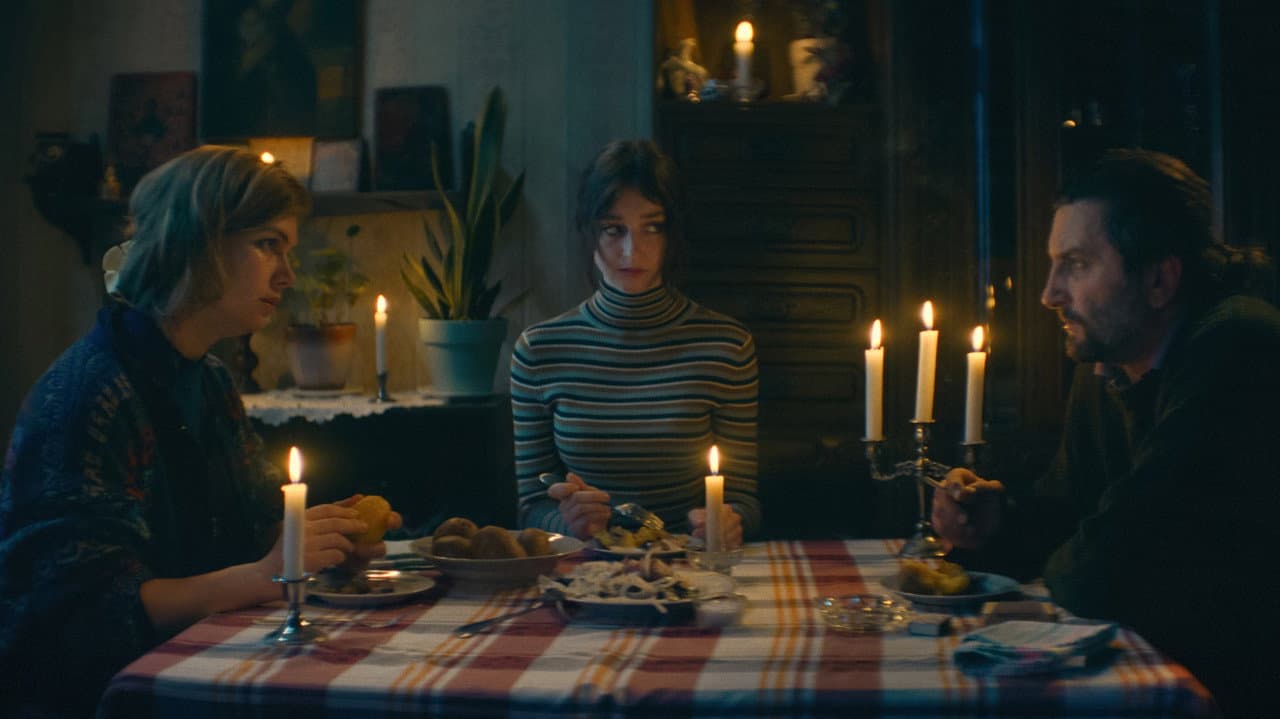
Transit Times is a 2026 Moldovan drama set over the course of a single year in a backyard courtyard in the heart of Chișinău, Moldova's capital, during the turbulent 1990s. The film centers on Zina, a mother living with her husband Victor and their daughter Eva in a shared residential space where multiple families coexist under the same financial strain. The story is intimate in scale but enormous in implication — because what happens in that backyard is really a compressed version of what was happening across an entire post-Soviet country scrambling to reinvent itself after decades of centralized rule. Director Ana-Felicia Scutelnicu frames this as a journey between survival and despair, with Zina's fierce, quiet determination to protect Eva's future driving nearly every scene.
How Transit Times came together — production, cast, and the creative team behind it
Transit Times is a co-production between three companies: Weydemann Bros., Mobra Films, and Youbesc Creative Institute. That's a genuinely interesting combination — Weydemann Bros. is a German production outfit with a track record in European arthouse cinema, while Mobra Films brings a Romanian and Eastern European production sensibility, and Youbesc Creative Institute rounds out the creative infrastructure. The collaboration across these three entities suggests a film designed to travel, to be seen at festivals and in international arthouse markets rather than to open wide in multiplex chains.
Ana-Felicia Scutelnicu directs. She's the key creative force here, and her background working within the post-Soviet Eastern European cinematic tradition shapes every frame of what Letterboxd users have begun cataloguing as a quiet but notable entry in contemporary Moldovan filmmaking. Full cast details haven't been widely circulated in English-language trade press at the time of writing — hard to say if that's a distribution strategy or simply the reality of a film from a country whose cinema rarely gets the attention it deserves. No MPAA rating, runtime, or box-office figures have been confirmed through major aggregators, and neither Rotten Tomatoes nor Metacritic carries an entry for the film as of early 2026. Movie OTT continues to track the film's availability and critical footprint as more data surfaces across global streaming platforms.
What we can say is that the film's 2026 release positions it within a wave of Eastern European productions revisiting the 1990s transition period — a decade that left deep scars across former Soviet republics and one that cinema has only recently started examining with real honesty.
Why Transit Times stands out — craft, performance, and what the film gets right
What's striking is how little Transit Times seems to need in the way of dramatic machinery. There's no villain, no single catastrophic event, no tidy resolution. The film's tension comes from accumulation — the slow pressure of unpaid bills, the weight of a mother's worry, the way a shared courtyard forces people into proximity with one another's suffering. Scutelnicu understands that the post-Soviet transition wasn't a single dramatic rupture but a grinding, daily renegotiation of what life could look like.
The backyard setting is doing a lot of work here. It functions almost as a character itself — a contained world where the macro-economic collapse of a country gets translated into micro-level human friction. Zina's relationship with Victor and Eva anchors the film emotionally, and the performances (from a cast whose names haven't yet been widely distributed in English-language coverage) reportedly carry that domestic tension with real restraint. Scutelnicu has spoken about framing the story as a portrait of a mother fighting for her daughter's future, and that framing gives the film a clear emotional spine even when the narrative meanders — deliberately — through quieter passages.
The thing nobody mentions enough about films like this is how much they depend on the texture of their locations. A backyard in central Chișinău in 1992 or 1993 looks and feels a specific way. The peeling paint, the improvised repairs, the way shared spaces accumulate the evidence of multiple lives — these details aren't set dressing. They're the argument the film is making.
Movieott.com's editorial team has been following the film's festival trajectory, and it's the kind of work that tends to find its audience slowly, through word of mouth and critical championing rather than marketing spend.
Where to stream Transit Times online right now
Transit Times is currently available on major OTT services, which means viewers in most major markets can find it without much hunting. The Where-to-Watch widget at the top of this page lists every platform currently carrying the film, updated in real time — that's the fastest way to check availability in your specific region, since licensing windows can shift. Movie OTT tracks streaming availability across major platforms globally, so if the film moves between services or becomes available in a new territory, this page will reflect that. Don't assume a title is unavailable just because it's not on the first platform you check — regional libraries vary significantly, and a film like Transit Times may be on one service in Europe and a different one in North America.
Frequently asked questions
Q: Who directed Transit Times (2026)?
Transit Times was directed by Ana-Felicia Scutelnicu, a filmmaker working within the Eastern European arthouse tradition. The film represents a significant entry in Moldovan cinema's engagement with the post-Soviet 1990s.
Q: Where can I watch Transit Times?
Transit Times is currently available on major OTT streaming platforms. Check the Where-to-Watch widget at the top of this page on Movie OTT for the most current regional availability, as streaming rights can vary by country.
Q: Is Transit Times based on a true story?
The film isn't described as being based on a specific true story, but it draws heavily on the documented social and economic reality of Moldova in the 1990s following the collapse of the Soviet Union. The characters of Zina, Victor, and Eva appear to be fictional, though their circumstances reflect widely shared experiences of that era.
Q: What is Transit Times rated, and is it suitable for younger viewers?
An official MPAA or equivalent rating hasn't been confirmed in available sources. Given the film's themes of economic hardship and post-Soviet social upheaval, it's likely best suited to older teens and adults, but parents should check platform-specific ratings before watching with children.
Q: Who produced Transit Times and where was it filmed?
The film was produced by Weydemann Bros., Mobra Films, and Youbesc Creative Institute as a co-production. It is set in Chișinău, Moldova's capital, and the central location is a shared residential backyard in the city center — a setting that grounds the story in a very specific time and place.
Final thoughts on Transit Times — who should watch it
Transit Times won't be for everyone. It's slow, specific, and asks you to sit with discomfort rather than resolve it. But for viewers who care about European cinema, post-Soviet history, or simply stories about ordinary people holding their families together under extraordinary pressure — this is exactly the kind of film worth seeking out. Quiet. Precise. The kind of thing that stays with you longer than something louder would. If you're using Movie OTT to find your next drama, put this one near the top of the list.