








The story of Una Palabra Tuya
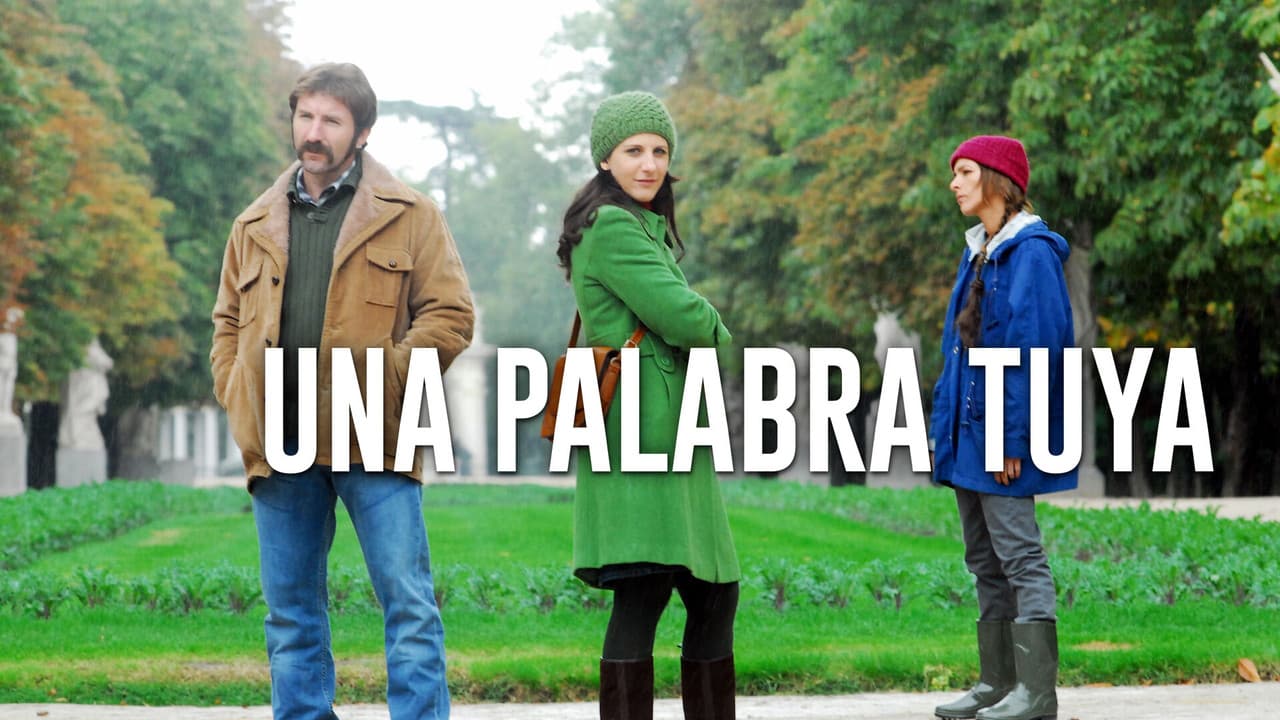
Una Palabra Tuya tells the story of two characters—Rosario and Milagros—whose lives have been shaped by years of setbacks, anxiety, and deferred hopes. The film's tagline, "A portrait of two ordinary lives," captures something essential about its approach: this isn't melodrama or grand tragedy. It's the quiet desperation of people who've stopped believing they're allowed to be happy. Over its 100-minute runtime, the narrative follows these two as their paths diverge sharply. One character moves toward what the film describes as "the cruelest nothingness" yet somehow maintains a joyful, vital attitude about it all. The other travels toward a more hopeful future, but only after redemption—only after wrestling with the weight of past mistakes. And between them, suspended in that middle space: the possibility of forgiveness.
Behind the making of Una Palabra Tuya
Una Palabra Tuya emerged in 2008 as a Spanish-language drama with modest theatrical ambitions but considerable emotional depth. Details about its production team, budget, and box office performance remain limited in mainstream English-language sources, which speaks to the film's regional scope—it wasn't built as a crossover hit or festival darling chasing international distribution. That said, the film's 100-minute structure suggests a filmmaker who knew exactly how long this story needed to breathe. There's no padding here, no subplot bloat. What we know is that the cast and crew committed to a character study rather than plot-driven machinery. The film didn't rack up major awards recognition in the way a Cannes or Berlin entry might, but it found its audience among viewers who appreciate slow-burn relationship dramas. It carries a 4.7 rating on IMDb—a score that often reflects the gap between a film's artistic ambition and its accessibility to casual viewers. Some films are loved most by those willing to sit with discomfort.
What makes Una Palabra Tuya stand out
What's striking about Una Palabra Tuya is how it refuses easy answers. Most films about forgiveness and redemption want to end with a neat emotional payoff—tears, reconciliation, a fade to black with strings swelling. This film isn't interested in that comfort. Instead, it presents two people choosing fundamentally different responses to their shared pain. One embraces a kind of joyful nihilism, finding lightness in surrender. The other claws toward hope, but only through the hard work of redemption. That tension—the fact that neither path is presented as objectively "correct"—is what lingers. The performances anchor this ambiguity without flinching or becoming maudlin. What I keep coming back to is how the film trusts its audience to sit with contradiction. Real people don't resolve their conflicts in tidy three-act structures. They live with unfinished business, with the knowledge that some rifts don't fully close, and that's okay. The film's portrait of ordinary life means it's not trying to be beautiful or poetic—it's trying to be honest, and there's a real difference between those two things.
Where to stream Una Palabra Tuya online
Una Palabra Tuya is available on major OTT streaming services, and Movie OTT tracks its current availability across platforms so you don't have to hunt. The "Where to Watch" widget at the top of this page shows you exactly which services are carrying it right now—availability shifts seasonally, so it's worth checking before you settle in. If you're a subscriber to any of the major streaming platforms, there's a solid chance it's already in your library. Since this is a Spanish-language drama without the name recognition of a Marvel blockbuster, it tends to live in the deeper catalog sections, which means you might not stumble on it by accident. That's where a streaming aggregator comes in handy. Movie OTT does the work of keeping tabs on where niche films end up, so you can focus on watching rather than searching.
Frequently asked questions
Q: What year was Una Palabra Tuya released?
Una Palabra Tuya came out in 2008. It's been nearly two decades since its initial release, which gives it a kind of quiet staying power—it's not a recent discovery but a film that's been circulating in streaming libraries and film communities for years.
Q: How long is Una Palabra Tuya?
The film runs 100 minutes, which is a tight runtime for a character study. That's roughly an hour and forty minutes—short enough to watch in one sitting without commitment fatigue, but long enough for the story to develop real emotional weight.
Q: What's the IMDb rating for Una Palabra Tuya?
It holds a 4.7 out of 10 on IMDb. That score suggests it's a divisive film—some viewers find it profound, others find it slow or unsatisfying. If you're drawn to understated dramas that don't provide clear resolutions, you might rate it higher than the aggregate.
Q: Is Una Palabra Tuya based on a true story?
There's no indication that Una Palabra Tuya is based on a specific true story, though its emotional authenticity—the way it captures ordinary disappointment and quiet resilience—makes it feel lived-in and real. Sometimes the most truthful films are the ones that distill universal experiences rather than adapt historical events.
Q: What genres does Una Palabra Tuya belong to?
Una Palabra Tuya is categorized as a drama and romance, though calling it a romance might be misleading if you're expecting a love story with traditional beats. It's more accurate to say it's a drama about intimacy, connection, and the ways two people can love each other while moving in opposite directions.
Final thoughts on Una Palabra Tuya
Una Palabra Tuya isn't for everyone—and that's not a weakness, it's the point. It's a film about ordinary people in ordinary pain, refusing to sentimentalize their struggle or rush toward resolution. If you're tired of movies that wrap everything up neatly, that want you to feel a specific emotion at a specific moment, this one might be worth your time. It trusts you. It doesn't explain its characters' choices or judge them. It just watches, the way a real portrait does, and lets you draw your own conclusions about whether forgiveness is possible, whether happiness is deserved, and what we owe each other when the easy answers have all run out.