Unbreakable Me: The Gabrielle Daleman Story
Release: 2026 | Runtime: 129 minutes | Genre: Documentary | Where to watch: Movie OTT
This isn't a film about winning medals. It's a film about what happens when winning medals isn't enough to save you.
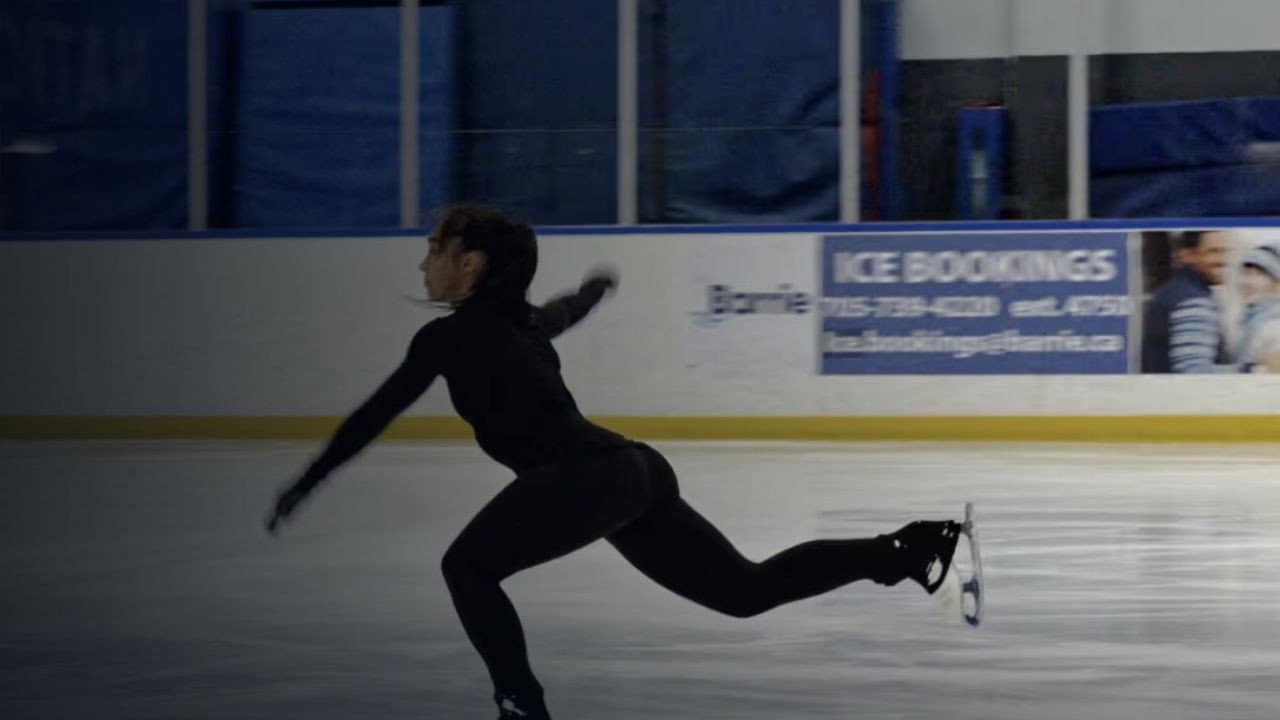
Unbreakable Me - The Gabrielle Daleman Story follows Gabrielle Daleman, two-time Canadian figure skating champion and 2018 Olympic gold medalist, through the years nobody talks about — the injuries, the illness, the bullying, the mental health collapse that nearly ended her career before it could fully begin. The 129-minute documentary refuses to treat those struggles as a detour from the real story. They are the real story.
Why This Documentary Stands Apart From the Usual Olympic Retrospective
Most sports films work backward from the medal. They show you the podium moment, then cut to the training montage, then close with the champion's thoughts on perseverance. Unbreakable Me inverts that entirely. The 2018 Pyeongchang team gold — which should have been a launching pad — arrives early and becomes a complication, not a climax. It raises the harder question: Why did a champion still feel so alone?
What's striking is how the filmmakers resist the triumphant-return edit. They sit in the uncomfortable territory longer than you'd expect. The quiet moments land harder than any slow-motion jump sequence could. There's a camera-direct moment where Daleman talks about the gap between what audiences see in a broadcast and what athletes carry into the arena that day. It's almost offhand. It stays with you.
The figure skating sequences, when they do appear, carry genuine weight — not because they're flashy, but because you've been given the context for what they cost her. Footage from competition is deployed sparingly, as evidence rather than spectacle. That's a choice that requires confidence from both the subject and the filmmakers.
What You're Actually Getting Into
At 129 minutes, this isn't a casual watch. The runtime reflects the depth of access the production secured — Exploration Films and ZGN Productions, the companies behind this, have a track record in character-driven storytelling that demands time. Released in 2026, the film had the benefit of hindsight. Enough distance had passed for Daleman's story to feel complete rather than ongoing, which matters when you're dealing with mental health and recovery.
The documentary covers:
- Two Canadian national championships (2016 and 2018)
- The 2018 Pyeongchang Olympic team gold — a moment that should have changed everything
- Years of injuries that threatened her ability to skate
- Serious illness that sidelined her for stretches
- Relentless bullying — both public and private
- Mental health struggles that the wider sports media only partially covered
Daleman's inner circle is present throughout. That access is what gives the film its texture. You're not watching talking heads explain her life; you're watching her live it.
Where to Actually Watch It
The film is currently streaming on major OTT platforms. Availability shifts more often than most people realize — services rotate documentaries aggressively — so Movie OTT's where-to-watch tracker updates in real time to show you exactly which platform has it today. No guessing. No app-hopping. Just current information.
If you're looking for it on a specific service, check there first. If it's not listed, the tracker shows alternatives. That's the whole point of aggregation — saving you the three-minute hunt.
Who Should Actually Watch This
You should watch it if you've ever wondered what the gap looks like between an athlete's public image and their private reality. You should watch it if you care about figure skating beyond the jumps. You should watch it if you've dealt with mental health struggles and want to see someone else articulate what that isolation feels like.
You don't need to be a skating fan. That's almost beside the point. What the film does — and what makes it different from most sports documentaries — is refuse to separate the athlete from the person. Daleman's greatest strength wasn't the triple Lutz. It was the decision to keep showing up after everything told her to stop.
Hard to say if any other skating documentary has been this willing to sit with that contradiction.
The Basics (If You're Still Deciding)
Q: Is it actually good?
Yes. The documentary doesn't flinch from difficult material, and it doesn't rush the resolution. Streaming availability has allowed this kind of patient storytelling to find audiences that traditional broadcast never would've reached.
Q: How long is it?
129 minutes. Plan accordingly. It earns the time.
Q: Was this actually her life, or is it dramatized?
Every event depicted — the injuries, the mental health struggles, the bullying — reflects her documented experiences. This is her real story.
Q: Where can I watch it?
Across major streaming services. Check Movie OTT for current availability in your region and on your preferred platform.
Q: Who made it?
Exploration Films and ZGN Productions co-produced the documentary. Exploration Films has built a reputation for giving athletes the kind of long-form access that television segments simply can't accommodate.
What Comes Next
If you haven't seen this yet, add it to your watchlist. Give it the full 129 minutes in one or two sittings — it's designed to be absorbed as a narrative arc, not skipped through. The payoff isn't a medal moment. It's the quiet strength of someone who stopped trying to prove something to everyone else and started proving something to herself.
That's the documentary that Unbreakable Me actually is.