Under the Same Sun
Director: Ulises Porra | Cast: David Castillo, Valentina Shen Wu, Jean Jean | Runtime: 103 minutes | Release Year: 2026 | Genres: Drama, History
The premise: Three outsiders, one silk factory, 1819
It's 1819. The island of Hispaniola is fracturing — empires collapsing, futures uncertain — and into that instability walk three people who don't fit anywhere. Lázaro (David Castillo) is a Spanish heir who recoils from the colonial machinery he was born to inherit. Mei (Valentina Shen Wu) is a Chinese silk expert, her knowledge rare, her presence in the Caribbean itself a historical oddity. Baptiste (Jean Jean) is a Haitian army deserter carrying the weight of a revolution that promised freedom and delivered something messier.
What they decide to do together sounds absurd: build a silk factory in the heart of Hispaniola. The film never lets you forget how fragile that ambition is — how the world they're trying to create has every structural reason to collapse. Running 103 minutes, it's quieter than its premise suggests. Three people. One unlikely plan. The colonial system arrayed against them.
If you've seen character-driven historical dramas like The Remains of the Day or Atonement, you know the register Porra's working in — intimate, morally complicated, suspicious of grand narratives.
Why this film landed at TIFF, not a festival dumping ground
Ulises Porra's directorial debut premiered in TIFF's Centrepiece section in September 2025 — that's not a slot handed out lightly. Centrepiece films are the ones programmers stake their credibility on. It's a Spain–Dominican Republic co-production (five production companies split the load: Wooden Boat Productions, Alta Isla Films, Fasten Films, Muy Buena Films, and Cobalt Films), and somehow the multi-partner structure produced something with a real point of view instead of a committee-shaped compromise.
From Toronto, the film traveled to Biarritz, where it won three awards — a meaningful signal that the jury found something genuinely accomplished here. It screened later at Seville. That's a solid festival trajectory for a first feature. Rotten Tomatoes and Metacritic haven't consolidated aggregator scores yet (the film's still finding its audience on streaming), but the critical response out of TIFF was meaningfully positive. Reviewers across multiple outlets singled out the performances and craft.
Movie OTT's tracking data will update those scores as they appear — worth checking back if you want the full critical picture before you commit your time.
The performances do the heavy lifting
What's striking is how much Porra trusts his actors over his ideas. He could've made this a lecture on colonialism. He didn't. Instead, the film earns its anti-colonial critique through three very different performances that refuse to become symbols.
David Castillo brings an internal stillness to Lázaro that keeps the character from sliding into the guilt-ridden-colonial-heir cliché. But it's Valentina Shen Wu's Mei who carries the film's moral weight — a woman whose expertise is being exploited even as she's nominally a partner in the enterprise. And Jean Jean, as Baptiste, handles the film's most politically charged role without letting it tip into abstraction. Three performers, three registers that somehow cohere.
According to Cineuropa's review, the film earns praise as "absorbing" and "emotionally engaging," with the central trio doing most of the work. That's harder than it sounds — films with pointed political themes often let the theme swallow the people, turn them into arguments instead of characters.
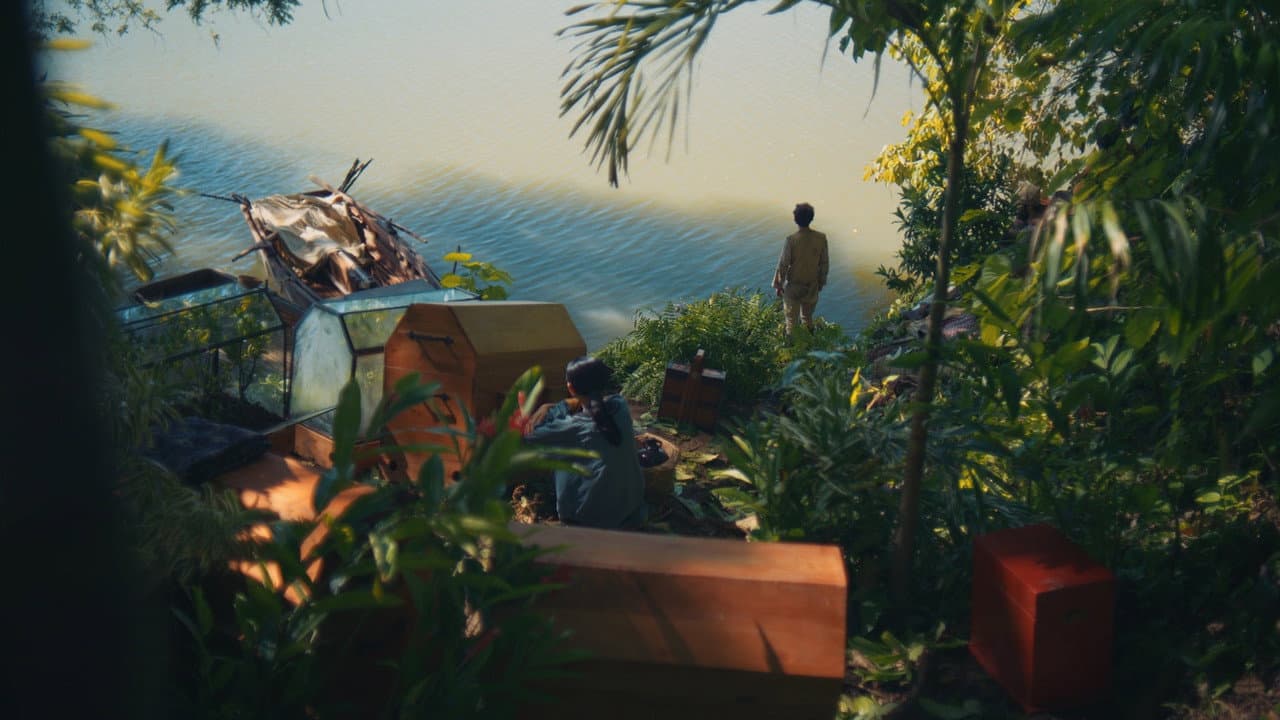
Cinematographer Sebastián Cabrera Chelin's work has drawn consistent notice. The Caribbean light isn't decorative here — it's deliberately used. There's something about the way the sun flattens and exposes in the outdoor sequences that makes the island feel simultaneously beautiful and merciless. The thing that stays with me is an early scene where the three protagonists survey the land they want to transform, and Chelin frames it so the horizon feels impossibly far away. It's small, but it tells you everything about the odds they're facing.
The Asian Cut's TIFF coverage rated the film 4 out of 5, emphasizing its "quietly beautiful" visual approach. Film Threat agreed. Some critics have noted the film covers familiar thematic ground — marginalized people carving out dignity inside a system built to deny it isn't new. But Porra keeps the stakes human-sized rather than epic, which is where the power lives.
Where to watch it right now
Under the Same Sun is currently available on major OTT platforms — no need to hunt for a theatrical screening or wait for a festival pass. The where-to-watch widget at the top of this page shows every service carrying it in your region, updated in real time. Streaming availability shifts fast, so the widget reflects current data rather than a static list.
If you're tracking multiple titles across platforms, Movie OTT aggregates streaming availability so you don't have to check five apps manually. Worth bookmarking if you follow international cinema or historical dramas.
FAQ
Who directed Under the Same Sun?
Ulises Porra directed and co-wrote it — his first solo feature. It's a Spain–Dominican Republic co-production.
Is it based on a true story?
No, but it's grounded in real history. The 1819 Hispaniola setting, the post-Haitian Revolution instability — that's historically rooted. The characters (Lázaro, Mei, Baptiste) are fictional, invented to inhabit that world.
What awards has it won?
Three awards at Biarritz after its TIFF premiere. It also screened at Seville.
What's the runtime?
103 minutes. Drama, History.
Where can I stream it?
Check the widget at the top of this page for your region's current options. Movie OTT tracks all available platforms if the widget doesn't load.
Should you watch it?
Yes — if you don't need your historical dramas to be sweeping or loud. This is a quieter film than its premise might suggest, which is exactly its strength. It's built for viewers who care more about how people move through impossible situations than about spectacle. Character-driven. Morally unsettling. The kind of thing that lingers.
Don't sleep on it.