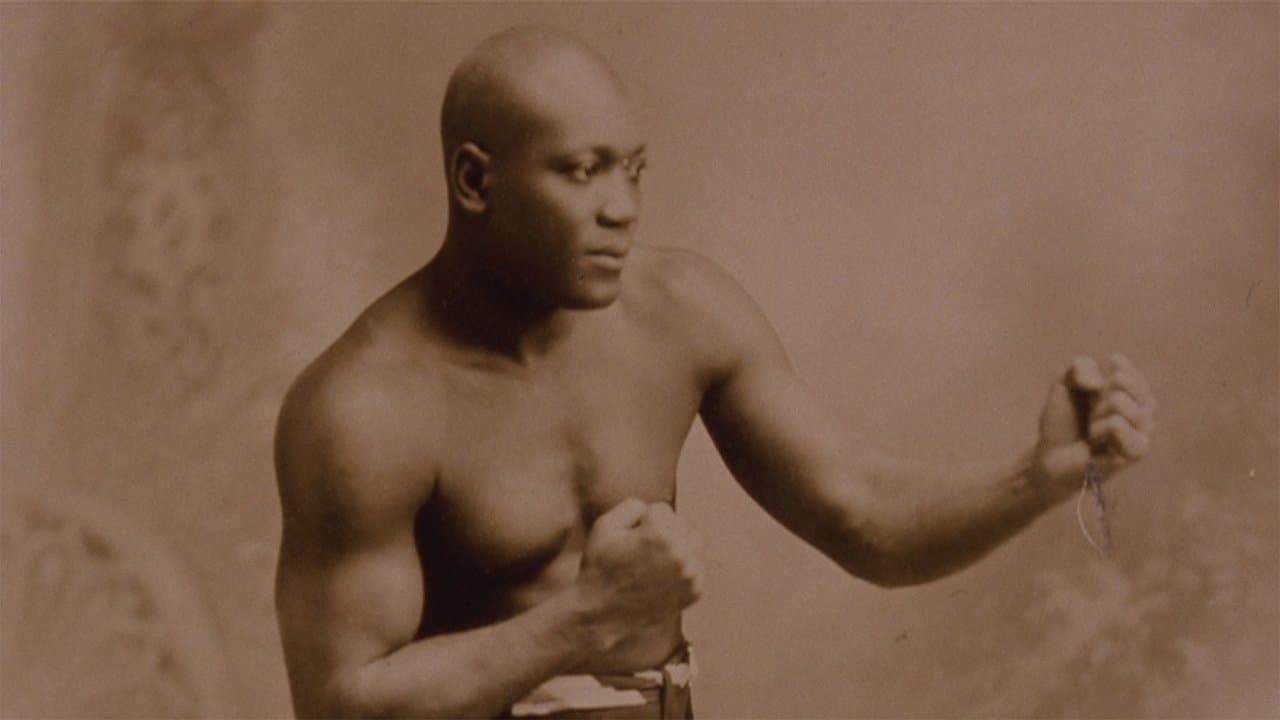









The Story of Unforgivable Blackness: The Rise and Fall of Jack Johnson
Unforgivable Blackness: The Rise and Fall of Jack Johnson is Ken Burns' sweeping documentary portrait of one of sport's most revolutionary and controversial figures. Released in 2004, this 214-minute film tells the story of Jack Johnson, the first African American heavyweight boxing champion of the world, and the seismic cultural upheaval his success provoked. Burns doesn't just chronicle Johnson's rise from Texas poverty to the heavyweight throne—he captures the suffocating racism of the Jim Crow era that made his very existence, let alone his dominance in the ring, an affront to the racial order of early 20th-century America. The documentary unfolds as both a boxing biography and a searing indictment of systemic racism, showing how one man's talent and refusal to apologize for his blackness became, in the eyes of white America, the most dangerous threat imaginable.
What makes this film so gripping is how Burns allows Johnson's own voice—through archival recordings, photographs, and written accounts—to speak across the decades. You watch him transform from a scrappy young fighter into a showman, a champion, and ultimately a fugitive. The stakes aren't just about who wins a fight; they're about power, identity, and the price of visibility for a Black man in a country determined to keep him invisible.
Behind the Making of Unforgivable Blackness: The Rise and Fall of Jack Johnson
Ken Burns, the legendary documentarian behind The Civil War and Baseball, brought his meticulous research and distinctive visual style to this project, adapting Geoffrey C. Ward's 2004 nonfiction book of the same name. Burns is known for his ability to make history feel immediate and personal—he does that here through archival photographs, period music, and a narrative voice that never condescends to its subject. The film's runtime of over three and a half hours might sound daunting, but Burns uses every minute to build a world. You're not just learning facts; you're inhabiting an era.
The documentary aired on PBS in 2005 and earned significant critical recognition, with an IMDb rating of 7.1 out of 10, reflecting its standing among both critics and general audiences who appreciate serious historical documentary work. Burns' approach—layering still photography, newsreel footage, period documents, and interviews with historians—creates a texture that feels lived-in rather than didactic. What's striking is how he refuses to make Johnson a simple hero or villain. Johnson was a complicated man: a brilliant fighter, a showman who loved luxury and attention, a man who married white women at a time when doing so was not just socially explosive but literally criminalized in many states. Burns doesn't shy away from any of it. The film won multiple Emmy nominations and became one of PBS's most significant documentary broadcasts of the 2000s, cementing Burns' reputation as perhaps America's most important living documentarian.
What Makes Unforgivable Blackness: The Rise and Fall of Jack Johnson Stand Out
What really gets you about this film—and I keep coming back to this—is how it refuses the comfortable distance of "historical" storytelling. The racism on display isn't presented as a quaint artifact of a bygone era; it's presented as a system, coordinated and vicious. When white newspapers call for Johnson's head, when the government literally manufactures charges against him to jail him, when America's boxing establishment refuses to let him fight white challengers—these aren't individual prejudices. They're institutional violence. And Burns makes you feel the weight of it.
The film's power also lies in what it shows us about Johnson himself. He wasn't a tragic victim passively suffering injustice. He was a man who loved fast cars, fine clothes, and beautiful women—and who refused to apologize for any of it, even as doing so made him a pariah. That defiance cost him everything: exile, poverty, the loss of his title, years in prison on dubious charges. Yet he never broke. The documentary captures something essential about Black resistance that doesn't fit neatly into a redemption narrative—it's messier, more human, more real.
Burns' editing and pacing deserve mention too. At over three hours, the film could have felt bloated. Instead, it builds momentum like a great novel, with acts and turning points that keep you invested. The archival footage—particularly of Johnson's actual fights—gives you a visceral sense of his skill and showmanship. And the period music, carefully chosen, anchors you in the emotional truth of each era. This isn't a dry historical lecture. It's cinema.
Where to Stream Unforgivable Blackness: The Rise and Fall of Jack Johnson Online
Unforgivable Blackness: The Rise and Fall of Jack Johnson is available on major OTT services, making Burns' masterwork accessible to a wide audience. If you're hunting for where to watch it, the "Where to Watch" widget at the top of this page will show you every platform currently carrying the film in your region. Movie OTT tracks streaming availability across services, so you can find the title wherever it's available without having to check five different apps. Given that this is a PBS documentary, it's often available on services that carry public television content, as well as mainstream platforms. Because the film's runtime is substantial, you'll want to carve out time to watch it properly—not as background noise, but as the serious historical work it is. It's worth the commitment.
Frequently asked questions
Q: Who directed Unforgivable Blackness: The Rise and Fall of Jack Johnson?
Ken Burns, the acclaimed documentarian behind The Civil War and Baseball, directed this film. It's an adaptation of Geoffrey C. Ward's 2004 nonfiction book and premiered on PBS in 2005.
Q: Is Unforgivable Blackness: The Rise and Fall of Jack Johnson based on a true story?
Yes, it's a documentary telling the true story of Jack Johnson, the first African American heavyweight boxing champion of the world, and the racism he faced in early 20th-century America. Every major event in the film is historically documented.
Q: How long is Unforgivable Blackness: The Rise and Fall of Jack Johnson?
The film runs 214 minutes, or just over three and a half hours. It's a substantial watch, but Burns uses the runtime to build a rich, immersive portrait of Johnson's life and era.
Q: What happened to Jack Johnson after he lost his boxing title?
Johnson faced exile, legal persecution, and financial ruin. He was charged under the Mann Act on dubious grounds and spent time in prison. The documentary follows his later years, showing how the system worked to destroy him even after his boxing career ended.
Q: Why is the film called "Unforgivable Blackness"?
The title reflects how white America of the time viewed Johnson's very existence—his talent, his success, his refusal to submit to racial hierarchy—as something that couldn't be forgiven. It's a provocative title that captures the era's racism.
Final Thoughts on Unforgivable Blackness: The Rise and Fall of Jack Johnson
If you care about American history, boxing, or just witnessing a master filmmaker at work, Unforgivable Blackness: The Rise and Fall of Jack Johnson demands your time. It's not a comfortable film—it's not meant to be. Burns shows us a man of extraordinary talent and courage crushed by a system designed to keep him in his place, and he does it with the kind of meticulous, humane storytelling that makes you feel the injustice in your bones. This is essential viewing.