
Uprising
What you're actually getting: A century-old revolution, resharpened by AI
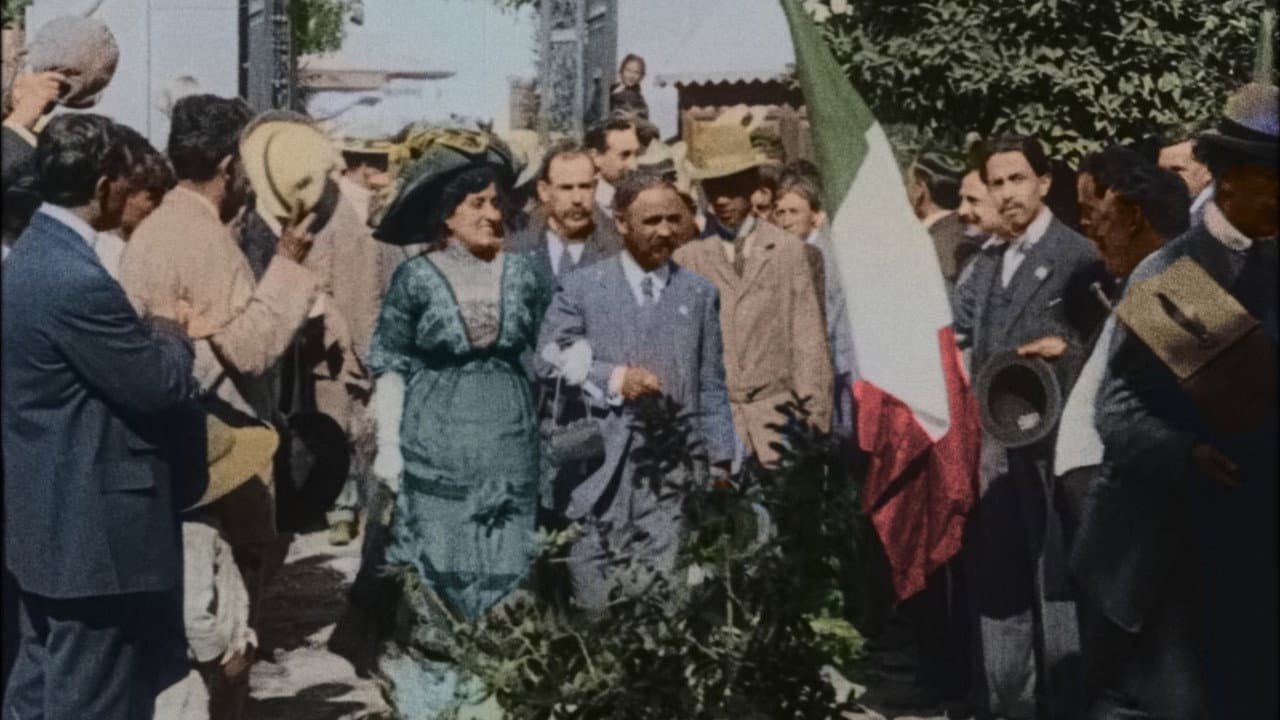
Uprising is a 95-minute documentary released in 2026 that takes archival footage from the Mexican Revolution — shot by the country's earliest cinematographers over a hundred years ago — and runs it through AI upscaling tools to make blurry newsreels sharp enough to see faces, expressions, the texture of what actually happened. The result is strange and urgent: history that feels populated rather than abstract. You're watching soldiers adjust their hats. Women watching from doorways. A crowd of Zapatista supporters filling the frame with a clarity that feels almost impossible given the source material.
The film itself doesn't just show you these enhanced images. It questions why we see what we see — and what gets left out of the version of the Mexican Revolution taught in schools.
Produced by UNAM (the National Autonomous University of Mexico), ENAC (Mexico's national film school), and the Filmoteca de la UNAM, this isn't a small independent project. UNAM productions carry institutional weight the way BBC documentaries do in Britain. That backing matters — it signals serious craft ambitions and archival rigor.
Why the AI enhancement isn't a gimmick
Here's the honest part: using machine learning to colorize and stabilize century-old film could easily feel cheap or manipulative. A shortcut. A way to dress up old material in technological novelty. But Uprising doesn't use the technology that way.
What the AI actually does is make the source footage legible. The stabilization removes camera shake. The sharpening brings faces into focus. Some sequences get colorized — moving from black-and-white to color — which is where things get philosophically interesting. Because once you can see a soldier's face clearly, or the exact color of a flag, or the specifics of a crowd's clothing, the footage stops feeling like a historical abstraction and starts feeling like evidence. Real people doing things. Real moments.
The film invites you to sit with that discomfort. Is this clarity historically accurate, or a beautiful lie we're telling ourselves about the past? Hard to say. But the fact that the film asks the question instead of hiding behind the technology is what makes it work.
The structure: Rise, peak, collapse, and a nation born from wreckage
The documentary mirrors the Revolution's own arc — slow build into explosive middle into exhausted aftermath. No talking heads. No Ken Burns-style pans across still photographs. Just enhanced footage, sparse narration, and room for the images to breathe.
What's striking is how the film manages two things at once. It functions as rigorous historical documentation — tracing the movement from its chaotic beginning through its most violent period to the nation-state that eventually emerged. But it's also a provocation about national identity itself. The version of the Revolution taught in Mexican schools, painted on murals, enshrined in civic ritual — that's a selection, not a complete picture. That's not a new argument in Mexican historiography, but Uprising makes it visceral rather than academic. You're shown, not lectured.
There's a sequence midway through where the enhanced footage becomes so detailed that you can read emotion in people's faces. That clarity shifts something. It's harder to treat history as symbol when you can see the specifics of how a person stood, watched, reacted.
Where to watch — and why this matters for archival docs
Uprising is currently streaming on major platforms. Check the where-to-watch widget at the top of this page for real-time availability in your region — streaming rights for institutional documentaries shift more often than studio releases do.
Movie OTT tracks this stuff across platforms, which matters because a film like this (backed by academic institutions, not major studios) tends to move between services. One month it's on a platform with strong international cinema catalogs, the next it's been picked up by something else. The widget reflects those changes as they happen, so you're not chasing dead links.
If you can't find it on your usual service, it's worth checking specialty documentary platforms first — those are where this kind of work typically lands.
Questions people actually ask about this film
Should I watch this if I don't know much about the Mexican Revolution? Yes. The film doesn't assume historical knowledge. It uses the Revolution as its subject, but it's really asking bigger questions about how we construct national narratives. You don't need a textbook background to sit with those ideas.
Is this family-friendly? It's a documentary about a violent historical period. There's archival footage of conflict, destruction. Not graphic by modern standards, but not sanitized either. Probably okay for teenagers and up; depends on the kid.
How does this compare to other Revolution documentaries? Most traditional docs use interviews, maps, voiceover analysis — the apparatus of historical film. This one strips all that away and bets everything on the power of enhanced archival footage. If you're used to more conventional documentary structures, the approach might feel deliberately sparse. But that sparseness is the point.
Is the AI enhancement distracting or does it enhance the experience? Both. There are moments where the clarity is remarkable — you catch details that would've been invisible in the original footage. There are other moments where you're acutely aware that a machine processed what you're seeing. The film seems aware of that tension and leans into it rather than hiding.
How long is it? 95 minutes. Long enough to make a real argument, short enough that it doesn't feel self-indulgent.
Who should actually watch this
Not everyone. If you're looking for a straightforward chronological account of the Mexican Revolution with dates and battle maps and clear historical conclusions, Uprising will frustrate you. The film is essayistic and questioning — it's more interested in what we choose to remember than in what objectively happened.
But if you're interested in how nations construct their own myths — what gets included, what gets quietly left out, what we lose and gain when we digitally restore the past — this is the kind of film that stays with you. The enhanced footage is genuinely remarkable. The argument is honest. It doesn't ask much of your time (95 minutes is nothing) and quite a lot of your assumptions.
Worth watching.