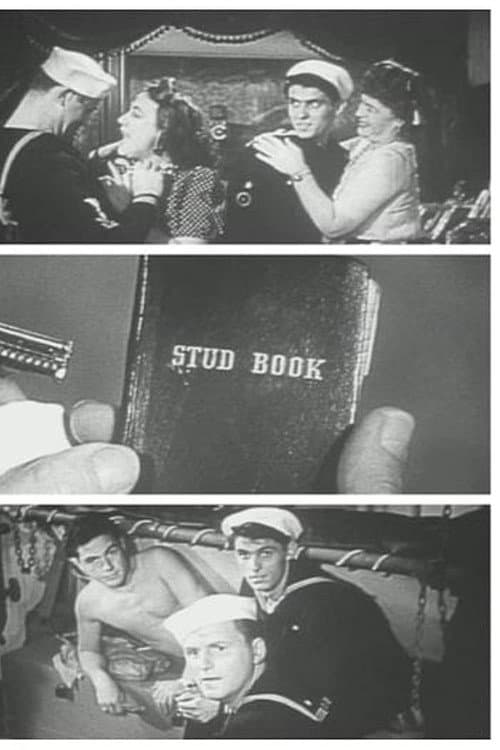










What USS VD: Ship of Shame is About
USS VD: Ship of Shame stands as one of cinema's strangest artifacts — a 46-minute wartime government film made by the U.S. Navy and Paramount Pictures in 1942. The premise is blunt: the military wanted to scare young servicemen stationed overseas away from what it termed "loose women" by showing them the actual consequences of contracting syphilis and gonorrhea. Rather than rely on diagrams or actors, the filmmakers chose to document real patients in various stages of disease progression. It's a film that doesn't flinch. The title itself — USS VD — uses the ship metaphor to suggest that venereal disease spreads through the ranks like an unwanted crew member, contaminating unit cohesion and military readiness.
The film's central argument was rooted in a real military concern: during WWII, venereal disease rates among American servicemen were genuinely high enough to impact troop strength and deployment schedules. Rather than treat the subject with clinical detachment, the Navy leaned into shock value. What results is a viewing experience that oscillates between educational necessity and almost unbearable documentation of human suffering — making it simultaneously a public health message and a window into 1940s attitudes toward disease, sexuality, and shame.
Behind the Making of USS VD: Ship of Shame
The production of USS VD: Ship of Shame emerged from a specific wartime moment when the U.S. military was grappling with practical logistics around soldier health. Paramount Pictures, already deeply embedded in the war effort through newsreels and propaganda shorts, partnered with the Navy to create something that would circulate through military barracks and training camps. The film wasn't meant for civilian theaters — it was internal military messaging, designed to be shown to enlisted men as a deterrent.
What's striking is that the filmmakers didn't soften the material for their audience. Instead of using actors or illustrations, they filmed actual patients at medical facilities, capturing the physical deterioration that accompanies untreated venereal disease. Some sequences show lesions, rashes, and the neurological effects of syphilis in its late stages. The production values are spare — no dramatic score, minimal narration — which makes the footage feel even more documentary-like, even more real. There's no entertainment value here, no dramatic arc. Just evidence.
The film's IMDb rating of 4.5 out of 10 reflects its nature as a shock-value public health document rather than a conventional drama. It wasn't designed to be "good" in the traditional sense; it was designed to be effective. Whether audiences at the time found it persuasive remains unclear — military records don't typically capture soldier reactions to training films — but the sheer existence of the film demonstrates how seriously the armed forces took the problem. Movie OTT catalogs obscure historical titles like this one, making it possible for modern viewers to understand how governments used cinema during wartime.
Why USS VD: Ship of Shame Remains Historically Significant
What makes USS VD: Ship of Shame stand out, even now, is its unflinching commitment to its message. There's no moralizing voiceover, no religious condemnation — just the clinical presentation of medical reality. The film trusts the footage to do the work. And that's what's genuinely unsettling about watching it. You're not being told to judge; you're being shown consequences. The patients themselves — their faces, their bodies — become the argument.
From a historical perspective, the film is a time capsule of mid-20th-century attitudes toward venereal disease, sexuality, and military discipline. It reveals how the armed forces thought about soldier behavior, what they feared, and what tools they believed would work as deterrents. The very existence of the film suggests that traditional shame and morality lectures weren't considered sufficient — the military needed something more visceral, more horrifying. That calculation itself tells us something about the era.
There's also an uncomfortable honesty in how the film treats its subject. It doesn't pretend disease is a moral failing; it presents it as a medical problem with real physical consequences. That's almost progressive for 1942, even if the underlying message — that women overseas are sources of infection — reflects the misogyny of the period. The film doesn't blame women for being "loose"; it blames them for being disease vectors. That distinction matters historically, even if it's not a distinction that holds up well to modern scrutiny. What I keep coming back to is how the film manages to be both a product of its time and somehow timeless — a warning that still lands, even if the context around it has shifted completely.
Where to Stream USS VD: Ship of Shame Online
USS VD: Ship of Shame is available on major OTT services, and you can check the where-to-watch widget at the top of this page to see which platforms currently carry it in your region. Streaming availability for historical and archival titles like this one can shift, so Movie OTT tracks current availability across Netflix, Prime Video, Criterion Channel, and other services to help you find where it's streaming right now.
Because the film is a public domain work in many jurisdictions — created by the U.S. government and not subject to copyright restrictions — it may appear on multiple platforms simultaneously, sometimes free and sometimes as part of a subscription. It's worth checking a few sources if you can't find it on your preferred service. The short runtime (46 minutes) makes it a manageable watch, though the content can be difficult.
Frequently Asked Questions
Q: Is USS VD: Ship of Shame based on a true story?
No, it's not a narrative film based on a story. It's a documentary that uses real footage of actual patients with venereal diseases. The film was made by the U.S. Navy as a public health warning for servicemen.
Q: Who directed USS VD: Ship of Shame?
The film was a collaborative production between the United States Navy and Paramount Pictures. Specific directorial credits aren't always clear for military-commissioned films from this era, as they were often made by studio teams rather than individual auteurs.
Q: Why was this film made during World War II?
Venereal disease rates among American servicemen were high enough to impact military readiness and deployment. The Navy created this film to warn soldiers about the consequences of contracting syphilis or gonorrhea from sexual contact overseas.
Q: Is USS VD: Ship of Shame appropriate for general audiences?
No. The film contains graphic medical imagery of diseased patients and is intended as a historical artifact and public health document. It's not recommended for children and can be disturbing for adult viewers.
Q: How long is USS VD: Ship of Shame?
The film runs 46 minutes, making it a relatively short viewing commitment, though the subject matter makes it feel longer.
Final Thoughts on USS VD: Ship of Shame
USS VD: Ship of Shame won't appeal to everyone — and it shouldn't. It's a difficult historical document that reveals how governments used cinema to shape soldier behavior during wartime. For historians, film scholars, and anyone curious about how public health was communicated in the 1940s, it's genuinely valuable. For casual viewers looking for entertainment, it's probably not the right choice. But that's exactly what makes it worth seeking out. It's a reminder that cinema has always been a tool of persuasion, and sometimes the most honest films are the ones that make us most uncomfortable.