
What Vermelho no Cinzento is about
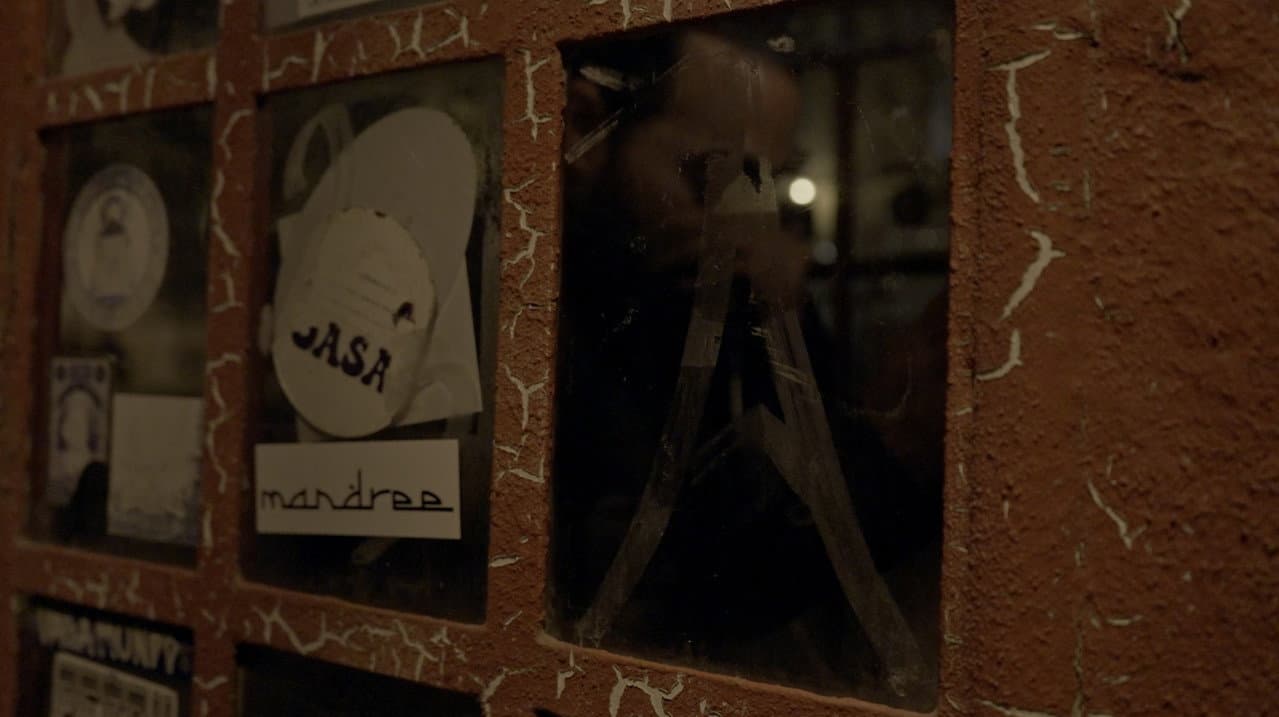
Vermelho no Cinzento opens on a man who has lost something most of us spend our lives trying to lose — fear. Pedro wakes up one morning with a nosebleed, the third that week, and a strange new absence where his anxiety used to live. The tagline puts it plainly: "The nosebleeds were only the beginning." What follows isn't a thriller in any conventional sense. Pedro doesn't become a superhero or a criminal. He just... leaves. His room, his job, the careful architecture of a life built to manage something that no longer needs managing. He ends up in a bar, standing still for what might be the first time in years, listening to a song he's never heard before. That moment of listening — after a lifetime of running — is the film's quiet center of gravity.
How Vermelho no Cinzento came together as a production
Vermelho no Cinzento is a 2026 production from Escola Artística António Arroio, a Lisbon-based arts school with a long tradition of producing technically rigorous student and emerging-filmmaker work. That institutional context matters more than it might seem. António Arroio isn't a film school in the Hollywood-pipeline sense — it trains students across visual arts, design, and audiovisual disciplines, and the productions that come out of it tend to carry a particular aesthetic seriousness that larger commercial productions sometimes sand away. This film feels like exactly that kind of project: made with intention rather than budget.
Detailed production credits — director, lead cast, cinematographer — haven't surfaced in major English-language trade coverage at the time of writing. Hard to say if that's a deliberate low-profile strategy or simply the reality of a regional Portuguese production that hasn't yet broken into the international press cycle. What's notable is that, as Movie OTT tracks across its streaming database, titles from smaller national cinema traditions often arrive on major platforms before they get the critical infrastructure they deserve in English-speaking markets. Vermelho no Cinzento appears to be one of those cases.
No box office figures are publicly available, which is consistent with a film of this origin — António Arroio productions typically don't pursue wide theatrical runs. There's no MPAA rating on record, no Metascore, and the IMDb page currently sits without user ratings, reflecting how early this title is in its public life. Awards recognition, if any has been pursued on the Portuguese festival circuit, hasn't been reported in accessible sources. That's not a knock — it's just where things stand right now.
Why Vermelho no Cinzento works as a piece of quiet cinema
What's striking is how the film resists the obvious move at every turn. A story about a man who loses his fear could so easily become a genre exercise — thriller, dark comedy, allegory with a capital A. Vermelho no Cinzento doesn't want any of that. It's interested in something smaller and harder to film: the texture of a life that's been organized entirely around avoidance, and what happens to that structure when the thing being avoided disappears.
The nosebleeds are doing real work here. They're not metaphorical in a heavy-handed way — they're just wrong, bodily, unexplained, and that wrongness rhymes with Pedro's internal state in a way that feels earned rather than designed. There's a scene in the bar, when the unfamiliar song stops him mid-step, that lands with the kind of quiet force that stays with you. Not because anything dramatic happens. Because nothing does. He just stands there and listens. For a character who's been in motion his whole life, standing still is the most radical thing the film can offer.
The craft here — at least as far as the film's construction can be assessed — seems to lean on restraint as its primary tool. No score swelling to tell you how to feel, no expository dialogue explaining Pedro's backstory. This is the kind of filmmaking that trusts its audience, which is either a virtue or a provocation depending on your patience. Honestly, it's probably both. Movie OTT editors flagged this title precisely because it represents a strand of 2026 international cinema that's easy to overlook and harder to forget once you've found it.
Where to stream Vermelho no Cinzento online
Vermelho no Cinzento is currently available on major OTT services, which means most viewers should be able to find it without much friction regardless of their existing subscriptions. The Where-to-Watch widget at the top of this page has the full, up-to-date platform breakdown — worth checking before you sign up for anything new, since availability can shift. As a general note, Movie OTT tracks current streaming availability across major platforms in real time, so if something changes after publication, the widget will reflect it before this text does. For a film this quietly made, finding it on a platform you already use is probably the best-case scenario — no hunting required. Just press play.
Frequently asked questions
Q: Where can I watch Vermelho no Cinzento?
Vermelho no Cinzento is currently streaming on major OTT services. Check the Where-to-Watch widget at the top of this page for the most current platform list, as availability can change. Movie OTT updates streaming data regularly to keep that information accurate.
Q: Who made Vermelho no Cinzento?
The film is a 2026 production from Escola Artística António Arroio, a respected Lisbon arts institution. Specific director and cast credits haven't been confirmed in major English-language sources at the time of writing, which is common for emerging Portuguese productions before wider international coverage picks up.
Q: Is Vermelho no Cinzento in Portuguese?
The title is Portuguese — it translates roughly to "Red in the Grey" — and the film is a Portuguese production, so yes, expect the original language to be Portuguese. Check your streaming platform's subtitle and dubbing options before watching.
Q: What does the tagline "The nosebleeds were only the beginning" mean for the story?
The nosebleeds are the physical symptom that opens the film and signals something has shifted in Pedro's life. The tagline suggests they're a threshold rather than the point — the real story is what Pedro does once that change has already happened, not the change itself.
Q: Is Vermelho no Cinzento based on a true story?
There's no indication that the film is based on real events. It appears to be an original narrative, though the emotional specificity of Pedro's situation — the exhaustion of a life spent in flight — gives it the kind of grounded feeling that sometimes makes fictional stories feel autobiographical.
Who should watch Vermelho no Cinzento
Vermelho no Cinzento is for viewers who don't need a film to explain itself. If you've got patience for slow-burn international cinema — the kind that prioritizes atmosphere over plot mechanics — this one will reward you. It's not a comfortable watch, exactly, but it's not punishing either. Think of it as a film about a very specific kind of exhaustion that most people will recognize even if they can't name it. Fans of quiet European drama, or anyone who's ever wondered what they'd do if the thing they'd been running from simply stopped mattering — this is worth ninety minutes of your time. Movie OTT recommends it for a late-night solo watch, no distractions.