The story of Victim: When justice becomes a weapon
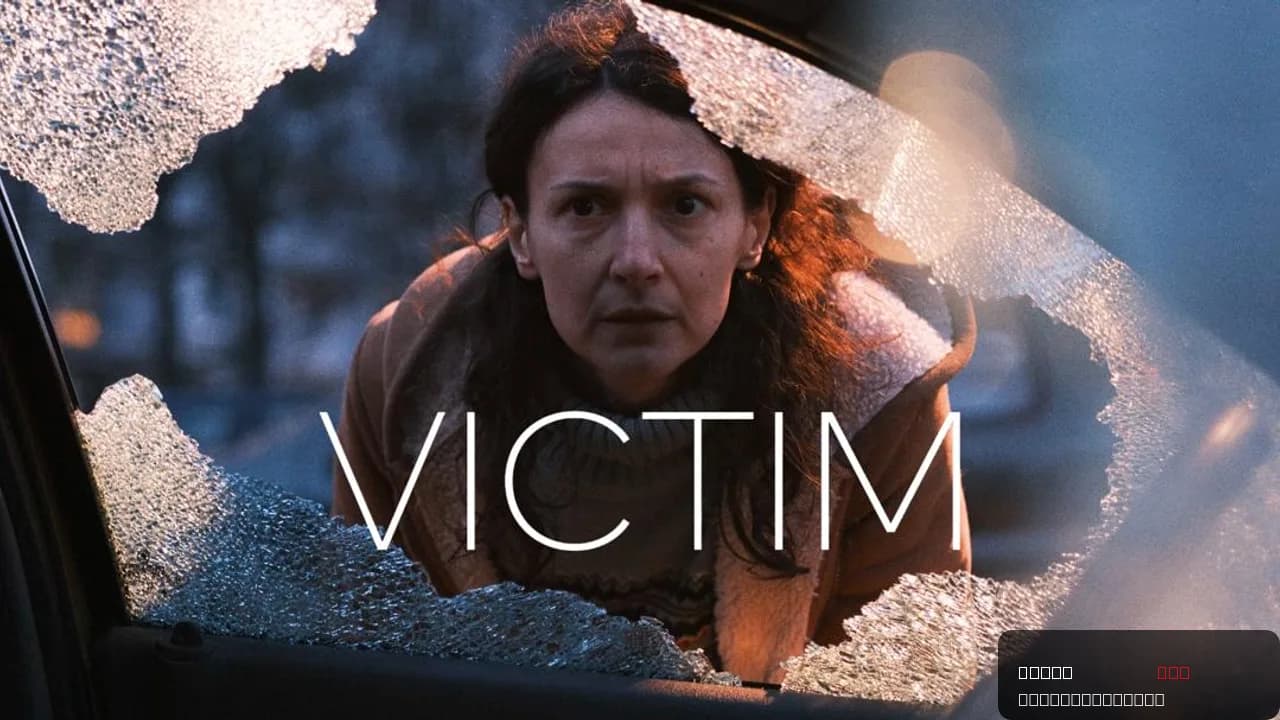
When the son of Ukrainian immigrant Irina (Vita Smachelyuk) is attacked in what appears to be a brutal assault, the response is swift and unforgiving. The entire city mobilizes around her family—solidarity, outrage, a collective demand for answers. But there's a problem: everyone already knows who did it. Or so they think. The Roma neighbors are quickly cast as the perpetrators, and the machinery of accusation grinds forward with the weight of popular opinion behind it. What begins as a straightforward crime story transforms into something far more unsettling. As Irina digs deeper, searching for actual justice rather than convenient scapegoats, the narrative fractures. Different truths start to emerge—contradictions, inconsistencies, the kind of details that don't fit the story the city has already decided to believe. This is where Victim (2022), directed by Michal Blaško, plants itself: in that uncomfortable space between what we assume and what's actually true, between solidarity and prejudice, between the desire to protect our own and the willingness to destroy others to do it.
Behind the making of Victim: A European co-production with festival pedigree
Victim is a collaboration between Slovakia, Czech Republic, and Germany—three nations with their own complex histories of ethnic tension and minority relations, which gives the film's subject matter particular weight. Directed by Michal Blaško and written by Jakub Medvecký, the film premiered at the Horizons section of the 79th Venice Film Festival in 2022, a prestigious platform that signals both artistic ambition and a willingness to tackle difficult social themes. The selection itself was significant: Slovakia subsequently chose Victim as its official entry for Best International Feature Film at the 95th Academy Awards, a recognition that placed the film in conversation with the year's most acclaimed international cinema.
The cast is anchored by Vita Smachelyuk in the role of Irina, with supporting performances from Gleb Kuchuk, Igor Chmela, Viktor Zavadil, Inna Zhulina, Alena Mihulová, and Veronika Weinhold. The ensemble work carries the film's emotional weight across its tight 91-minute runtime. At the Sun in a Net Awards—a significant regional honor—Victim took home two major prizes, including Best Film and Best Director, cementing Blaško's reputation as a filmmaker unafraid to examine society's uglier impulses. While the film didn't achieve mainstream box-office dominance, its festival run and awards recognition established it as a serious work of cinema—the kind of title that Movie OTT tracks for viewers interested in challenging international drama.
What makes Victim stand out: The performances and the moral ambiguity
The real power of Victim lies not in plot twists but in how it refuses to let anyone—including the audience—off the hook. Smachelyuk's performance as Irina is the film's emotional center, and what's striking is how she plays the character's desperation without making her sympathetic in the conventional sense. She's a mother protecting her son, yes. But she's also complicit in the very prejudices she'll later have to confront. The film doesn't let her (or us) have the comfort of moral clarity. That's rare in cinema, especially in social-issue dramas that often want us to pick a side and stay there.
The supporting cast does crucial work in building the texture of a community that's not evil so much as reflexively tribal. When neighbors turn on neighbors, when professional investigators get caught up in the current of public opinion, when evidence gets bent to fit the narrative—these aren't cartoon villains doing cartoon things. They're people we recognize. The thing nobody mentions is that this makes the film harder to watch, not easier. We can't distance ourselves from the ugliness on screen because we see ourselves in it. The cinematography is deliberately unglamorous; there's no visual poetry to soften what we're witnessing. Just a woman searching for truth in a place that's decided it already has the answer.
What I keep coming back to is the film's refusal to offer catharsis. Even when truths emerge, even when assumptions crumble, the damage doesn't simply reverse. People don't apologize and move on. Relationships that were fractured don't spontaneously heal. This is what elevates Victim beyond a simple courtroom procedural or crime drama. It's interested in the architecture of prejudice—how quickly it builds, how deeply it roots, how much harder it is to dismantle than to construct. The IMDb rating of 5.3/10 likely reflects viewers who wanted something more straightforward, more reassuring. But that's partly the point.
Where to stream Victim online: Current availability
Victim is currently available on Prime Video, where you can stream it on demand. The film's availability may vary by region, so checking the Where to Watch widget at the top of this page will show you the most current streaming options in your location. Movie OTT maintains real-time updates across all major platforms, so if Victim moves to another service or becomes available through additional channels, you'll find that information reflected here. At 91 minutes, it's a film that doesn't demand a huge time commitment, but it does demand your attention—the kind of title worth carving out an evening for rather than half-watching while scrolling your phone.
Frequently asked questions
Q: Who directed Victim and where did it premiere?
Michal Blaško directed Victim, which premiered at the Horizons section of the 79th Venice Film Festival in 2022. The film went on to win Best Film and Best Director at the Sun in a Net Awards.
Q: Was Victim selected for the Academy Awards?
Yes. Slovakia selected Victim as its official entry for Best International Feature Film at the 95th Academy Awards, a significant honor that reflects the film's artistic weight and thematic importance.
Q: What is Victim about?
Victim follows a Ukrainian immigrant mother named Irina whose son is attacked. When the city quickly blames Roma neighbors, she begins searching for the actual truth—only to discover that justice and prejudice are far more entangled than anyone wants to admit.
Q: Where can I watch Victim?
Victim is currently streaming on Prime Video. Check the Where to Watch widget on this page for the most up-to-date availability in your region.
Q: Is Victim based on a true story?
While Victim isn't adapted from a specific documented case, it's rooted in the very real dynamics of ethnic prejudice and mob justice that occur across Europe. The film draws on recognizable social patterns rather than a single historical event.
Final thoughts on Victim: A film for viewers who want to be challenged
Victim isn't a comfortable watch, and it's not designed to be. It's a film for people who can sit with moral ambiguity, who understand that real justice is messier than headlines suggest, and who recognize that prejudice isn't always the product of conscious malice—sometimes it's just what everyone assumes, what everyone believes, what's easiest to accept. Blaško has made something rare: a social-issue film that doesn't preach or simplify. If you're looking for cinema that trusts its audience to draw their own conclusions, that examines the gap between what we think is true and what actually is—this is worth your time. It's the kind of film that stays with you long after the credits roll, not because it's entertaining, but because it's honest.