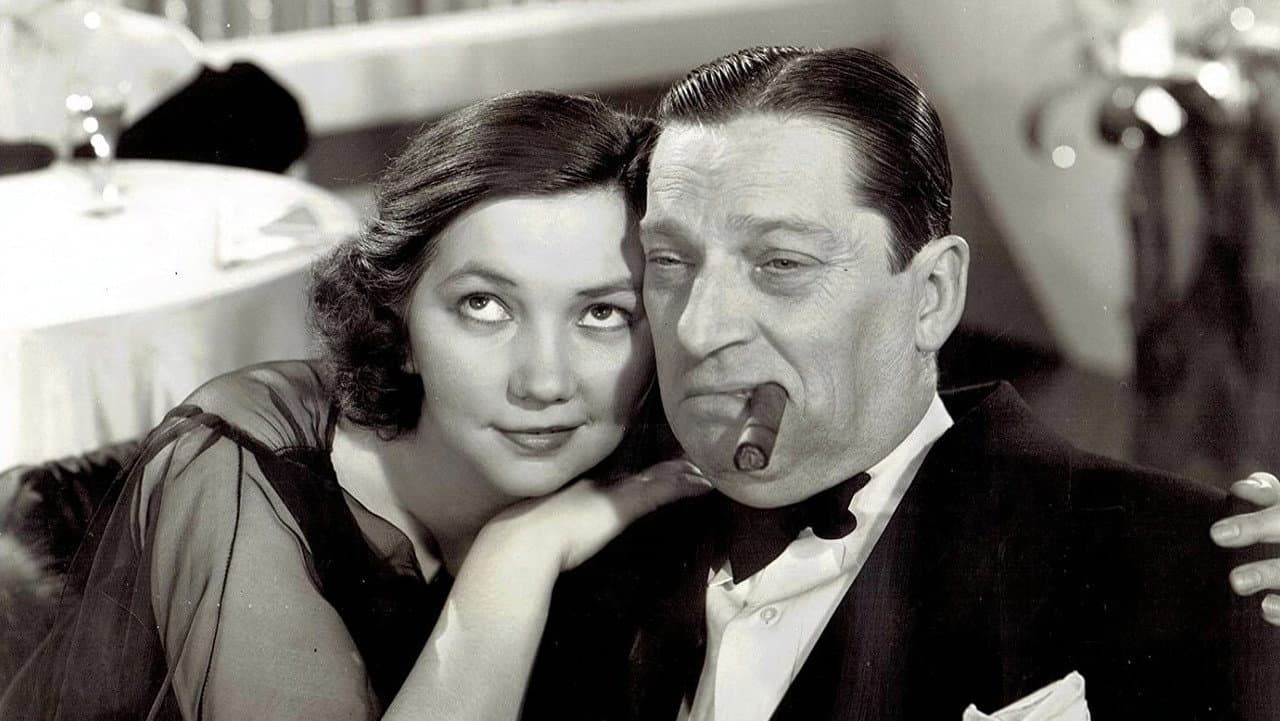
The Story of Wake Up and Live
Wake Up and Live opens on a premise that's equal parts gossip column and practical joke. The film orbits around Eddie Kane (Jack Haley), an ordinary guy who gets dragged into the orbit of bandleader Ben Bernie's world—courtesy of a scheme cooked up by Alice (Alice Faye), who sees an opportunity to make Eddie a singer whether he's ready or not. What unfolds is a quick-paced romp through 1930s radio culture, where the line between real antagonism and manufactured drama blurs entirely. The whole thing hinges on the supposed feud between Bernie and the famous gossip columnist Walter Winchell, a rivalry that—according to legend—was the stuff of industry lore. But does the movie buy into that myth, or does it gently deflate it? That's where the satire bites.
At its heart, this isn't a film that takes itself seriously. It's a vehicle designed to poke fun at radio's outsized personalities and the way feuds—real or invented—could sell newspapers and drive ratings. Eddie Kane becomes the unwitting pawn in a game between bigger egos, and the chaos that follows is meant to be funny, not earnest.
Behind the Making of Wake Up and Live
Wake Up and Live arrived in 1937 from 20th Century Fox, a studio that understood how to package entertainment for mass audiences. The film runs 91 minutes and sits comfortably in the musical genre—a natural fit for a story built around radio and bandleaders. Jack Haley, best known for his role as the Tin Man in The Wizard of Oz (released the same year), carries the film as Eddie Kane, while Alice Faye rounds out the cast as Alice, the woman who sets the whole plot in motion. Faye was already a rising star in Fox's stable, and her pairing with Haley gives the film a reliable comedic chemistry.
The production itself was a straightforward studio operation—Fox knew how to make these pictures efficiently. The cast pedigree mattered: Haley and Faye were bankable names, and the supporting ensemble brought credibility to the radio-world setting. While the film didn't become a legendary box-office smash, it performed respectably for its era, finding an audience curious about the behind-the-scenes world of radio broadcasting, which was still relatively novel to moviegoers. The picture sits at a 6.2 rating on IMDb, which suggests audiences found it entertaining enough—a solid mid-tier entertainment that didn't pretend to be anything more profound than a good time.
What Makes Wake Up and Live Stand Out
What's striking about Wake Up and Live is how it weaponizes satire without ever turning mean-spirited. The film takes the Walter Winchell–Ben Bernie feud—a real thing in the gossip columns of the 1930s—and uses it as scaffolding for comedy rather than as a genuine conflict to be resolved. Instead of asking "Is the feud real?", the movie seems to be asking "Does it even matter?" That's a surprisingly modern sensibility for 1937.
The performances work because nobody's trying too hard. Jack Haley brings a kind of befuddled sincerity to Eddie Kane—he's the everyman thrust into a world of outsized personalities, and his confusion feels genuine rather than played for broad laughs. Alice Faye, meanwhile, gets to be the schemer, the one who actually understands how the game works, and there's a mischievous energy in her scenes that drives the plot forward. The pacing is brisk; the film doesn't linger on sentiment or slow down for dramatic beats. It keeps moving, which is exactly what a satire about radio—a medium built on constant chatter and momentum—should do.
I keep coming back to the fact that this picture doesn't try to prove the feud is real or fake. It simply uses the premise as a springboard. That's the satire at work—not a frontal assault on radio culture, but a gentle nudge suggesting that the whole ecosystem of personalities and rivalries is a bit absurd. The thing nobody mentions is how refreshing that restraint feels. The film trusts the audience to get the joke without spelling it out.
Where to Stream Wake Up and Live Online
Wake Up and Live is available on major OTT services, and finding it is easier than ever thanks to streaming aggregators like Movie OTT, which tracks current availability across platforms in real time. Rather than hunting through multiple services yourself, you can check the "Where to Watch" widget at the top of this page to see exactly which platform has it available right now—availability shifts frequently, and Movie OTT keeps that information updated so you don't waste time searching. If you're a classic Hollywood enthusiast, it's worth adding to your watchlist the moment you spot it on your preferred service.
Frequently asked questions
Q: Is Wake Up and Live based on a true story?
Not exactly. While the Walter Winchell–Ben Bernie feud was real—they did have a genuine rivalry in the 1930s—the film uses this as a satirical framework rather than a strict historical account. The plot about Eddie Kane is entirely fictional, though it's anchored in the real personalities and the real gossip-column culture of the era.
Q: Who directed Wake Up and Live?
The film was directed by Sidney Lanfield, a studio director who worked regularly for 20th Century Fox during this period. Lanfield was skilled at keeping comedies moving at a snappy pace, which is exactly what Wake Up and Live needed.
Q: What's the runtime, and is it worth watching if I'm not into 1930s comedies?
Wake Up and Live runs 91 minutes—short enough that it won't demand a huge commitment. If you enjoy satire, radio history, or just solid entertainment from Hollywood's golden age, it's worth a try. The humor holds up better than you'd expect for an 80-plus-year-old film.
Q: Where can I watch Wake Up and Live right now?
Check the "Where to Watch" widget at the top of this page for current streaming availability. Movie OTT updates this information regularly so you'll know exactly which service has it available today.
Q: Is there any musical content in the film?
Yes—the film is classified as a musical, and there are performances woven throughout. Given the radio-world setting and the presence of bandleader Ben Bernie, musical numbers fit naturally into the story rather than feeling like interruptions.
Final Thoughts on Wake Up and Live
Wake Up and Live isn't a masterpiece, but it's a genuinely entertaining artifact of 1930s Hollywood—the kind of picture that reminds you why people went to the movies in that era. It's light, it moves fast, and it understands its own absurdity. If you're curious about how Hollywood satirized its own world during the golden age, or if you just want 91 minutes of Jack Haley and Alice Faye doing their thing, this one delivers. Don't expect profound social commentary. Just expect a good time.