

Wham! 10 Days in China: The First Western Pop Act Behind the Iron Curtain
The basics: Documentary | 90 minutes | 2026 release | Directed by Mike Christie | Available on major streaming platforms — check Movie OTT for your region's current listings.
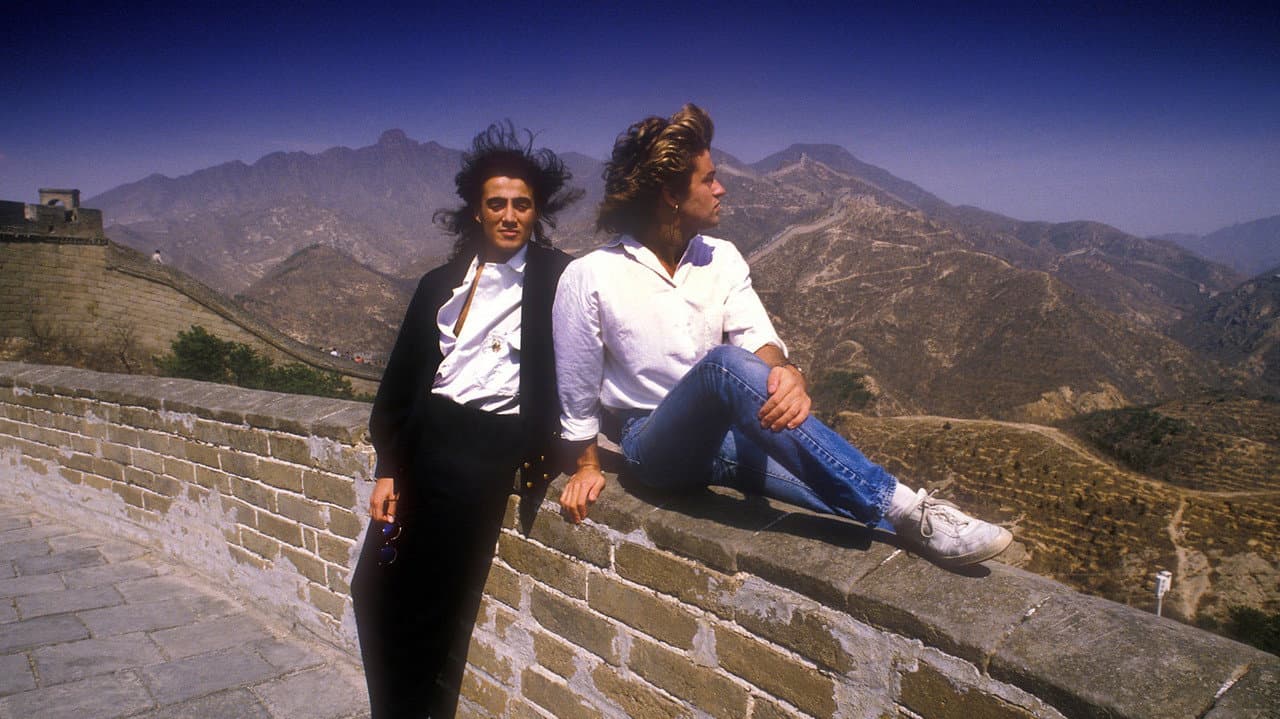
In April 1985, George Michael and Andrew Ridgeley did something nobody else had attempted: they flew a full Western pop touring operation into communist China and performed concerts in Beijing and Guangzhou. No Western pop act had ever done it before. The story is stranger than the legend suggests — it's not just about two British musicians in pastel blazers. It's about two 22-year-olds walking into a country where their music didn't exist yet, where the audiences had no frame of reference for what they were about to see, and where every moment carried geopolitical weight that neither of them fully understood at the time.
The newly restored footage from that 1985 tour sat largely unseen for decades. Now, director Mike Christie has excavated it — alongside interviews with Andrew Ridgeley, crew members who were actually on the ground, and Chinese fans who still remember exactly where they were sitting — and assembled something that feels less like nostalgia and more like archaeology. This is what happened. Here's why it mattered.
Why 1985 China mattered — and why the restored footage changes the story
You have to understand the context. In 1985, China wasn't the global music marketplace it is today. Young people in Beijing and Guangzhou had access to maybe two or three Western records, if they were lucky. A Walkman was a luxury. MTV? Forget it. So when Wham! arrived with a full lighting rig, backing tracks, and a setlist about nightclubs and romance — this was genuinely disorienting for audiences who'd grown up on state radio and propaganda music.
The thing that strikes me watching the restored concert footage is the moment you can see the crowd shift. In the Beijing show, the first few songs are polite, almost ceremonial. People sit. They applaud on cue. Then something breaks. The music lands differently. You watch the audience stop performing politeness and start actually moving — and that transition, captured on film forty years ago, is the whole documentary in miniature.
Variety reported that the archival material underwent professional restoration for this production, which matters more than you'd think. Early '80s concert footage shot on 16mm or early video formats doesn't usually look this clean. You can see faces in the crowd now. You can read the expressions.
Andrew Ridgeley's voice — why the quieter half of Wham! is the film's anchor
Ridgeley has stayed largely out of the spotlight since Wham! split in 1986. George Michael became a global solo superstar; Ridgeley stepped back. That asymmetry — the two friends on different trajectories — is exactly what makes his perspective on those ten days so valuable. He's not playing a role. He's reflecting.
In his interview segments, Ridgeley talks about the friendship, the shared ambition, and the surreal moment when the touring party realized, somewhere over Central Asia, that they had no idea what awaited them. Hard to say whether a George Michael estate representative could've provided that same reflective distance. Ridgeley can. He was there. He remembers the uncertainty.
What's interesting is how the film avoids turning George Michael into a saint. He died in 2016, and there's an obvious pull toward hagiography in any posthumous documentary about him — but Christie seems aware of that trap. The China footage shows a young performer working out in real time what it meant to perform for an audience with zero cultural reference point. That's not a polished icon. That's a kid figuring it out live.
The production: Who made this, and why it matters that the BBC was involved
This is a co-production between Sony Music Vision, Sony Music Entertainment UK, Supercollider (part of the Zinc Media Group), BBC Two, and BBC Music — distributed theatrically by Trafalgar Releasing, the same company behind Rolling Stones and André Rieu concert films. That's not a casual lineup. These are organizations that know how to handle music archive material and how to reach both casual viewers and devoted fans.
Director Mike Christie has a background in music documentaries, and his pacing here is restrained in a way that matters. He doesn't chop the archive footage into quick-cut montages. He lets sequences breathe. The interviews with crew members and Chinese fans who attended the concerts add texture — these people are now in their fifties and sixties, and they're talking about a moment that changed their relationship to Western culture.
The restored concert footage is genuinely one of the film's strongest elements. It's the kind of archival work that elevates a documentary from "interesting" to "worth your time." Check Movie OTT's streaming guide for theatrical availability in your area — Trafalgar's distribution suggests a limited cinema run will likely precede the streaming release.
What this documentary does differently — and who should actually watch it
Most music documentaries follow a template: archive footage + talking heads + a narrative arc that's been polished by decades of retrospective storytelling. This one doesn't quite work that way. Because the story isn't settled. The people telling it are still processing it.
If you grew up with Wham!, the restored concert footage alone justifies the 90-minute runtime. But even if you don't know "Wake Me Up Before You Go-Go" from a hole in the ground, there's something here — a story about cultural collision, about two young musicians operating at the edge of what was politically possible, about an audience discovering something they didn't know they wanted.
The film works best for music fans first, history enthusiasts second. It doesn't have the crossover appeal of something like "Get Back" — that's not what it's trying to do. It knows exactly what it is: a specific story, told well, for people who care about that specificity. That's fine. That's actually better than trying to be everything.
Where to watch — and when to expect it
Wham! 10 Days in China arrives in 2026 with theatrical distribution through Trafalgar Releasing, which means a limited cinema run will likely come first. Streaming availability typically follows within a few weeks of the theatrical window closing.
Because of the BBC Two co-production, UK audiences should expect an iPlayer broadcast window at some point — though nothing's been formally announced yet. For everyone else, the film will land on major OTT services. Movie OTT tracks real-time streaming availability across platforms, so if it's not live on your preferred service yet, check back in the coming weeks. These windows move fast, especially with music documentaries.
Want to know the runtime? 90 minutes — tight enough that it doesn't overstay its welcome, long enough to tell the story properly.
Is it family-friendly? Yes. It's a music documentary, not a biographical scandal piece. There's nothing here that would concern parents.
Can you watch it without knowing Wham!'s music? Absolutely. The story stands on its own. The restored footage is the story.