The story of What Dreams May Come and its haunting premise
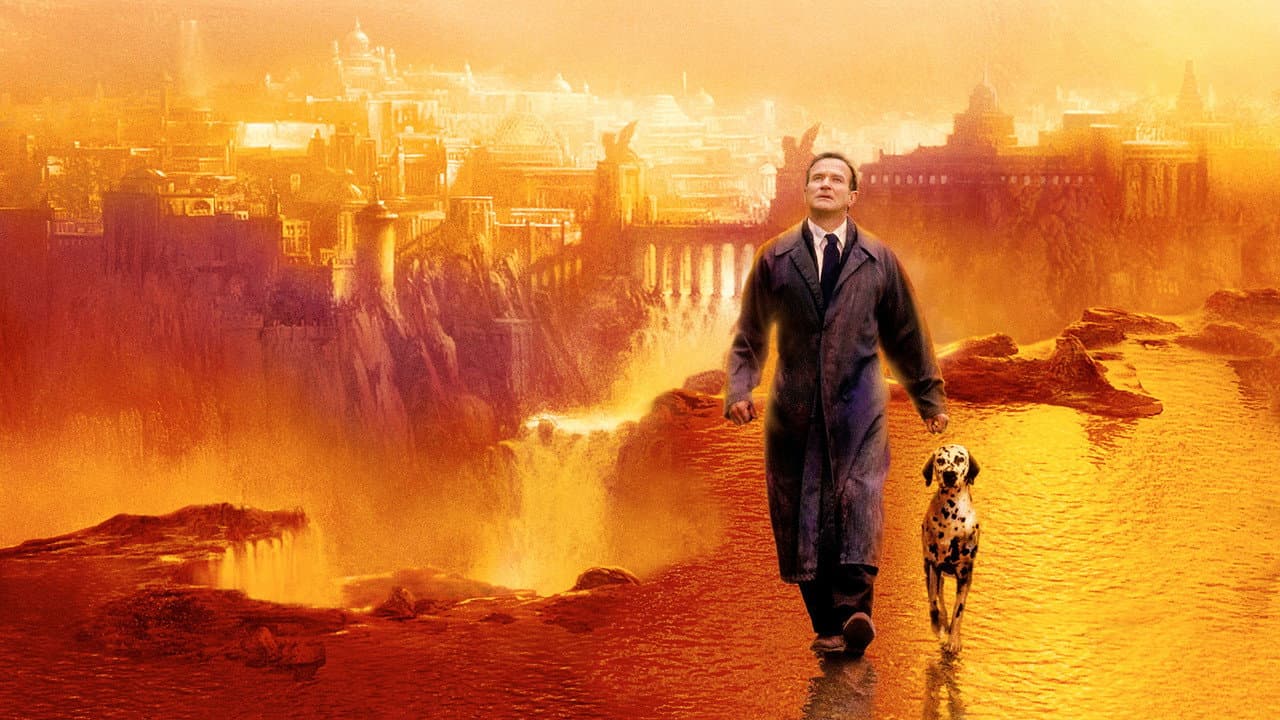
What Dreams May Come opens with a deceptive simplicity: a man dies and wakes up in paradise. That man is Chris Nielsen, played by Robin Williams, and the paradise he inhabits is so visually overwhelming that it almost breaks the screen—rolling landscapes painted in impossible colors, architecture that defies physics, a world that feels less like heaven and more like a fever dream of beauty. But there's a catch, and it's a devastating one. His wife Annie, played by Annabella Sciorra, didn't make it to this place of light. After Chris died in a car accident, Annie took her own life in grief, and suicide sent her to an entirely different afterlife: hell. What follows isn't a typical religious narrative but something far stranger—a love story so determined that it's willing to gamble eternity itself on the possibility of redemption.
Behind the making of What Dreams May Come and its visual legacy
Directed by Vincent Ward and adapted by Ronald Bass from Richard Matheson's 1978 novel (which itself draws its title from Hamlet's "To be, or not to be" soliloquy), What Dreams May Come arrived in October 1998 as one of the most visually ambitious films of that year. The production design and visual effects were genuinely groundbreaking—the film earned the Academy Award for Best Visual Effects and took home the Art Directors Guild Award for Excellence in Production Design, with a nomination for Best Art Direction to boot. The budget was substantial: somewhere between $85 and $90 million, which was considerable even for 1998. Yet despite this investment and critical recognition for its technical achievements, the film barely recouped its costs at the box office, grossing just $75.4 million worldwide. It was, by Hollywood math, a commercial failure. The cast—Williams, Sciorra, and Cuba Gooding Jr. in a supporting role—brought dramatic weight to what could have been a purely visual exercise, though mixed reviews at the time suggested audiences weren't sure what to make of the film's tonal ambitions. Movie OTT tracks where this film has found its second life in the streaming era, and it's worth noting that critical reassessment often takes time.
What makes What Dreams May Come stand out despite its troubled reception
Here's the thing about What Dreams May Come that critics at the time couldn't quite pin down: it's a film that doesn't fit neatly into any category. Is it a love story? A theological meditation? A visual art installation that happens to have dialogue? The answer is yes to all of them, which is probably why it confused audiences in 1998 and continues to provoke strong reactions today. What's striking is how the film uses Williams' particular gifts—his ability to shift between vulnerability and whimsy, his capacity to make you believe in impossible things—without asking him to be funny. He's genuinely mournful here, desperate in a way that feels earned rather than performative. The cinematography by Stephen Burum paints each realm in radically different palettes: the afterlife heaven is almost too beautiful, rendered in warm golds and impossible greens, while hell is a landscape of the damned rendered in grays and blacks and the kind of visual despair that makes you understand why Annie might have ended up there. Some viewers find the film's visual excess overwhelming, even off-putting—the beauty can feel saccharine if you're not in the right headspace. But others, including those who've rewatched it through the lens of Williams' own struggles later in life, see something more complicated: a film about the weight of love, about the lengths we'll go to save those we can't bear to lose, about whether any paradise is worth having if the person you love isn't in it.
Where to stream What Dreams May Come online
What Dreams May Come is available on major OTT streaming services, and the best way to check current availability is through the "Where to Watch" widget at the top of this page—streaming catalogs shift monthly, and that widget updates in real time so you don't end up hunting for a title that's just rotated off a platform. If you're browsing Movie OTT, you'll find the film listed with all its current homes, so you can jump straight to whichever service you already subscribe to. The film's visual design is genuinely meant for a larger screen, so if you're able to watch it on a TV rather than a phone, you'll get more out of the experience—these painted worlds deserve real estate.
Frequently asked questions
Q: Is What Dreams May Come based on a true story?
No, it's adapted from Richard Matheson's 1978 novel of the same name. While it explores universal themes about love and loss, the story itself is entirely fictional, though it touches on real questions about grief and how far we'd go for those we love.
Q: Who directed What Dreams May Come?
Vincent Ward directed the film, bringing his distinctive visual style to the material. Ward is known for ambitious, visually striking work, and What Dreams May Come is perhaps his most elaborate canvas.
Q: Did What Dreams May Come win any major awards?
Yes—it won the Academy Award for Best Visual Effects and the Art Directors Guild Award for Excellence in Production Design. It was also nominated for the Academy Award for Best Art Direction, cementing its legacy as a technical achievement even if audiences didn't embrace it commercially.
Q: What's the runtime of What Dreams May Come?
The film runs 113 minutes, which gives it enough breathing room to build its world and let scenes breathe rather than rushing through the narrative.
Q: Why was What Dreams May Come a box-office disappointment?
Despite critical praise for its visuals, the film only grossed $75.4 million against a budget of $85–90 million, making it a commercial flop. Mixed reviews and uncertainty about its genre likely kept audiences away, though it's found a devoted following since its release.
Final thoughts on What Dreams May Come
What Dreams May Come is a film that rewards patience and surrender—you have to let it wash over you rather than resist it. It's not perfect; the plot can feel thin, and there are moments where the visual spectacle threatens to overwhelm the emotional core. But there's something genuinely moving beneath all that beauty, something about devotion and loss that feels more honest now than it did in 1998. If you're in the mood for something that looks like nothing else, that swings for the fences even if it doesn't always connect, it's worth your time. Just don't expect a conventional afterlife story.