






The story of When the Bough Breaks and its dark conspiracy
When the Bough Breaks opens with a Los Angeles psychiatrist testifying for the prosecution in a child molestation trial—a case that'll haunt him long after the verdict. The defendant, released on bail, turns up dead in the psychiatrist's office, staged as a suicide. Shaken and doubting his own judgment, he retreats to the mountains outside the city, hoping to escape the weight of it all. But escape isn't coming. A detective colleague arrives asking for help with a seven-year-old girl who witnessed her parents' murder. The child's so traumatized she can't remember anything—not faces, not details, nothing that could lead them to the killer. What begins as a straightforward case of recovered memory work spirals into something far more sinister: the psychiatrist and detective realize the child's parents' murder and the pedophile's death aren't coincidences. They're connected to a network of wealthy, influential men—a hidden ring operating in plain sight. And the girl isn't the only one in danger.
Behind the making of When the Bough Breaks and its source material
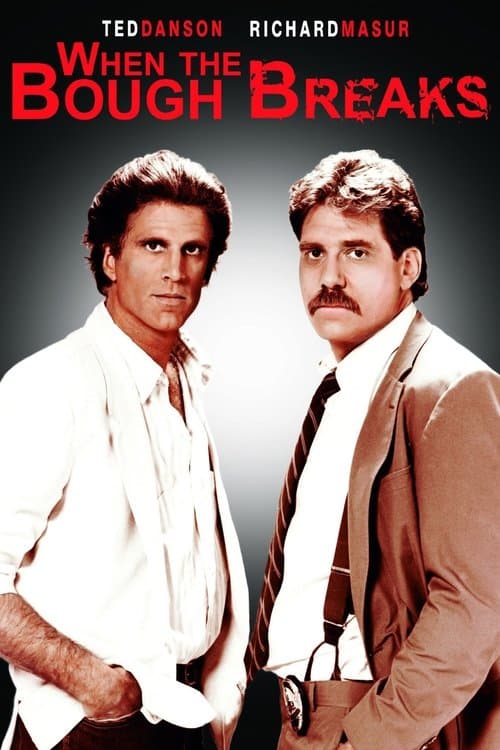
When the Bough Breaks is adapted from Jonathan Kellerman's 1985 novel of the same name, which introduced readers to Alex Delaware, a forensic psychologist who'd become the centerpiece of Kellerman's long-running crime series. Director Waris Hussein brought the book to television in 1986, with screenwriter Phil Penningroth handling the adaptation. Ted Danson—already known for his comedic chops on Cheers, which debuted that same year—took on the role of Delaware and also served as a co-producer, giving him creative stake in the project. The film was produced by TDF Productions and Taft Entertainment Television, positioning it as a serious dramatic venture rather than a quick cash-in. Danson's dual role as star and producer signaled genuine commitment to Kellerman's material. The 100-minute runtime gives the story room to breathe, avoiding the rushed pacing that often plagued TV movies of the era. While it didn't become a theatrical juggernaut, the film found its audience on television and has maintained a solid IMDb rating of 6.4/10, reflecting viewers who appreciate its genre blend of crime, drama, and psychological thriller elements.
What makes When the Bough Breaks stand out as a crime-thriller
What's striking about When the Bough Breaks is how it refuses to treat child trauma as background noise. The girl at the center of the investigation isn't a plot device—she's the emotional core, and the film takes her fractured memory seriously, exploring how trauma locks away crucial information in a child's mind. Danson brings a quiet intensity to Delaware, playing him as someone grappling with professional doubt and moral responsibility in equal measure. There's no swagger here, no detective-show grandstanding. Instead, you get a man methodically piecing together a conspiracy while genuinely concerned about whether he's helping or harming the child in his care. The conspiracy itself—wealthy pedophiles operating with impunity—was a bold subject for 1986 television, touching on institutional corruption and class privilege in ways that didn't shy away from ugliness. The film's pacing works because it doesn't rush the revelations. Each scene builds dread rather than cheap thrills. Danson's performance anchors everything; he's vulnerable without being weak, determined without being reckless. The supporting cast brings credibility to a narrative that could've easily tipped into exploitation or melodrama, but instead stays grounded in the psychology of its premise.
Where to stream When the Bough Breaks online
When the Bough Breaks is currently available on major OTT services, and you can check the streaming widget at the top of this page to see exactly which platforms are carrying it right now. Availability shifts seasonally across different services, so Movie OTT tracks current listings to save you the hunt—just look at the widget to find where it's streaming today. Since it's a 1986 TV movie rather than a theatrical release, it's found a steady home on various platforms over the years. If you're hunting for Kellerman adaptations or Ted Danson's dramatic work beyond Cheers, this is a solid find worth checking your subscriptions for.
Frequently asked questions
Q: Is When the Bough Breaks based on a true story?
No, it's not based on a true story, but it's adapted from Jonathan Kellerman's 1985 novel of the same name. Kellerman drew on his background as a clinical psychologist to create believable crime narratives, and the themes of institutional corruption and child trauma reflect real issues—even if the specific plot is fictional.
Q: Who directed When the Bough Breaks?
Waris Hussein directed the film. Hussein was an accomplished television director known for his work on prestige dramas, bringing serious dramatic sensibility to what could've been a standard TV thriller.
Q: Is Alex Delaware a recurring character?
Yes. Alex Delaware is the protagonist of Jonathan Kellerman's long-running novel series. When the Bough Breaks was the first adaptation, but Delaware appears in dozens of Kellerman books, making him one of crime fiction's most prolific psychologist characters.
Q: What's the runtime of When the Bough Breaks?
The film runs 100 minutes, which was a solid length for a TV movie of that era—long enough to develop character and plot without feeling padded.
Q: Does When the Bough Breaks have a happy ending?
I won't spoil it, but the film doesn't offer easy resolution. It's more interested in the psychological and moral costs of uncovering the truth than in neat, tidy closure—which is part of what makes it feel more substantial than typical 1980s TV thrillers.
Final thoughts on When the Bough Breaks
When the Bough Breaks doesn't get the same cultural attention as Kellerman's later adaptations, but it deserves a second look. It's a genuinely unsettling thriller that trusts its audience to sit with discomfort—the discomfort of watching a child's trauma, of realizing how easily powerful people evade justice, of questioning whether you're doing more harm than good in pursuit of truth. Ted Danson's willingness to play against type, stepping away from his Cheers persona into something morally complex and psychologically fragile, shows real range. If you're into crime dramas that don't rely on procedural shortcuts or flashy cinematography, this 1986 gem is worth your time.