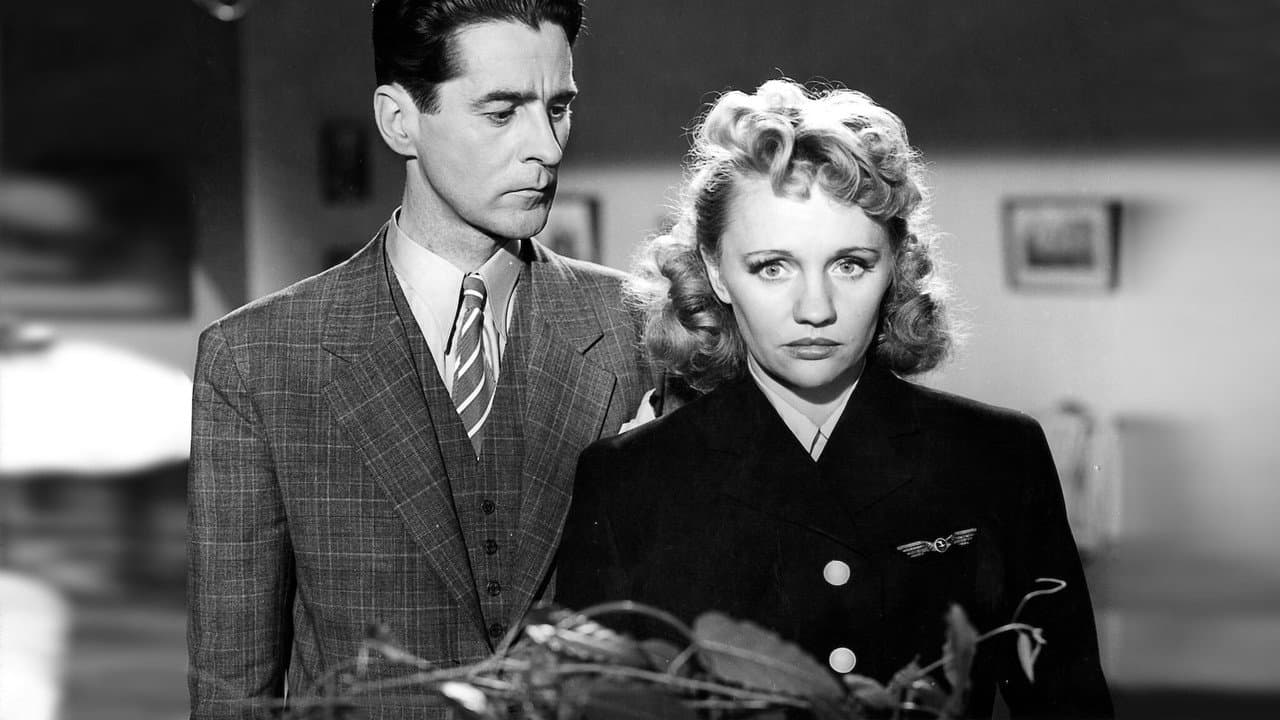
The story of While the Door Was Locked
While the Door Was Locked unfolds across a single, claustrophobic night inside an apartment building where multiple lives collide, overlap, and unravel. The film doesn't follow a single protagonist but rather weaves together the fates of several residents—each carrying their own burdens, desires, and lies. What begins as an ordinary evening transforms into something far more volatile when a locked door becomes both literal barrier and metaphor for the secrets people keep. It's a story about how proximity breeds tension, how small spaces amplify desperation, and how one night can expose truths that years of careful living have hidden away.
Behind the making of While the Door Was Locked
While the Door Was Locked arrived in 1946 as a collaboration between two significant Swedish production entities: Europa Film and Hasse Ekmanfilm. Director Hasse Ekman, a towering figure in Nordic cinema during the mid-twentieth century, brought his characteristic eye for psychological tension and ensemble storytelling to this 89-minute drama. Ekman wasn't interested in grand gestures—he worked in the register of intimate dread, the kind that builds when you trap people in rooms and let their contradictions do the talking.
The film emerged during a fascinating moment in European cinema. Sweden's film industry, insulated from the worst ravages of World War II, was experiencing a creative surge. While Hollywood was still figuring out how to process the war's aftermath, Swedish filmmakers were already experimenting with darker, more psychologically complex narratives. Ekman's production design choices—the cramped interiors, the way shadows pool in corners—reflect a distinctly Nordic sensibility: less interested in spectacle than in the claustrophobic mechanics of human behavior. The film runs 89 minutes, a lean runtime that keeps the pressure constant. There's no fat here, no subplot that doesn't twist back into the main tension. The IMDb rating of 6.417/10 suggests a film that's respected more than beloved by modern audiences, which often happens with mid-century European dramas that don't fit neatly into genre expectations.
What makes While the Door Was Locked stand out
What's striking about While the Door Was Locked is how it refuses to offer easy moral clarity. These aren't characters you can quickly sort into heroes and villains—they're complicated people making desperate choices, and Ekman trusts the audience to sit with that discomfort. The performances anchor the film in a kind of lived-in realism that can feel almost documentary-like. When someone lies in this film, you see it register in their face, in the way they hold their body. When someone's cornered, you feel the walls closing in.
The locked-door premise—which could've been a gimmick—becomes genuinely philosophical. It's not about mystery in the Agatha Christie sense (who did it?) but rather about exposure. What happens when escape becomes impossible? What truths spill out when people can't simply walk away? Ekman's direction keeps the camera moving just enough to prevent the single-location setting from feeling static, but not so much that it distracts. The film's got a real understanding of how architecture shapes behavior. A hallway becomes a stage. A doorway becomes a confession booth. I keep coming back to how economical it all is—nothing is wasted, every scene does double duty, advancing both plot and character psychology simultaneously.
For viewers discovering Nordic cinema through Movie OTT's streaming catalog, While the Door Was Locked offers a chance to see how European filmmakers were handling psychological complexity before the French New Wave arrived to get all the credit. It's a film that respects your intelligence enough to let you draw your own conclusions about who's guilty and of what.
How to watch While the Door Was Locked online
While the Door Was Locked is available across major OTT services, making it accessible to streaming audiences worldwide. Rather than hunting across multiple platforms, you can check the Where to Watch widget at the top of this page to see exactly which service carries it in your region right now. Streaming availability shifts constantly—what's on one platform today might move tomorrow—so that widget stays updated in real time. The film's 89-minute runtime makes it perfect for a weeknight viewing; you can finish it in one sitting without the commitment a longer drama requires. If you're exploring 1946 cinema or Nordic film history, adding this to your queue takes just a click.
Frequently asked questions
Q: Who directed While the Door Was Locked?
Hasse Ekman directed the film. Ekman was a major figure in Swedish cinema known for his psychological dramas and ensemble pieces. He founded Hasse Ekmanfilm, one of the production companies behind this 1946 release.
Q: How long is While the Door Was Locked?
The film runs 89 minutes, a lean runtime that keeps the tension constant throughout the night-long narrative without padding or unnecessary subplots.
Q: What year was While the Door Was Locked released?
While the Door Was Locked premiered in 1946, during a creatively fertile period for Swedish cinema in the immediate post-war years.
Q: Is While the Door Was Locked based on a true story?
The film is a fictional drama, not based on documented events. Ekman created the locked-door scenario and interconnected character entanglements as a narrative device to explore psychological tension.
Q: Where can I watch While the Door Was Locked?
The film is available on major OTT platforms. Check the Where to Watch widget above to see which service currently streams it in your location.
Final thoughts on While the Door Was Locked
While the Door Was Locked deserves rediscovery by anyone interested in how cinema handled psychological complexity before it became fashionable. It's not a film that announces itself or demands your attention through spectacle. Instead, it works quietly, methodically, trapping you in a space where human nature becomes inescapable. The locked door isn't a puzzle to solve—it's a mirror. Watch it if you appreciate ensemble dramas, if you're curious about Nordic cinema, or if you simply want to see how a master craftsman builds tension from character and confined space. It won't shout at you. But it'll stay with you.