The story of Whirlpool
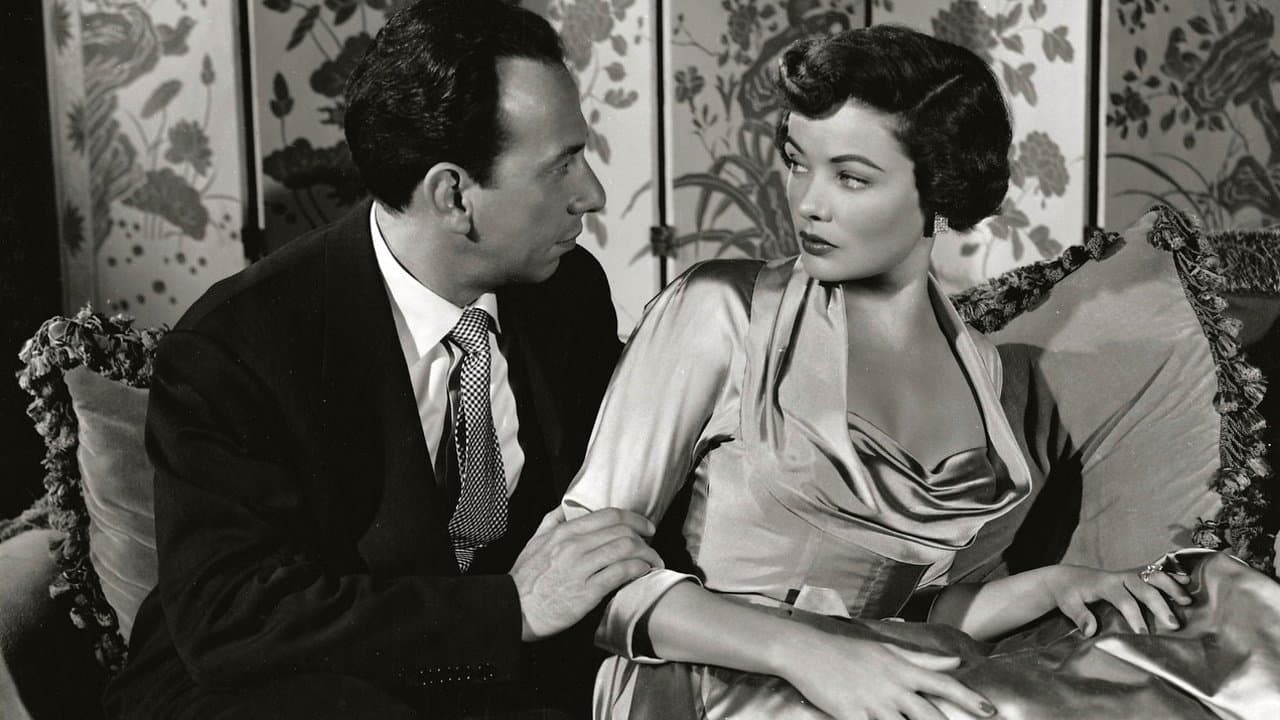
Whirlpool opens on a marriage that looks perfect from the outside—wealthy, sophisticated, built on the kind of trust that doesn't ask too many questions. But beneath the surface, Ann Sutton (Gene Tierney) carries a secret shame: she's a compulsive shoplifter. Her husband William (Richard Conte), a respected psychoanalyst, knows about her habit and is determined to understand its roots. Then she meets Korvo (José Ferrer), a mysterious and charismatic hypnotist who claims he can unlock the trauma driving her behavior. What starts as a chance encounter becomes something far more sinister when Korvo discovers her weakness and uses it against her. After one of William's patients is murdered, Ann is found at the scene—and suddenly she can't remember what happened. The evidence points only one way. Trapped between a manipulative hypnotist's influence and the law's suspicion, she must fight to prove her innocence in a world that's already made up its mind.
Behind the making of Whirlpool: Otto Preminger's vision and cast
Director Otto Preminger brought Whirlpool to 20th Century Fox in 1950, adapting Ben Hecht and Andrew Solt's screenplay from Guy Endore's 1946 novel Methinks the Lady. Hecht, one of Hollywood's greatest screenwriters, worked under the blacklist pseudonym Lester Barstow at the time—a detail that speaks volumes about the era's political climate. The film assembled an impressive cast: Gene Tierney, fresh off her success in Laura, anchors the picture with a performance that captures both vulnerability and steel. Richard Conte brings gravitas as the concerned husband, while Charles Bickford rounds out the ensemble. But it's José Ferrer who steals nearly every scene he inhabits, his Korvo a portrait of calculated menace wrapped in continental charm. Constance Collier, a theatrical legend, appears in what would be her final film role, lending the production a touch of Old Hollywood prestige. The 98-minute runtime keeps the tension taut without ever feeling rushed, and the cinematography trades in the shadows and moral ambiguity that define the noir tradition—though Preminger's touch is distinctly his own, favoring long takes and psychological depth over pure visual spectacle.
What makes Whirlpool stand out in 1950s noir cinema
What's striking about Whirlpool is how it refuses to let you settle into comfortable judgments. The film asks uncomfortable questions about guilt, memory, and the power dynamics between doctor and patient, hypnotist and subject—questions that feel surprisingly modern. José Ferrer's performance as Korvo is the engine that drives everything; he's not a cartoonish villain but a man who's learned to exploit human weakness with surgical precision. There's a scene where he hypnotizes Ann, and the camera lingers on her face as her will dissolves—it's genuinely unsettling, the kind of moment that sticks with you. Gene Tierney, meanwhile, walks a tricky line. Ann could have been written as simply a victim, but Tierney plays her with a complicated mix of shame, defiance, and genuine confusion about her own actions. She's sympathetic without being passive, which matters enormously. Reviewers have noted that the film works best when it leans into the psychological rather than the procedural—when it's exploring the mess of human motivation rather than just solving a whodunit. The marriage at the film's center is neither a love story nor a tragedy; it's something murkier and more honest, a partnership built on what people choose not to know about each other. You'll find Movie OTT tracking availability across multiple platforms, which makes sense—this is the kind of mid-century thriller that rewards repeated viewings, each one revealing new layers in the performances and Preminger's direction.
Where to stream Whirlpool online
Whirlpool is currently available on major OTT services, and Movie OTT's Where to Watch widget above shows you exactly which platforms carry it right now. Streaming rights shift regularly, so checking that widget ensures you're getting current information rather than chasing a link that's gone dead. The film's 98-minute runtime makes it perfect for a weeknight watch—lean, focused, and unlikely to overstay its welcome. Whether you're a noir devotee or someone discovering Preminger's work for the first time, having instant access through your existing subscriptions makes this a low-friction entry point into 1950s psychological thriller cinema.
Frequently asked questions
Q: Who directed Whirlpool?
Otto Preminger directed Whirlpool in 1950, bringing his distinctive visual style and psychological depth to this noir thriller. Preminger was known for his long takes and complex character studies, both of which are on full display here.
Q: Is Whirlpool based on a true story?
No, Whirlpool is adapted from Guy Endore's 1946 novel Methinks the Lady, written specifically as fiction. Ben Hecht and Andrew Solt adapted the novel for the screen, crafting an original narrative rather than drawing from real events.
Q: What's the runtime of Whirlpool?
The film runs 98 minutes, a lean runtime that keeps the psychological tension moving without unnecessary padding or digression.
Q: Where can I watch Whirlpool?
Whirlpool is available on major OTT services. Use the Where to Watch widget at the top of this page to see which platforms currently offer it in your region, as streaming availability changes regularly.
Q: Why is Ben Hecht credited under a pseudonym in Whirlpool?
Hecht worked under the pseudonym Lester Barstow on Whirlpool because he was blacklisted during the McCarthy era. This was a common workaround for many Hollywood writers facing political persecution in the early 1950s.
Final thoughts on Whirlpool
Whirlpool doesn't try to be bigger than it is. It's a lean, psychologically astute thriller that trusts its cast and its central premise—that the mind can be manipulated, that guilt and innocence aren't always clear-cut, that marriage is built on comfortable lies. Gene Tierney and José Ferrer carry the weight of that premise beautifully, and Preminger's direction keeps you off-balance in the best way. It's not the flashiest noir ever made, but it's a smart one. If you're looking for something that'll make you think about power, persuasion, and the stories we tell ourselves about the people closest to us, Whirlpool delivers. Don't miss it.