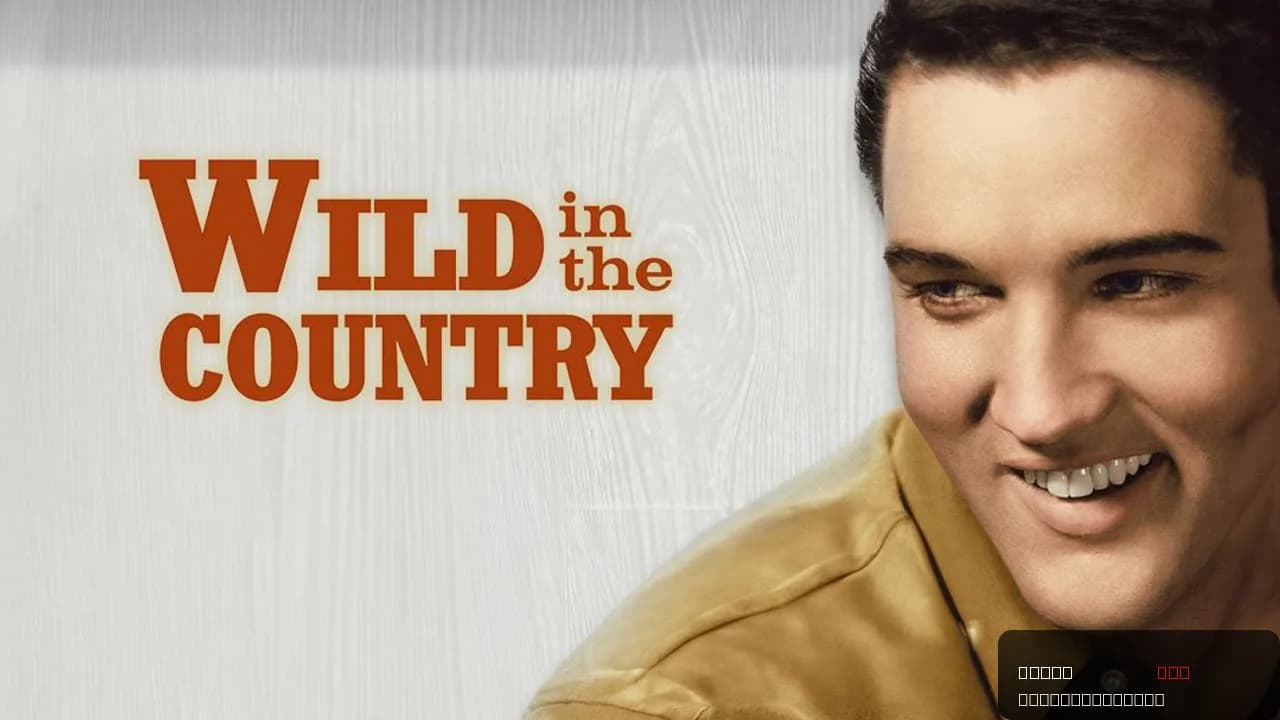
The story of Wild in the Country
Wild in the Country tells the story of a young man from a broken home who finds himself on the wrong side of the law—until a chance at redemption arrives in the form of probation and psychiatric counseling. Rather than serve time, he's given an opportunity to turn his life around by working with a psychologist who believes in his potential. The premise sounds straightforward enough, but what unfolds is something more complex: a character study about ambition, class, and the pull of destructive relationships. He's caught between two worlds—the respectable path represented by a good-hearted young woman whose family despises him, and the dangerous allure of a "bad girl" stepdaughter living under his uncle's roof. It's not a simple morality play. The film doesn't pretend the choice is easy, and that's where it finds its tension.
Behind the making of Wild in the Country
Wild in the Country arrived at a pivotal moment in Elvis Presley's career. By 1961, he'd already served in the U.S. Army and was returning to Hollywood with a chance to reshape his image. The film was based on J.R. Salamanca's 1958 novel The Lost Country, and the studio brought in Clifford Odets—the celebrated American playwright behind works like Waiting for Lefty and Golden Boy—to write the screenplay. That's a serious pedigree. Director Philip Dunne, who'd helmed The Ten Commandments (1956) and numerous other major productions, was tasked with steering Elvis toward dramatic credibility rather than musical spectacle. The supporting cast was equally ambitious: Hope Lange, fresh from television and film work, played the psychologist; Tuesday Weld brought her distinctive energy as the rebellious stepdaughter; Millie Perkins, known for The Diary of Anne Frank, played the "good girl"; and character actors like John Ireland and Rafer Johnson rounded out the ensemble. The 114-minute runtime gave the story room to breathe—no musical numbers wedged in artificially, just sustained drama. While box office returns were respectable for a 1961 release, the film didn't become a blockbuster, and critical reception was mixed, though it's earned a respectable 6.2 rating on IMDb over the decades.
What makes Wild in the Country stand out
What's striking about Wild in the Country is how seriously it commits to its premise. This isn't Elvis playing a version of himself; it's an actor attempting to inhabit a character with real psychological depth. The film doesn't shy away from depicting a genuinely dysfunctional family environment—poverty, alcoholism, and abuse aren't glossed over. Hope Lange's performance as the psychologist anchors the film with quiet intelligence; she's not a love interest first, but a professional trying to help someone who's genuinely lost. The tension between Elvis's character and Millie Perkins's "good girl" works because the film understands that class prejudice is real and that redemption isn't automatic just because someone gets a second chance. Tuesday Weld, meanwhile, steals scenes with her portrayal of raw, unfiltered desire and recklessness—she's not evil, just young and trapped by circumstance.
Honestly, the film's biggest strength is Odets's screenplay. A writer of Odets's stature doesn't typically work on what could've been a forgettable Elvis vehicle, and his presence elevates the material. The dialogue carries weight; characters don't speak in the flatness of typical melodrama. There's a lived-in quality to how people talk to each other—hesitant, sometimes contradictory, occasionally brutal. The central conflict—between aspiration and self-sabotage, between the person you could become and the person your circumstances keep pushing you toward—remains genuinely compelling. I keep coming back to the fact that this film trusts its audience to sit with moral ambiguity. Nobody's entirely right. The psychologist can't save him if he won't save himself. The "good girl" can't love away his rage. The "bad girl" isn't a villain, just someone equally trapped. That's not the stuff of typical 1961 entertainment, and it shows.
Where to stream Wild in the Country online
If you're looking to watch Wild in the Country, you've got multiple options depending on your preferred streaming service. The film is currently available on Disney+, which makes sense given the studio's acquisition of classic Hollywood catalog material. You can also find it on Molotov TV, Fawesome, and the Apple TV Store for purchase or rental. Those who subscribe to Prime Video will find it there as well, along with availability on Google Play Movies, Sky Store, Fandango At Home, and YouTube. The "Where to Watch" widget at the top of this page will show you current availability in your region and help you compare prices across platforms. Movie OTT tracks these streaming options across hundreds of titles, so you can always find where your favorite films are currently streaming without hunting through multiple services.
Frequently asked questions
Q: Is Wild in the Country based on a true story?
No, it's based on J.R. Salamanca's 1958 novel The Lost Country, which is a work of fiction. However, the themes—poverty, family dysfunction, and the struggle for upward mobility—reflect real social conditions of the era.
Q: Who wrote the screenplay for Wild in the Country?
Cliff Odets, the legendary American playwright, wrote the screenplay. His involvement brought serious dramatic weight to what could've been a standard studio picture.
Q: Is this a musical or a drama?
It's classified as a drama. Unlike many of Elvis's other 1961 films, there are no major musical numbers. It's a straight character study, though Elvis was primarily known for his music at the time.
Q: How long is Wild in the Country?
The film runs 114 minutes, giving the story substantial room to develop its characters and conflicts without feeling rushed.
Q: What's the IMDb rating for Wild in the Country?
The film holds a 6.2 out of 10 rating on IMDb, reflecting mixed but generally favorable reception over the years. Movie OTT users and critics tend to appreciate it more as a curio of Elvis's career and as a showcase for Odets's writing than as a mainstream dramatic triumph.
Final thoughts on Wild in the Country
Wild in the Country deserves a second look, especially if you're curious about Elvis as an actor rather than a phenomenon. It's not flawless—the pacing occasionally drags, and some plot threads feel underdeveloped—but it's genuinely ambitious in a way that separates it from the Hollywood assembly line. If you're interested in early 1960s drama, character-driven storytelling, or Elvis's post-Army reinvention, it's worth your time. Don't expect a feel-good redemption story. Do expect something more honest and messier than that.