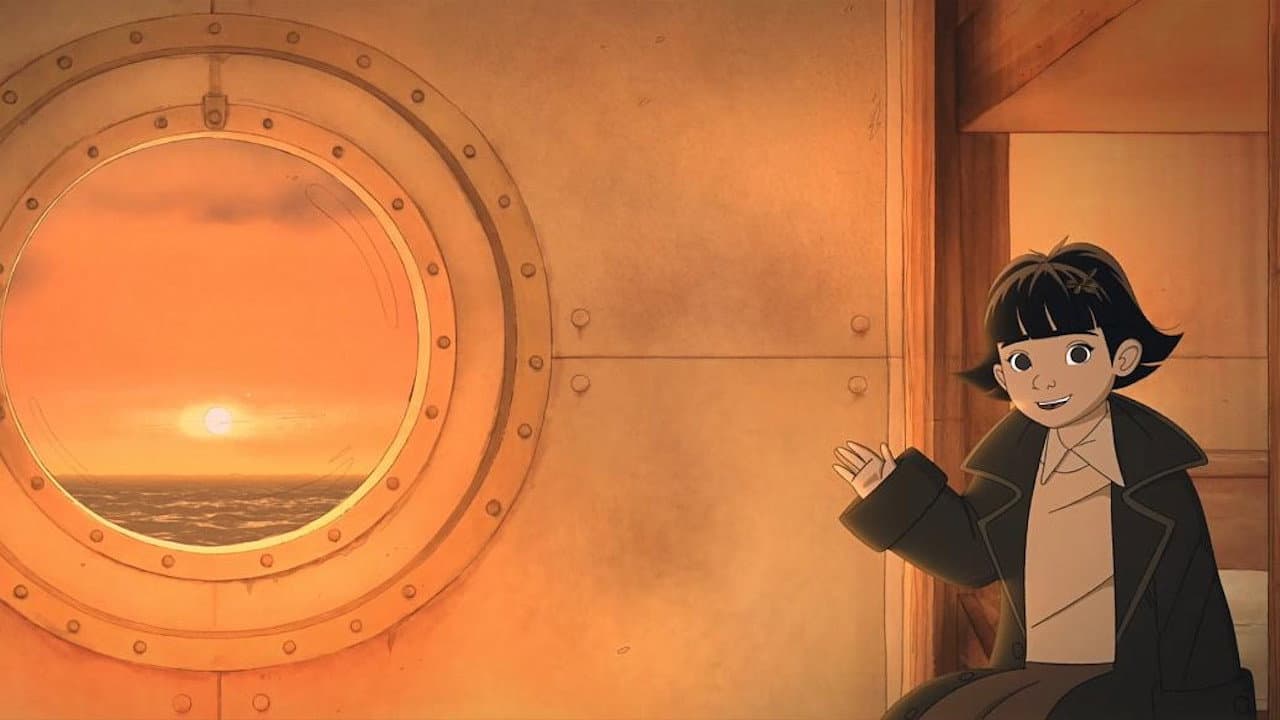
What Winnipeg, Seeds of Hope is about
Winnipeg, Seeds of Hope tells the story of Julia, a young girl who flees Barcelona with her father Victor — a widowed man trying to hold his world together while everything around him crumbles — as the Spanish Civil War ends in 1939 and Franco's forces close in. The film traces their harrowing journey from the chaos of a collapsing republic to the grim reality of French refugee camps, where nearly half a million displaced Spaniards found themselves stranded, unwanted, and running out of time. What saves Julia and Victor, along with roughly 2,200 others, is a ship called the Winnipeg — chartered through the extraordinary diplomatic intervention of Chilean poet Pablo Neruda — and the fragile, almost improbable promise of a new life in Chile. The story is told through Julia's eyes, which means it's filtered through the particular honesty that only a child's perspective can provide.
How Winnipeg, Seeds of Hope came together as a production
Winnipeg, Seeds of Hope is a co-production spanning multiple companies and countries, brought together by Dibulitoon Studio, El Otro Film, La Ballesta Films, Marmitafilms, and the Chilean economic development agency Corfo — that last partner being a telling signal of just how personally Chile still holds this history. The film is animated in a 2D style, a deliberate aesthetic choice that lends the story a storybook warmth even as it grapples with concentration camps and political exile. It's the kind of visual approach that can make suffering legible to younger audiences without sanitizing it for adults.
The project has been showcased at the Cannes Marché du Film, placing it firmly in the festival and international market circuit — which tells you this isn't a straight-to-streaming afterthought. Films that travel to Cannes' industry market are being positioned for global distribution, awards consideration, and the kind of critical attention that builds a documentary record over time. As of this writing, Winnipeg, Seeds of Hope carries a release year of 2026 and an 82-minute runtime, but no aggregated critic scores or box office figures exist yet because the film has not entered wide commercial release.
According to IMDB News, the film was highlighted at Annecy — the world's most prestigious animation festival — as a title inspired by Pablo Neruda's real historical effort to rescue Spanish refugees. That Annecy connection matters. It's not a minor footnote. Animation festivals are where the serious work gets seen first, and landing attention there puts Winnipeg, Seeds of Hope in conversation with the best of international animated cinema. No MPAA rating has been officially assigned at this stage, and final voice cast details haven't been widely confirmed, though the film's Spanish-language production roots suggest a cast drawn from Iberian and Latin American talent.
Why Winnipeg, Seeds of Hope stands out from other animated historical films
Honestly, the thing that makes this film feel different — even before it's had a proper theatrical run — is the specificity of its historical anchor. This isn't a generalized war story dressed up with period costumes. The Winnipeg was a real ship. Pablo Neruda really did convince Chilean President Pedro Aguirre Cerda to grant asylum to over 2,000 Spanish refugees in 1939. The descendants of those passengers still call themselves "hijos del Winnipeg" — children of the Winnipeg — and that living legacy gives the film a moral weight that's hard to manufacture.
What's striking is how the filmmakers chose to frame all of this through Julia, a child who can't fully understand the political machinery saving her life, only feel its effects. That gap between what she experiences and what the audience understands is where the film's emotional intelligence lives. A child watching the ocean for the first time. A father who can't explain why they can't go home. These aren't abstract historical lessons — they're the texture of a specific, irreversible loss.
The 2D animation style reinforces this. Rather than chasing photorealism, the visual approach leans into expressiveness, letting color and line carry emotional states that dialogue might over-explain. Hard to say if the final cut fully delivers on that promise until wider critical response emerges, but the trailer available on YouTube suggests a film that takes its visual language seriously. The palette shifts — warm Catalan ochres giving way to the grey of French internment camps — feel intentional rather than incidental.
For a film rooted in one of the 20th century's least-discussed refugee crises, that visual and narrative care feels earned. Nearly 100,000 of the half-million people who fled Spain were children. That number deserves more than a footnote.
Where to stream Winnipeg, Seeds of Hope online
Winnipeg, Seeds of Hope is currently available on major OTT services, and the easiest way to find out exactly where it's streaming in your region right now is to check the Where-to-Watch widget at the top of this page — it updates in real time as platform availability shifts. Streaming rights for international animated films can move fast, and what's on one platform today sometimes migrates within a few months of a wider release window.
Movie OTT tracks current streaming availability across platforms so you don't have to manually check each service. If Winnipeg, Seeds of Hope lands on additional platforms as its distribution expands through 2026, movieott.com will reflect those changes as they're confirmed. Given the film's festival positioning and multinational production backing, it wouldn't be surprising to see it picked up by services with strong international animation libraries.
Frequently asked questions
Q: Is Winnipeg, Seeds of Hope based on a true story?
Yes — the film is grounded in real historical events. In 1939, Chilean poet Pablo Neruda organized the voyage of the ship Winnipeg, which carried approximately 2,200 Spanish Civil War refugees from France to Chile, saving them from Franco's Europe. The descendants of those passengers are still known today as "hijos del Winnipeg."
Q: Who are the main characters in Winnipeg, Seeds of Hope?
The story centers on Julia, a young girl, and her father Victor, a widower who escapes Barcelona with her as the Spanish Republic collapses. Their journey — from refugee camps in France to the ship Winnipeg — forms the emotional spine of the film.
Q: Where can I watch Winnipeg, Seeds of Hope?
The film is available on major OTT platforms. Movie OTT maintains an updated streaming guide, so checking the Where-to-Watch widget on this page will give you the most current regional options without the guesswork.
Q: What animation style does Winnipeg, Seeds of Hope use?
The film uses traditional 2D animation, a deliberate choice that gives it a distinct visual warmth and expressiveness. The style sets it apart from CGI-heavy productions and suits the film's intimate, human-scale story.
Q: Has Winnipeg, Seeds of Hope been shown at any film festivals?
Yes. The project has been presented at both the Cannes Marché du Film and the Annecy Animation Festival, two of the most significant industry events for international animated cinema. These appearances signal serious distribution ambitions rather than a quiet direct-to-streaming release.
Who should watch Winnipeg, Seeds of Hope
Winnipeg, Seeds of Hope earns a strong recommendation for anyone drawn to animated films that don't talk down to their audience — the kind that sit comfortably alongside Persepolis or Waltz with Bashir in terms of historical seriousness. Families with older children will find it a genuinely affecting entry point into a chapter of 20th-century history that rarely gets this kind of treatment. History buffs, animation enthusiasts, and anyone who responds to stories about ordinary people surviving extraordinary political violence should seek this one out. Movie OTT will keep its streaming status updated as distribution expands through 2026.