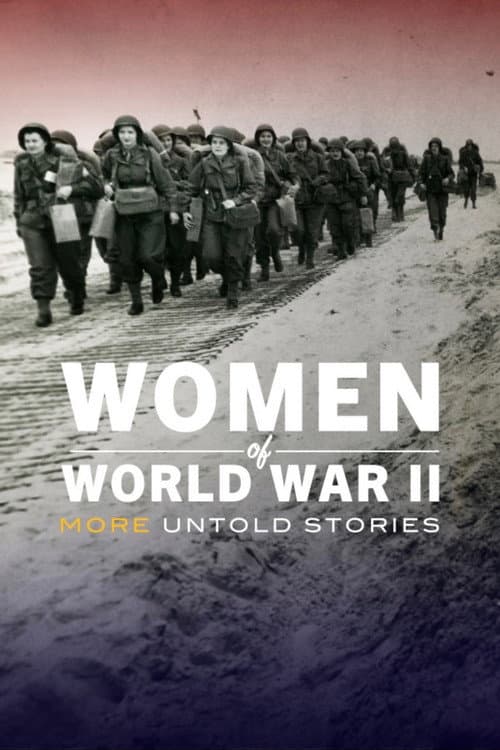
Women of World War II: More Untold Stories
The 2026 PBS documentary that finally centers the women history forgot — codebreakers, spies, and resistance fighters whose contributions were systematically erased.
Here's what most WWII documentaries get wrong: they treat women as supporting characters in someone else's war. Women of World War II: More Untold Stories flips that entirely. This 60-minute PBS production centers women who operated in the shadows—intelligence operatives decrypting enemy communications, war correspondents filing dispatches from active combat zones, secret agents parachuting behind enemy lines, resistance fighters in occupied territories where a single mistake meant execution. These weren't auxiliary roles. They were the difference between victory and defeat.
The documentary arrives in 2026 as the second installment in a PBS series committed to excavating stories that haven't made it into textbooks. What's striking isn't just the subject matter—it's the refusal to make women's contributions feel like an afterthought or a diversity add-on. They're the story.
What Actually Happens: The Real Work These Women Did
The documentary profiles women across multiple wartime specialties, each with a specific operational focus. You're not watching a general survey. You're watching deep dives into particular lives—women whose names were classified for decades, whose families didn't know what they'd actually done during the war.
Codebreakers. War correspondents. Operatives dropped into France, Poland, and occupied Europe to organize resistance cells. Women who gathered intelligence, forged documents, smuggled downed pilots across borders. The film draws on rare archival footage—the kind that hasn't circulated through standard documentaries—paired with something more powerful: testimonies from descendants discovering what their grandmothers never talked about. That silence itself becomes part of the story.
What I keep coming back to is the structural choice of pairing descendant memory with historian analysis. It's not dry oral history—it's emotional testimony grounded in rigor. A granddaughter describing her grandmother's wartime service carries weight that no archive footage alone can match. When the rare film appears, it lands harder because you've already understood why it matters.
The runtime—60 minutes—cuts tight. Some of these women deserve more screen time than the format allows. A codebreaker's entire career compressed into four minutes feels like a small injustice, even when those minutes are well-crafted. But the constraint also works: you'll watch this straight through. One sitting. No fatigue.
Why This Documentary Stands Apart
The WWII documentary field is crowded. Ken Burns's The War (2007) remains the gold standard—and it remains incomplete. Other productions have circled similar territory recently. The American Women Film Festival highlighted Invisible Warriors in early 2026, examining African American women's wartime contributions. Journeys in Film released Her War, Her Story for classroom audiences. But none of them lean as hard into the "untold" framing as this PBS production does. Not as marketing language. As editorial commitment. These are stories that haven't been told before, even in documentary form.
What separates this from companion pieces is specificity. Rather than a broad survey of women's wartime roles, the film treats individual women—their actual operations, their actual risks, their actual impact. Each profile gets space to breathe, even within the compressed runtime. ThinkTV reported that this functions as part two of a series, which means the production team had already completed the archival excavation work. The second installment feels more confident. More willing to push into uncomfortable corners.
PBS had institutional advantages here—archival partnerships, historian consultants, access to first-hand recordings where they exist. A smaller production house wouldn't have had those resources. It shows.
Where to Watch Right Now
Available on: PBS (primary broadcaster) and major OTT platforms. Specific U.S. digital release dates hadn't been formally confirmed at publication time, so check Movie OTT's where-to-watch tracker for the most current platform breakdown. Streaming rights for documentary content—especially from public broadcasters—shift without much warning. Don't assume the first service you check will have it.
PBS produces its own streaming infrastructure, which means this documentary will likely be accessible without a paywall initially. That's one advantage of public broadcasting distribution. Worth checking PBS's platform first before subscribing elsewhere.
If you're building a watch queue around women's history or WWII documentaries more broadly, Movie OTT tracks viewer engagement across multiple services and updates availability when platforms shift. Bookmark it if you're waiting on a specific service to pick up the title.
Who Should Actually Watch This
Anyone who found The War incomplete—which, let's be honest, it was—will find this a meaningful corrective. General audiences, not specialists. Doesn't assume prior knowledge of the specific operations or resistance networks it covers. History teachers will want this for their curriculum. Documentary enthusiasts who track releases will already have it on their list. And anyone with family connections to the WWII era will get something personal from it.
Start with the first installment in the series if you can locate it—each builds on the last. But this works as a standalone watch too. At 60 minutes, the barrier to entry is nonexistent. You can commit to it tonight.
FAQ
Is this actually brand new footage? Mostly yes. The archival material here hasn't circulated through mainstream documentaries. Descendant interviews are original to this production. No recycled Ken Burns footage—this is distinct material.
How graphic is it? The documentary handles its subject matter seriously without gratuitous violence. Appropriate for older teens and adults. You won't see graphic combat footage, but you will confront the reality of occupied Europe and intelligence work under fascism.
Do I need to watch the first episode? Not required. This stands alone. But watching in order adds context about the broader series framework and methodology. Each episode builds on the production team's archival work.
What's the actual runtime? Sixty minutes exactly. Single sitting. PBS documentary standard.
Will this get awards consideration? Too early to say. At publication, no Rotten Tomatoes consensus, no Metacritic score, no Letterboxd aggregation exists—the film is too new. Awards conversation typically follows broadcast. PBS documentaries often compete during the regular awards cycle, but that's future-tense at this point.
What Happens If You Skip This
You'll keep consuming WWII history that centers military campaigns and political leadership. You'll miss specific profiles of women whose contributions literally changed the outcome of the war. That's not hyperbole—intelligence work won the European theater. Resistance networks saved lives. Journalism documented atrocities that would've stayed hidden. These women did that work. Most people have no idea who they are.
The documentary corrects that gap. It's two hours of your month well spent.