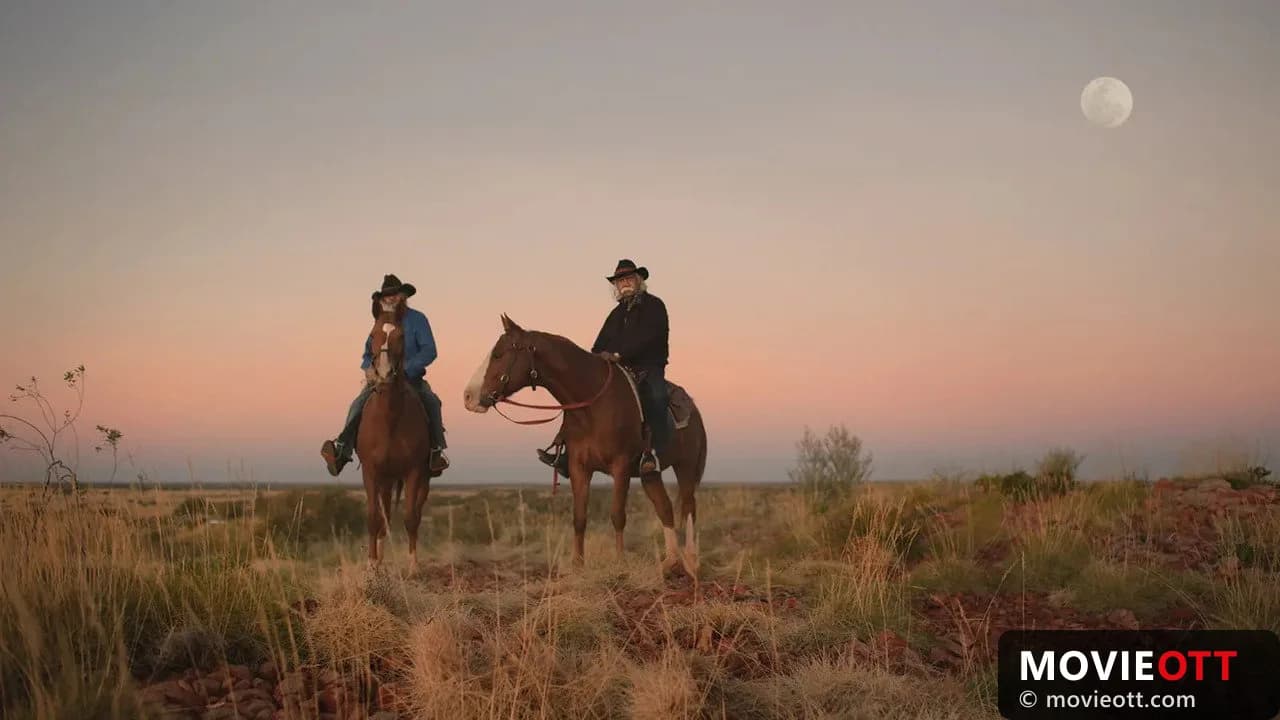
The story of Yurlu | Country
Yurlu | Country is a documentary that sits at the intersection of environmental restoration, cultural survival, and one man's unwavering commitment to his people. The film follows Aboriginal Elder Maitland Parker as he confronts the legacy of mining on his homeland—what the film's tagline calls "poison country"—and works to reclaim both the land and the traditions that have sustained his community for generations. It's a story about healing. Not the quick kind you see in feel-good narratives, but the slow, grinding, sometimes heartbreaking work of restoration when extraction has left its mark. The 79-minute film captures Parker's panoramic vision for his country while remaining intimately focused on the man himself—his determination, his knowledge, and his relationship to a landscape that's been fundamentally altered.
Behind the making of Yurlu | Country
Produced by Illuminate Films, Yurlu | Country represents a significant entry in the growing body of documentary work centered on Indigenous perspectives and environmental justice. The production brings together filmmaking craft with a subject matter that demands both respect and nuance. Released in 2025, the film arrives at a moment when audiences are increasingly hungry for stories that center Indigenous voices rather than filtering them through external narration or outsider perspectives. Illuminate Films has built a reputation for documentary work that takes its subjects seriously, and that commitment shows in how the film approaches Parker's story—not as a tragedy narrative requiring rescue, but as an active, ongoing struggle that viewers are invited to witness and understand. The runtime of 79 minutes is lean and purposeful; there's no padding here, no unnecessary sequences. Every moment serves the larger portrait being constructed.
What makes Yurlu | Country stand out
What's striking about Yurlu | Country is how it refuses to separate the personal from the political, the spiritual from the practical. Maitland Parker isn't presented as a symbol or a representative of "Aboriginal issues in Australia"—he's a specific person with a specific relationship to a specific place, and that specificity is what makes the film resonate. The documentary captures the granular work of land healing: the conversations, the knowledge being passed down, the small victories alongside the overwhelming scale of what's been damaged. I keep coming back to how the film manages to be both intimate and panoramic at once, the way it holds both the close-up detail of Parker's hands working the earth and the vast landscape that frames his efforts. There's also an honesty here that avoids the trap of inspirational documentary clichés. This isn't a story where one person fixes everything. It's a story about persistence in the face of systems that don't always bend, about cultural knowledge as a form of resistance, and about the stubborn refusal to let a place—or a way of life—disappear entirely. The cinematography doesn't sentimentalize the scarred landscape; instead, it documents it plainly, letting viewers sit with the reality of what mining extraction has done and what repair actually looks like.
Where to stream Yurlu | Country online
Yurlu | Country is currently available on major OTT services, and you can check the "Where to Watch" widget at the top of this page to see exactly which platforms are streaming it in your region right now. Movie OTT tracks streaming availability across services, making it easy to find where titles land as they move between platforms. Since documentary releases can shift between streamers depending on licensing agreements, it's worth checking that widget if you're planning to watch—what's available today might move tomorrow. The good news is that the film's distribution across major platforms means it's accessible to a wide audience, which matters for a documentary that deserves to be seen.
Frequently asked questions
Q: Who is Maitland Parker and why is his story important?
Maitland Parker is an Aboriginal Elder fighting to heal his mining-impacted homeland and preserve his culture for future generations. His story matters because it centers Indigenous knowledge, environmental restoration, and cultural continuity—themes that are increasingly urgent but still underrepresented in mainstream documentary.
Q: Is Yurlu | Country based on a true story?
Yes. The film documents the real, ongoing work of Maitland Parker and his community to restore their country after mining damage. This isn't dramatized or reconstructed—it's a direct portrait of actual efforts happening in Australia.
Q: What does "poison country" mean in the context of the film?
The tagline "Healing 'poison country'" refers to land that has been contaminated or degraded by mining operations. It's both literal—the environmental damage caused by extraction—and metaphorical, capturing the spiritual and cultural wounds that accompany environmental destruction.
Q: How long is Yurlu | Country?
The documentary runs 79 minutes, a focused runtime that moves through Parker's work and vision without excess.
Q: What production company made Yurlu | Country?
The film was produced by Illuminate Films, a production company known for documentary work that takes its subjects and stories seriously.
Who should watch Yurlu | Country
Yurlu | Country isn't just for documentary enthusiasts or those specifically interested in Indigenous affairs—though it will absolutely speak to those audiences. It's for anyone trying to understand what environmental restoration actually means, what cultural preservation looks like in practice, and what it costs to fight for both simultaneously. If you've ever wondered what happens after the mining company leaves, or what it takes to heal a wounded landscape, this film has something to say. It's also for viewers who are tired of stories that make activism seem easy or solutions seem simple. This is a film about the long game, and that's something we all need to see more of.