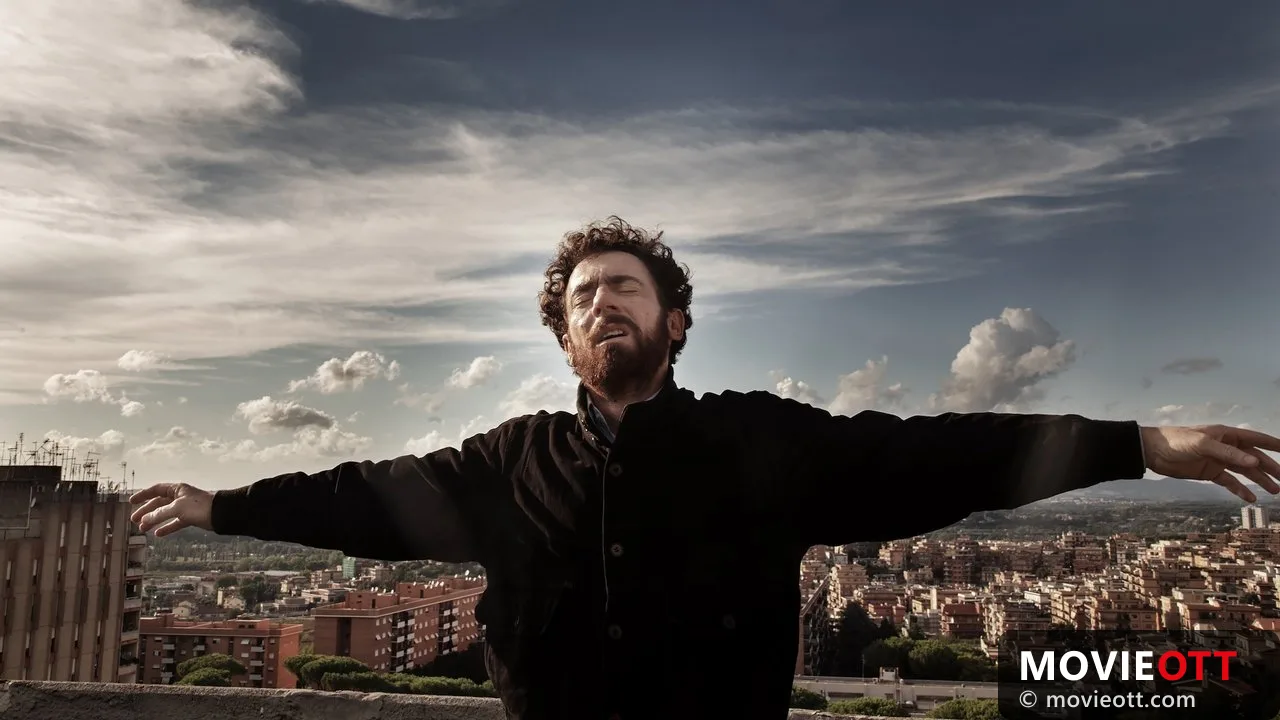
I See Buildings Fall Like Lightning: Why This Cannes Film Matters Beyond the UK
TL;DR: Clio Barnard's five-character ensemble drama premiered at Cannes on May 20, 2026, following Birmingham friends hitting 30 with childhood dreams intact but futures fraying. Stars Daryl McCormack, Joe Cole, and Anthony Boyle. No U.S. distribution confirmed yet—MUBI is the likely Indian landing spot when it arrives, probably late 2026 or early 2027.
There's a filmmaker you can trust immediately, and then there's a filmmaker you trust more with each project until one day you realize you'd watch anything she makes. Clio Barnard is the second kind.
Since The Arbor in 2010, she's built something rare in British cinema: a body of work that lives with communities, not just in them. Real people in her scenes. Production money staying local. A refusal to use working-class struggle as backdrop for middlebrow catharsis. Her latest, I See Buildings Fall Like Lightning, premiered at Cannes on May 20, 2026, and based on the early critical response, it might be the most emotionally complete film she's made yet.
What strikes me isn't that it's a good British social realist film. It's that it doesn't feel British at all (not really). The disappointment of watching childhood friends splinter at 30, the loneliness of "making it" in a way that leaves everyone hollowed out, the particular ache of sitting in a room with people you've known since age eight and realizing you don't speak the same language anymore. That's universal. Barnard seems to know that.
The Setup: Five Friends, One Estate, and the Weight of Thirty Years
Director: Clio Barnard
Screenplay: Enda Walsh (Hunger, Small Things Like These)
Source: I See Buildings Fall Like Lightning by Keiran Goddard (2014)
Premiered: Cannes Film Festival, May 20, 2026
U.S. Distribution: TBD
Cast:
- Daryl McCormack (Conor) — Good Luck to You, Leo Grande
- Joe Cole (Rian) — the one who left for London finance
- Anthony Boyle (Patrick) — married to Shiv
- Lola Petticrew (Shiv) — homemaker, anchor
- Jay Lycurgo (Oli) — dealing drugs, sampling his own supply
The story is simple. Five people grew up on the same Birmingham council estate, played together, skipped school together, built elaborate mental blueprints for who they'd become. They're thirty now. The blueprints are dust.
According to IndieWire's review, these five characters "all but follow you home after the film." That's specific praise. It means the screenplay — adapted by Enda Walsh from Keiran Goddard's novel — has done something most ensemble pieces fail at: made each person necessary and distinct without explaining them away.
Why Enda Walsh's Adaptation Actually Works
Keiran Goddard, who also served as an executive producer, has said something that basically functions as the film's thesis: "We feel more than we know and we know more than we can say."
That quote matters because it explains the screenplay's strategy. Walsh doesn't rely on big confessional scenes or characters spelling out their emotional architecture. The silences do the work. A look. The way McCormack's Conor holds his shoulders when he's trying not to explode. That's harder to pull off than a monologue, and far more effective.
Walsh has done similar work before (Small Things Like These stripped Cillian Murphy's performance down to almost nothing and somehow made it devastating). But here, with five characters instead of one, he's had to balance five emotional trajectories at once. Early reviews suggest he's pulled it off. Most coverage is framing this as Barnard's big artistic leap, but the more honest read is that Walsh's adaptation is doing the structural heavy lifting; Barnard's previous films haven't had source material this precisely engineered, and the difference in character density shows.
There's one moment where the film stumbles into on-the-nose territory. Patrick's speech about "the death of a certain way of thinking that housing was a social good" lands as late-era-Loachian didacticism. One speechy moment in an otherwise subtle film? Forgivable. Especially when the rest of the emotional work is carried in what isn't said.
The Cannes Reception (and Why U.S. Distribution Matters)
IndieWire gave the film a B+, which in festival-speak means "this works, this travels, this has something to say beyond its regional specificity."
The exact observation that keeps surfacing: after a certain point, the film "achieves the enduring power of a folk ballad." Folk ballads don't explain themselves. They assume you understand loss because you've lived it. That's what Barnard's doing here — trusting the audience to carry half the emotional weight.
The thing about British working-class drama is it defaults to misery. Grim streets, broken families, drugs as metaphor, the obligatory scene where someone shouts at a government building. Ken Loach made that mode iconic. He's also, occasionally, made it predictable.
What Barnard does differently: the film opens and closes with club scenes — euphoria, friendship, the kind of joy that only exists when you've known someone since you were eight and you don't need to explain yourself. That frame is deliberate. The disappointment is real. The love is realer.
Where to Actually Watch This (and When)
Here's the honest answer: not yet.
I See Buildings Fall Like Lightning is still seeking U.S. distribution as of its Cannes premiere. For India, the region most likely to matter for streaming availability, that means a release window is probably late 2026 or early 2027.
Where it'll land:
- MUBI India — most likely. The platform acquired 14 Cannes 2025 titles within six months of their premieres, and its subscriber base skews exactly toward this audience (people who watched The Arbor and have been following Barnard since The Selfish Giant picked up a BAFTA nomination in 2014).
- Netflix India — possible but less likely. This isn't a comfort film.
- Amazon Prime Video India — could work for broader reach, though the tone might get buried.
- BookMyShow Stream — if a limited theatrical window precedes the digital release.
Movie OTT's where-to-watch tracker will update the moment a distribution deal is confirmed. No Hindi, Tamil, or Telugu dubs are expected — subtitles will be the standard. The Birmingham accents are dense in places, so subtitle quality will actually matter here.
One small disclosure: Movie OTT reached out to the film's production team for streaming availability details but hadn't received a response at publication time.
Clio Barnard's Career Is the Real Context
Barnard didn't arrive at this project accidentally. The Arbor (2010) was formally radical — documentary-drama hybrid, Bradford setting, Andrea Dunbar's life refracted through theater and archive and reconstruction. It announced her as someone willing to experiment with form in service of truth, not novelty.
Then The Selfish Giant (2013). A loose rewrite of Oscar Wilde set in Bradford, featuring two boys scavenging scrap metal. Dark. Beautiful. Devastating in the way only a film about childhood can be.
Dark River (2017) with Ruth Wilson: quieter, more psychological, all inheritance and family trauma and the violence that lives in silence.
What connects all three: method as much as subject. Barnard works with actual communities. Locals appear in scenes. The production process involves collaboration. That's not a political gesture; it shows up in texture. You feel it.
I See Buildings Fall Like Lightning represents a step forward in one way: the characters are more vividly drawn than in her previous work. Direct product of having a strong literary source. According to the IndieWire review, this is "the most vivid characters she has ever brought to the screen."
If you responded to Aftersun (2022) or The Swimmers (2022), films about people trying to outrun the circumstances they were born into, this belongs in that conversation. It's grittier than Aftersun. Less plot-driven than The Swimmers. But it shares that quality of watching characters you actually care about move through a world that wasn't designed for them.
The Specific Thing the Film Gets Right
Look — I keep coming back to this: most British dramas treat disappointment as the whole story. Not Barnard. She opens with joy. She closes with joy. The disappointment lives in the middle, which means it doesn't define anyone.
Rian in his Canary Wharf glass tower isn't a specifically British character. He's every person who got what they wanted and found the view disappointing. Oli dealing drugs isn't a "social realism warning." He's someone trying to feel something in a place that's made feeling impossible. Patrick and Shiv aren't a cautionary tale about early marriage. They're two people trying to build a life in a world that doesn't provide the scaffolding anymore.
That's harder to do than despair. Despair is easy. Hope-in-the-face-of-nothing is the thing that actually destroys you.
What Happens Next
Distribution is the whole game. The film has the festival platform, the critical goodwill (a B+ from a major outlet is solid), and BBC Film backing. What it needs is a U.S. acquirer willing to give it genuine theatrical play rather than streaming-dump burial.
A24, Neon, or MUBI Releasing would all fit the acquisition pattern. No deal announced as of Cannes. The longer the gap between festival premiere and distribution news, the harder theatrical becomes; that's the market reality right now.
Watch for: distribution announcement in the weeks after Cannes closes, a trailer drop timed to that news, and possible awards positioning if the U.S. distributor is ambitious. The part I am most curious about is whether McCormack can convert this performance into a genuine awards-season conversation, because based on early notices he's doing career-best work here and the role has the kind of quiet combustibility voters tend to remember.
For Indian audiences tracking this, Movie OTT will have confirmed availability the moment it lands on platform, likely MUBI given acquisition patterns, with subtitles live. This is one to add to your watchlist now, before the acquisition noise starts and everyone pretends they knew all along.