Actor
Aïssa Maïga
3 films on Movie OTT · Active 2006–2016
Aïssa Maïga was born on May 25, 1975, in Dakar, Senegal, and grew up between West Africa and France — a dual geography that would shape not just her biography but the kinds of stories she kept gravitating toward on screen. She began building her career in French cinema and television through the late 1990s and early 2000s, accumulating credits across drama, thriller, and art-house work at a time when Black French actresses had almost no visibility in the industry's mainstream. That scarcity didn't slow her down. She pushed through it, landing roles that required her to carry scenes, not just populate them.
About Aïssa Maïga
Aïssa Maïga was born on May 25, 1975, in Dakar, Senegal, and grew up between West Africa and France — a dual geography that would shape not just her biography but the kinds of stories she kept gravitating toward on screen. She began building her career in French cinema and television through the late 1990s and early 2000s, accumulating credits across drama, thriller, and art-house work at a time when Black French actresses had almost no visibility in the industry's mainstream. That scarcity didn't slow her down. She pushed through it, landing roles that required her to carry scenes, not just populate them.
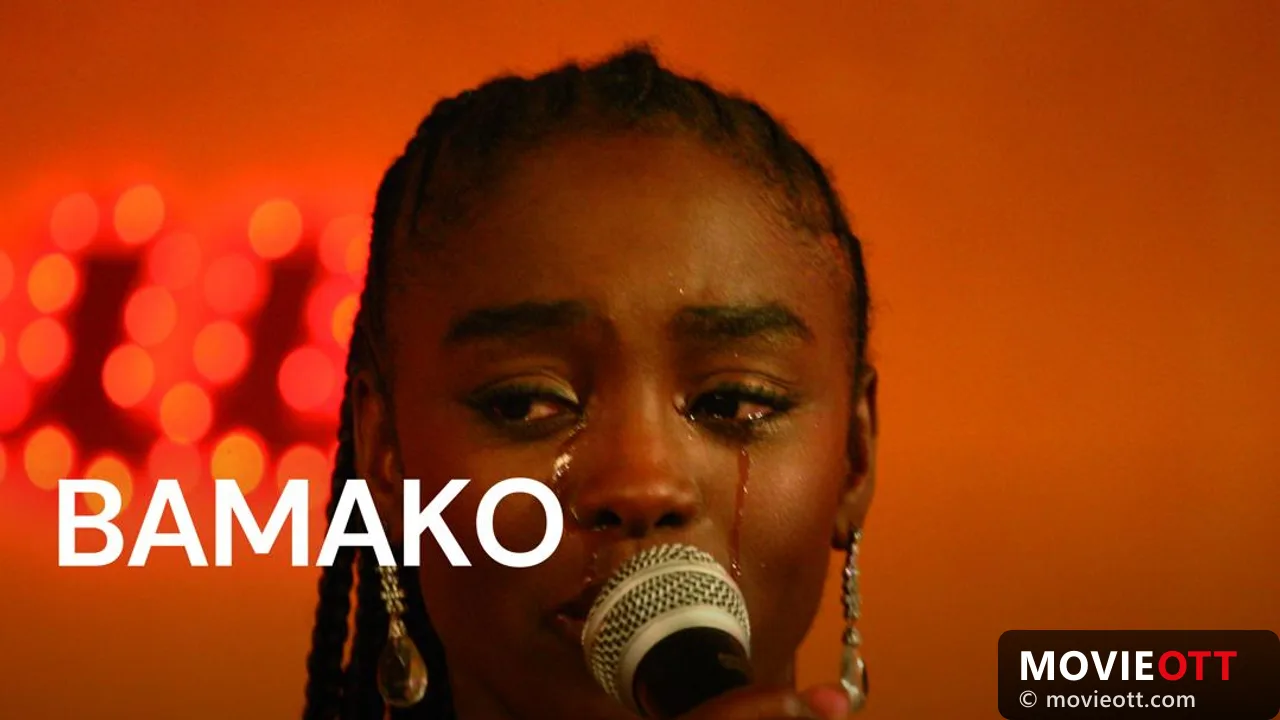
The film that put her in front of a genuinely international audience was Abderrahmane Sissako's Bamako, released in 2006. The premise is arresting: a trial is staged in the courtyard of a Bamako home, with African civil society prosecuting the World Bank and the IMF for the continent's poverty. Maïga plays Melé, a nightclub singer whose domestic life — a marriage falling apart, a husband sinking — runs alongside the formal legal proceedings in the courtyard. What's striking is how Sissako uses that contrast, the personal and the political occupying the same physical space, and how much of the film's emotional weight Maïga carries without the screenplay handing her explicit dramatic moments. Her performance is quiet and precise. A scene where she simply sings, the trial noise bleeding in from outside, does more work than most monologues would. Bamako screened at Cannes and earned Sissako considerable critical attention in Europe and North America; Maïga's contribution to that reception was substantial, even if her name didn't always lead the reviews.
Her work tends to sit at the intersection of social realism and character study — she's drawn to films that treat African or diasporic experience as the center of the narrative rather than its exotic backdrop. That's not a small distinction. French cinema has a complicated history with how it frames Blackness, and Maïga has been publicly candid about that (her 2018 book Noires n'est pas mon métier, co-authored with other Black French actresses, documented the industry's systemic problems with some precision). She's collaborated with directors working in that more politically conscious register, and her choices across two decades reflect a consistent set of priorities — she doesn't appear to take roles just to fill a slate.
Bamako remains the title most associated with her in international film databases, and it's worth noting that the film holds up well nearly two decades on. The courtroom-in-a-courtyard conceit could have been heavy-handed, but Sissako's direction and Maïga's performance keep it grounded. Hard to say if a film like that would get the same Cannes platform today, given how the festival's priorities have shifted, but in 2006 it felt genuinely urgent.
Within French film and television, Maïga's career continued to develop across genres — thrillers, prestige drama — and she's remained a working actress in the proper sense of that phrase. Not coasting on a single landmark. She's also moved into producing and advocacy work, using her profile to push on the structural issues she and her co-authors catalogued. That dual track — practitioner and critic of the industry she works in — is increasingly how she's positioned, and it gives her presence in any project a particular kind of weight. The thing nobody mentions often enough is that this kind of sustained engagement with the industry's failures, while continuing to work inside it, requires a specific kind of stamina that doesn't show up in a filmography listing.
Currently streaming
2 of 3 on platforms
Filmography

Frequently asked questions
When and where was Aïssa Maïga born?
Aïssa Maïga was born 1975-05-25 in Dakar, Senegal.
What films is Aïssa Maïga known for?
Aïssa Maïga has 3 titles indexed on Movie OTT, including Love Is Dead, HOUBA! On the Trail of the Marsupilami, Bamako.
Where can I watch Aïssa Maïga's films?
2 of Aïssa Maïga's films are currently streaming, available on Prime Video, MUBI, MUBI Amazon Channel, OVID.
How long has Aïssa Maïga been active?
Aïssa Maïga's film career on Movie OTT spans from 2006 to 2016 — 10 years of work.