Actor
Ayrton Senna
1 film on Movie OTT
Ayrton Senna was a Brazilian racing driver who, across a career spanning roughly a decade at Formula One's highest level, became one of the most studied and contested figures the sport has ever produced. Born in São Paulo on March 21, 1960, he came up through karting circuits in Brazil before moving to Europe in the early 1980s to compete in junior formulae — the usual path, though he took to it with an unusual intensity that coaches and rivals noticed almost immediately. He won three Formula One World Championships (1988, 1990, and 1991) with McLaren, and his death during the 1994 San Marino Grand Prix at Imola — at 34 — gave his story the kind of abrupt, unresolved ending that makes it almost impossible to assess without emotion getting in the way.
About Ayrton Senna
Ayrton Senna was a Brazilian racing driver who, across a career spanning roughly a decade at Formula One's highest level, became one of the most studied and contested figures the sport has ever produced. Born in São Paulo on March 21, 1960, he came up through karting circuits in Brazil before moving to Europe in the early 1980s to compete in junior formulae — the usual path, though he took to it with an unusual intensity that coaches and rivals noticed almost immediately. He won three Formula One World Championships (1988, 1990, and 1991) with McLaren, and his death during the 1994 San Marino Grand Prix at Imola — at 34 — gave his story the kind of abrupt, unresolved ending that makes it almost impossible to assess without emotion getting in the way.
What's striking is that Senna's on-screen presence, in the documentary sense, arrived more than fifteen years after his death and still managed to feel urgent. The 2010 film Senna, directed by Asif Kapadia, is the work that brought his story to audiences who had never watched a qualifying lap in their lives. Kapadia built the film almost entirely from archival footage — no talking-head reconstruction, no dramatized scenes — and the result is something that doesn't feel like a sports documentary so much as a character study that happens to take place at 180 miles per hour. Senna himself appears throughout, drawn from television interviews, onboard cameras, and paddock footage, which means the film's central performance is, in the strangest possible sense, his own. He's articulate, occasionally combative, and in the later segments — when the political maneuvering inside FIA governance starts to close in on him — visibly exhausted by something beyond racing.
The film's antagonist, broadly speaking, is Alain Prost, and Kapadia doesn't entirely hide his sympathies (Prost himself has said publicly that he felt the documentary treated him unfairly, and honestly, watching it, you can see his point — though the footage of the 1990 Japanese Grand Prix collision is hard to contextualize charitably regardless of who's cutting it). The rivalry between the two drivers, which ran through the late 1980s at McLaren and continued after Prost moved to Ferrari, structures most of the film's second act. That tension — personal and professional and almost philosophical, given how differently the two men talked about what driving meant to them — is what gives Senna its dramatic spine.
Senna the film was released in 2010 and won the BAFTA for Best Documentary in 2012, which was the kind of institutional recognition that tends to follow work that manages to reach beyond its presumed audience. It did reach beyond it. Racing fans came expecting a tribute and got something more complicated; general audiences came expecting a sports film and got something closer to a tragedy in the classical sense. Hard to say if any other Formula One driver has been the subject of a documentary that crossed over so completely into mainstream film culture, but the numbers suggest not many have — the film grossed over $3 million in the UK alone on a limited release, which for a documentary about a sport with a niche domestic following is genuinely unusual.
Because Senna died in 1994, the filmography entry here — Actor, Senna (2010) — is a function of archival presence rather than a conventional acting credit. He didn't perform in the film; he simply existed on camera, repeatedly and revealingly, across years of footage that Kapadia and his editors assembled into something that reads as performance whether or not that was the intent. That distinction matters, and it's worth keeping in mind when navigating what this page actually represents. Senna the man left no further screen work. Senna the film remains, and it's still the most direct way most people will ever encounter him — not the race results, not the statistics, but the footage of him sitting in a cockpit before a wet qualifying session in Monaco in 1984, describing what happened when he went beyond his own limits. That sequence alone is why the documentary holds up.
Currently streaming
1 of 1 on platforms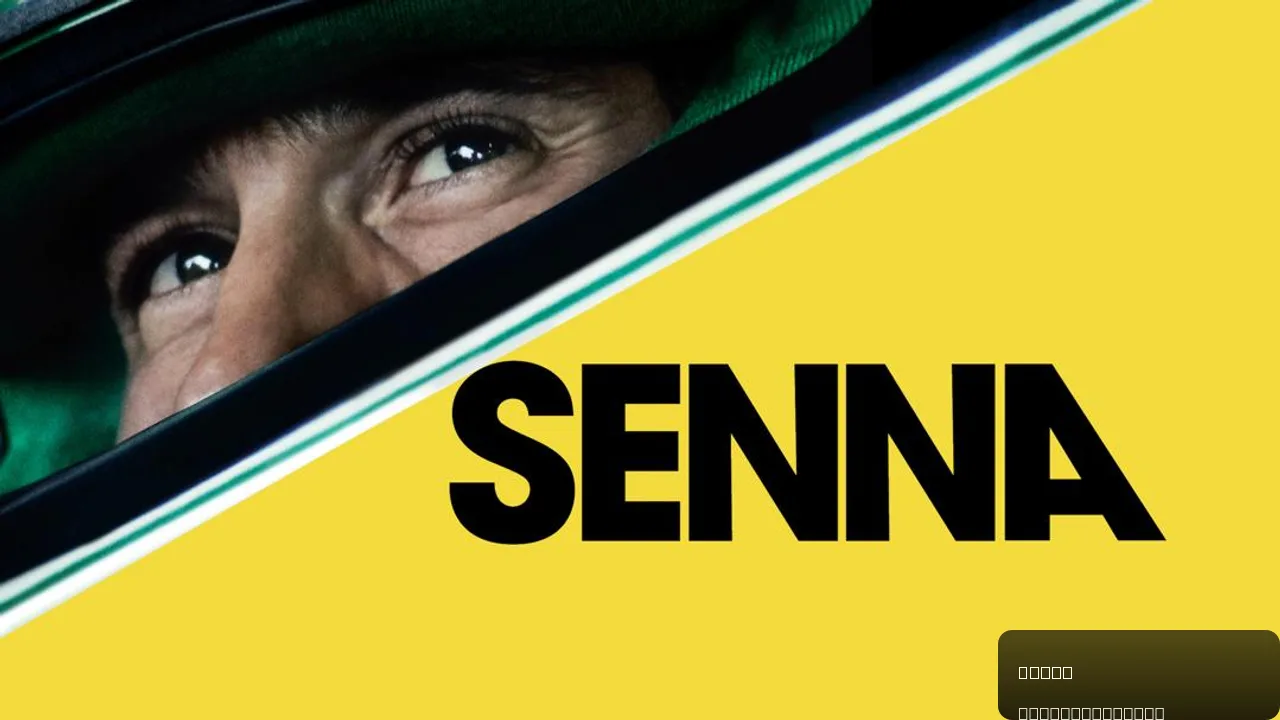
Filmography
Frequently asked questions
When and where was Ayrton Senna born?
Ayrton Senna was born 1960-03-21 in São Paulo, São Paulo, Brazil.
What films is Ayrton Senna known for?
Ayrton Senna has 1 title indexed on Movie OTT, including Senna.
Where can I watch Ayrton Senna's films?
1 of Ayrton Senna's films are currently streaming, available on Prime Video.