Filmmaker
Fernando Meirelles
2 films on Movie OTT · 2 as director · Active 2002–2014
Fernando Meirelles is a Brazilian director and producer whose work sits at an intersection that most filmmakers don't even attempt — visceral street-level realism on one side, formally ambitious visual storytelling on the other. Born in São Paulo on November 9, 1955, he came up through advertising and television before making the transition to features, a path that shaped his instinct for pace and image in ways that are still visible in everything he's made since. He's probably best known internationally for City of God (2002), but reducing him to that one film does a disservice to a career that has kept shifting registers and geographies.
About Fernando Meirelles
Fernando Meirelles is a Brazilian director and producer whose work sits at an intersection that most filmmakers don't even attempt — visceral street-level realism on one side, formally ambitious visual storytelling on the other. Born in São Paulo on November 9, 1955, he came up through advertising and television before making the transition to features, a path that shaped his instinct for pace and image in ways that are still visible in everything he's made since. He's probably best known internationally for City of God (2002), but reducing him to that one film does a disservice to a career that has kept shifting registers and geographies.
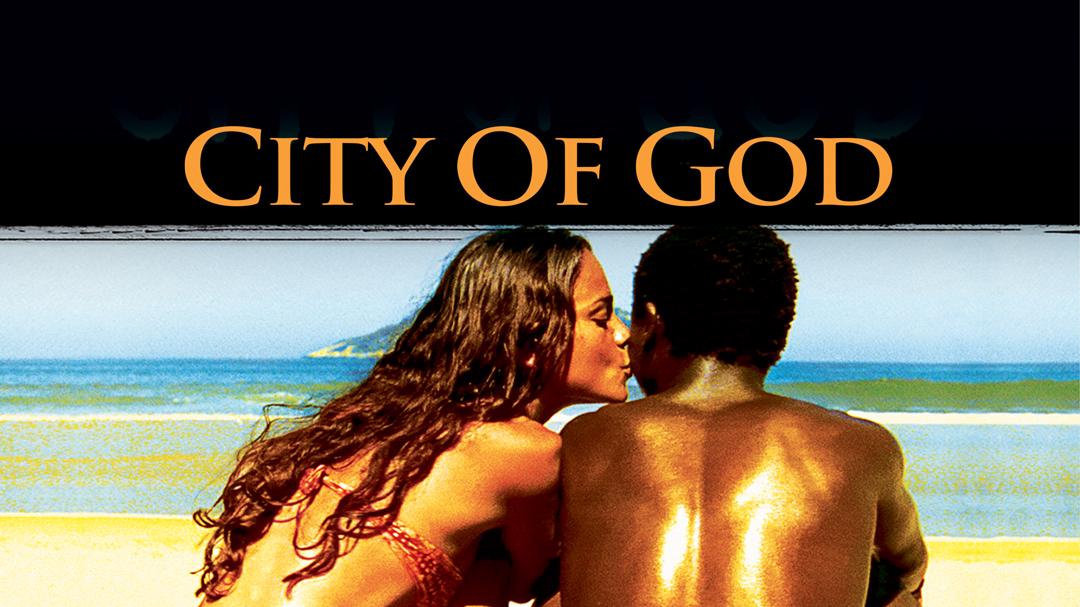
City of God didn't just put Meirelles on the map — it rewrote what people thought Brazilian cinema could do commercially and critically at the same time. Shot with a handheld restlessness that made the favelas of Rio feel both documentary-close and cinematically charged, the film earned him an Academy Award nomination for Best Director and introduced a generation of international audiences to a kind of storytelling that didn't soften its edges. What's striking is how little the film condescends to its subjects; the kids in those streets aren't symbols of poverty, they're people with ambitions and rivalries and a very specific social logic governing their lives. The Constant Gardener followed in 2005, adapted from John le Carré's novel, and it showed something different — that Meirelles could work within a more conventional thriller framework and still push the form, using fragmented timelines and location shooting across Kenya and the UK to give the film a texture that studio productions rarely bother with. The film won Rachel Weisz the Academy Award for Best Supporting Actress.
His collaborations have ranged widely. Cinematographer César Charlone worked closely with him on City of God and The Constant Gardener, and the visual language they developed together — that particular combination of handheld urgency and precise color grading — became something critics associated with a whole wave of Brazilian filmmaking. Meirelles has never settled into a single genre; Blindness (2008), adapted from José Saramago's novel, was a dystopian allegory, and The Two Popes (2019) was something closer to a two-hander chamber piece, built almost entirely on dialogue between Anthony Hopkins and Jonathan Pryce. Hard to say if that last one was exactly what audiences expected from him, but it worked — Netflix acquired it and it earned three Oscar nominations.
Anthology filmmaking is something Meirelles has also contributed to, most notably with Rio, I Love You — A Celebration of Love in Brazil (2014), part of the international Cities of Love series that had previously produced Paris, je t'aime and New York, I Love You. The format asks directors to contribute short segments rather than sustain a single narrative, which is either a limitation or a freedom depending on how you look at it. For Meirelles, who has always been drawn to the texture of specific places, the assignment of capturing Rio de Janeiro in a short form seemed like a natural fit. The film brought together multiple directors, each handling a different story set in the city, and Meirelles served as one of the contributors shaping that mosaic portrait.
He's remained active and doesn't seem interested in coasting on reputation. The Two Popes demonstrated that he can attract major talent and work within a more restrained mode than his earlier films suggested. Variety reported that Netflix's investment in the film reflected broader platform interest in prestige international productions — and Meirelles, with his track record across languages and continents, fits that model well. He's one of a small number of directors who've moved between Brazilian productions, Hollywood-adjacent projects, and genuinely international co-productions without losing a consistent sensibility. That sensibility, if you had to pin it down, is something like: the world is specific, places matter, and people caught inside systems — criminal, political, medical, religious — are more interesting than the systems themselves.
Currently streaming
2 of 2 on platforms
Filmography
Frequently asked questions
When and where was Fernando Meirelles born?
Fernando Meirelles was born 1955-11-09 in São Paulo, São Paulo, Brazil.
What films is Fernando Meirelles known for?
Fernando Meirelles has 2 titles indexed on Movie OTT, including Rio, I Love You: A Celebration of Love in Brazil, City of God.
Where can I watch Fernando Meirelles's films?
2 of Fernando Meirelles's films are currently streaming, available on fuboTV, Netflix, Pluto TV, The Roku Channel.
Has Fernando Meirelles directed any films?
Yes — Fernando Meirelles has 2 directorial credits indexed on Movie OTT.
How long has Fernando Meirelles been active?
Fernando Meirelles's film career on Movie OTT spans from 2002 to 2014 — 12 years of work.