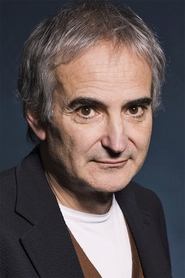
Actor & Director
James Gray
6 films on Movie OTT · 3 as director · Active 2015–2026
James Gray is a writer-director from Queens, New York, born in April 1969, whose work sits in a particular corner of American cinema that doesn't get enough credit — intimate, formally rigorous films that borrow the grammar of classical Hollywood but carry the emotional weight of something far more personal. He studied at the USC School of Cinematic Arts and emerged in the mid-1990s as part of a generation of American filmmakers who took crime drama seriously as a literary form. He's best known for a string of films set in and around New York's immigrant communities, though his ambitions have always pushed toward something larger than neighborhood geography.
About James Gray
James Gray is a writer-director from Queens, New York, born in April 1969, whose work sits in a particular corner of American cinema that doesn't get enough credit — intimate, formally rigorous films that borrow the grammar of classical Hollywood but carry the emotional weight of something far more personal. He studied at the USC School of Cinematic Arts and emerged in the mid-1990s as part of a generation of American filmmakers who took crime drama seriously as a literary form. He's best known for a string of films set in and around New York's immigrant communities, though his ambitions have always pushed toward something larger than neighborhood geography.
His debut, Little Odessa (1994), announced him at Cannes when he was still in his mid-twenties — it won the Silver Lion and introduced the Queens milieu, the Russian-Jewish family dynamics, and the Tim Roth and Vanessa Redgrave performances that would mark his early period. But it was The Yards (2000) and then We Own the Night (2007) that really defined what a James Gray film could do: Joaquin Phoenix in the latter, caught between a cop brother and a drug-world employer, in a film that builds toward a night chase through rain-soaked streets that's as purely cinematic as anything American directors produced that decade. Phoenix kept coming back. So did Mark Wahlberg. That loyalty between Gray and his actors isn't incidental — it's structural to how he works, building performances through repetition and trust rather than improvisation.
What's striking is how consistently Gray's films treat genre as a container for grief. The crime films aren't really about crime. Two Lovers (2008), probably his most underrated picture (Joaquin Phoenix again, playing a man paralyzed between two women and his own inability to choose a life), works almost like a chamber drama dressed in a romantic triangle's clothes. The immigrant saga The Immigrant (2013), with Marion Cotillard and Joaquim Phoenix, pushed his period sensibility into the early 20th century. By that point, Gray had developed a visual language — deep, warm shadows, faces caught in half-light — that owed something to Gordon Willis and something to Visconti, and that he'd refined across nearly two decades without softening it for mainstream consumption.
His 2019 film Ad Astra: A Journey Beyond the Stars represents the most expensive and formally ambitious thing he's attempted. Brad Pitt plays an astronaut traveling to the outer edges of the solar system to find his missing father — and the film is less interested in the science-fiction mechanics of that journey than in what a man discovers about himself when he's stripped of every social context that normally lets him avoid the question. Ad Astra is quiet in a way that confused some audiences expecting spectacle; it's a film where the most important scenes are internal, where Pitt's near-affectless narration does the work that explosions might do in another director's hands. Variety reported that the film grossed around $135 million worldwide against a significant production budget, a performance that reflected both its genuine audience and the difficulty of marketing something that resists easy categorization.
Gray doesn't make films quickly. The gaps between projects are long, and the work shows it — each film arrives with the sense that it couldn't have been made any faster. His most recent completed feature, Armageddon Time (2022), returned him to Queens and to autobiography, drawing on his own 1980s childhood in a way that felt like a filmmaker settling accounts with his own history before moving on to whatever comes next. Hard to say if that autobiographical turn signals a permanent shift in subject matter, or whether it's simply what he needed to make at that moment. Either way, his place in contemporary American cinema is that of a director who makes the films he intends to make. That's rarer than it sounds.
Currently streaming
1 of 6 on platforms
Filmography


Frequently asked questions
When and where was James Gray born?
James Gray was born 1969-04-14 in New York City, New York, USA.
What films is James Gray known for?
James Gray has 6 titles indexed on Movie OTT, including Paper Tiger, Faye, Room 999.
Where can I watch James Gray's films?
1 of James Gray's films are currently streaming, available on Prime Video.
Has James Gray directed any films?
Yes — James Gray has 3 directorial credits indexed on Movie OTT.
How long has James Gray been active?
James Gray's film career on Movie OTT spans from 2015 to 2026 — 11 years of work.