Actor
Miroslav Macháček
1 film on Movie OTT
Miroslav Macháček was a Czech stage and screen actor whose career stretched across several decades of Czechoslovak cultural life, rooted in the theatrical traditions of Prague and extending outward into film at a moment when the country's cinema was beginning to attract serious international attention. Born on May 8, 1922, in Nymburk — a mid-Bohemian town that produced more than its share of sharp-minded artists — Macháček came of age during a period of profound disruption, which probably shaped the particular quality of restraint and interior tension that defined his best performances. He trained and worked primarily within the Czech theatrical world, where he built a reputation as a precise, technically grounded actor before the camera found him.
About Miroslav Macháček
Miroslav Macháček was a Czech stage and screen actor whose career stretched across several decades of Czechoslovak cultural life, rooted in the theatrical traditions of Prague and extending outward into film at a moment when the country's cinema was beginning to attract serious international attention. Born on May 8, 1922, in Nymburk — a mid-Bohemian town that produced more than its share of sharp-minded artists — Macháček came of age during a period of profound disruption, which probably shaped the particular quality of restraint and interior tension that defined his best performances. He trained and worked primarily within the Czech theatrical world, where he built a reputation as a precise, technically grounded actor before the camera found him.
What's striking is how Macháček's film work arrived at exactly the right historical moment. Czech cinema in the early 1960s was beginning to push against the constraints of socialist realism, and directors were looking for actors who could carry ambiguity — people who didn't need to signal every emotion to the back row. That's the context in which his appearance in Ikarie XB 1 (1963) becomes meaningful. Directed by Jindřich Polák, the film is a science-fiction production that doesn't really behave like one — it's slow, philosophical, concerned with the psychology of isolation aboard a spacecraft heading toward a distant star, and it draws more from Stanisław Lem's literary sensibility than from the action-driven template that dominated the genre elsewhere. Macháček fit that register. The film's ensemble approach meant no single actor dominated, but the cumulative effect of the performances — including his — gave Ikarie XB 1 the human weight that made it stand apart from its contemporaries.
Hard to say if Macháček thought of the film as a departure or simply another job. His primary identity remained theatrical throughout his life, and Czech actors of his generation tended to move between stage and screen without treating either as a lesser calling. That fluidity meant his screen appearances were selective rather than prolific, which may be why each one carries a certain deliberateness. He wasn't chasing camera time. The genres he worked in reflected the preoccupations of Czech cultural production during the postwar decades — drama, literary adaptation, the occasional genre piece that smuggled in social commentary — and he seemed most at ease in material that demanded patience from both performer and audience.
Ikarie XB 1 remains the title most likely to bring international viewers to Macháček's name, and for good reason. The film was submitted as the Czechoslovak entry for the Academy Award for Best Foreign Language Film in 1963, and its influence on subsequent science fiction — some critics have drawn a direct line between it and Stanley Kubrick's 2001: A Space Odyssey — gives it a retrospective significance that wasn't fully visible at the time of release. Being part of that production, even within an ensemble, places Macháček inside one of the more quietly consequential films of the decade.
Czech cinema's international profile has grown considerably since the 1990s, and with it has come renewed interest in the films of the 1960s that defined the Czech New Wave and its adjacent productions. Ikarie XB 1 has been restored and re-released for new audiences, which means Macháček's work continues to be seen — not as a historical curiosity but as a functioning piece of cinema that still holds up in a screening room. His broader stage legacy remains better documented within Czech scholarship than in English-language sources, which is a gap that hasn't fully closed. The film record is partial. But what exists is enough to locate him clearly within a generation of Czech performers who did serious work during a complicated time, without fanfare and without much need for it.
Currently streaming
1 of 1 on platforms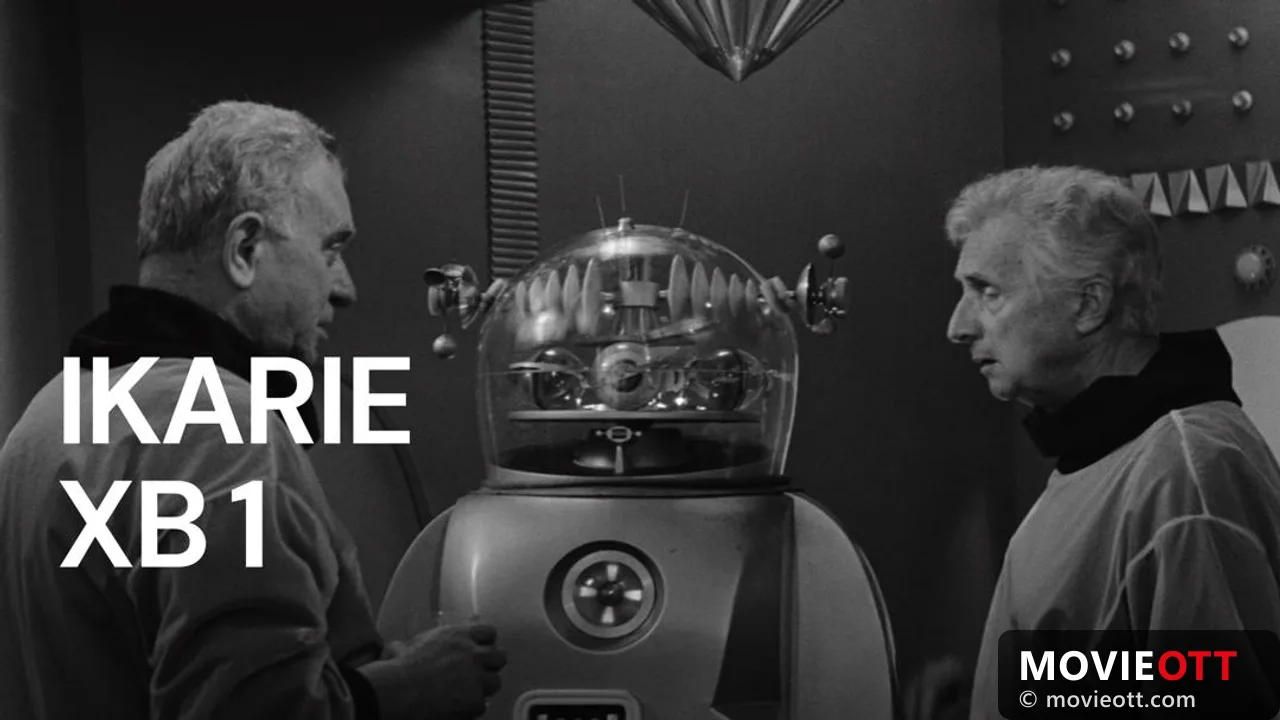
Filmography
Frequently asked questions
When and where was Miroslav Macháček born?
Miroslav Macháček was born 1922-05-08 in Nymburk, Czechoslovakia [now Czech Republic].
What films is Miroslav Macháček known for?
Miroslav Macháček has 1 title indexed on Movie OTT, including Ikarie XB 1.
Where can I watch Miroslav Macháček's films?
1 of Miroslav Macháček's films are currently streaming, available on Prime Video.