The Greatest Sci-Fi Movie Endings Ever Made, Ranked and Explained
TL;DR: From the haunting silence of The Thing's frozen tundra to the crumbling Statue of Liberty in Planet of the Apes, science fiction's greatest endings aren't just plot conclusions — they're philosophical gut-punches. This piece breaks down the ten most unforgettable sci-fi finales, where to stream them today, and why they've outlasted nearly every other film in the genre.
What actually makes a science fiction ending immortal — and why do so many of the best ones leave you feeling vaguely unsettled for days?
The answer, it turns out, has almost nothing to do with special effects or budget. The finales that stick are the ones that use genre machinery — time travel, alien invasion, memory erasure — to say something painfully true about being human. Science fiction, when it's working properly, is a mirror. And the endings on this list are the moments when that mirror cracks.
Ten Films, Ten Different Theories of What Humanity Deserves
Published in May 2026 by Screen Rant contributor Dalton Norman, a freelance writer and filmmaker who graduated from the University of Central Florida with a BFA in Film, the original ranking covers a wide range of eras and tones. Norman's list spans from 1968 to 2016, pulling from Hollywood studio blockbusters, indie genre experiments, and franchise tentpoles alike.
Here's the full lineup, for readers who want the quick version:
- 2001: A Space Odyssey (1968) — Stanley Kubrick, dir. — Starring Keir Dullea
- Planet of the Apes (1968) — Franklin J. Schaffner, dir. — Starring Charlton Heston
- The Thing (1982) — John Carpenter, dir. — Starring Kurt Russell
- Star Trek II: The Wrath of Khan (1982) — Nicholas Meyer, dir. — Starring William Shatner, Leonard Nimoy
- The Empire Strikes Back (1980) — Irvin Kershner, dir. — Starring Mark Hamill, Harrison Ford
- Arrival (2016) — Denis Villeneuve, dir. — Starring Amy Adams
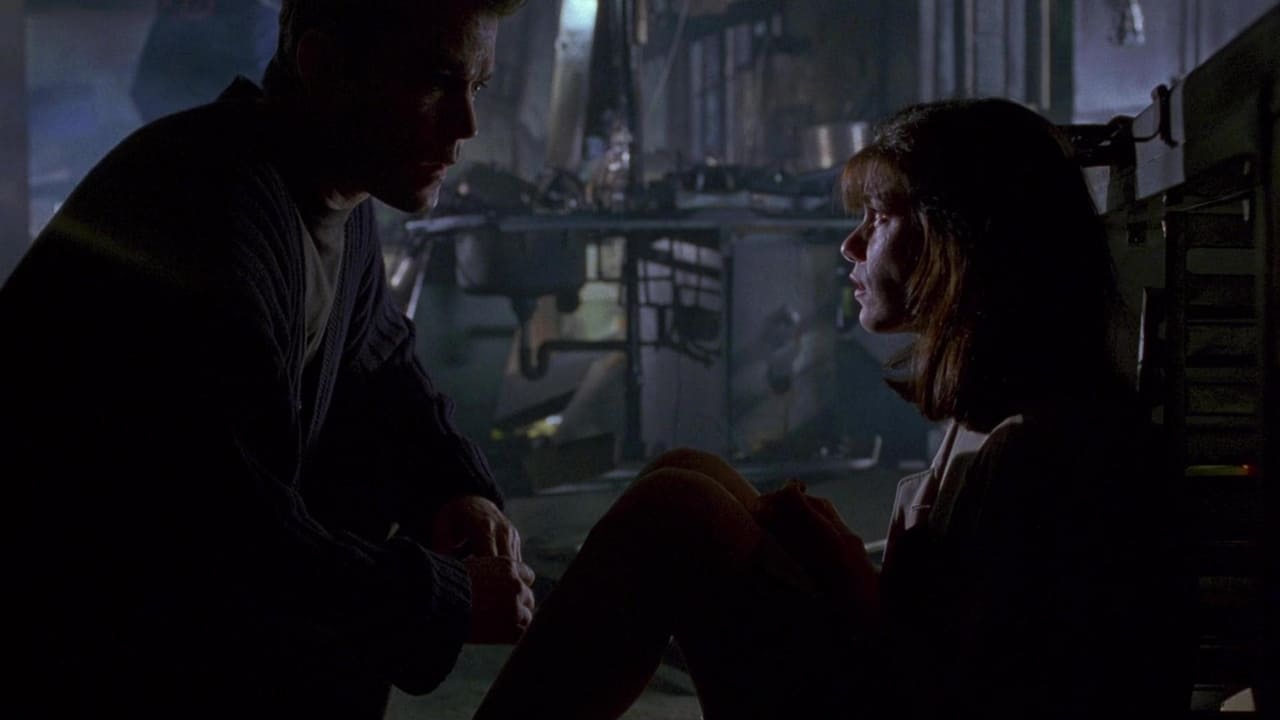
- Terminator 2: Judgment Day (1991) — James Cameron, dir. — Starring Arnold Schwarzenegger, Linda Hamilton
- Eternal Sunshine of the Spotless Mind (2004) — Michel Gondry, dir. — Starring Jim Carrey, Kate Winslet
- Invasion of the Body Snatchers (1978) — Philip Kaufman, dir. — Starring Donald Sutherland
- Children of Men (2006) — Alfonso Cuarón, dir. — Starring Clive Owen
Runtime range: 88 minutes (Body Snatchers) to 161 minutes (2001). Most stream in HD on major platforms. Movie OTT tracks live availability for all ten films across Netflix, Prime Video, Apple TV+, and regional platforms — worth bookmarking before you start planning a marathon.
Why Sci-Fi Endings Hit Differently Than Any Other Genre
Here's the thing nobody mentions enough: science fiction endings carry extra weight because the genre spends so long constructing an entirely alternate reality. By the time you reach the finale, you've accepted different physics, different politics, different biology. The emotional stakes are therefore enormous — because the filmmaker can choose to confirm your hope or obliterate it, and either choice lands harder than it would in a thriller or a drama.
What's striking is how many of these endings work through a kind of delayed detonation. Planet of the Apes (1968) is the classic example. For most of its runtime, it plays like a fairly conventional adventure about astronaut Taylor (Charlton Heston) navigating a world where apes have dominion over mute, primitive humans. Then Charlton Heston rides down a beach — and there it is. The Statue of Liberty, half-buried in sand. Taylor has been on Earth the entire time. Human civilization destroyed itself. The ape society was built on our ruins.
That image, according to CBR's ranking of the darkest sci-fi endings ever made, remains one of the most politically charged visual conclusions in cinema history — not just a twist, but an indictment. The Cold War anxiety baked into that shot is as legible today as it was in 1968. Maybe more so.
The range of emotional registers across these ten films is genuinely remarkable. Children of Men (2006) ends with fragile, trembling hope. The Thing (1982) ends with two men in the Antarctic dark, waiting to die — or possibly already compromised by an alien organism neither can detect. Terminator 2 ends with both triumph and grief, almost simultaneously. Arrival ends with a woman choosing to walk knowingly into suffering because the joy is worth it.
Audiences at My Top Ten Greatest Science-Fiction Movie Endings have been debating this exact taxonomy of endings for over a decade, and the conversation hasn't settled. That's a good sign. These films earned their longevity.
What Dalton Norman's Ranking Gets Right (and Where It Invites Argument)
Norman, writing for Screen Rant on May 11, 2026, places 2001: A Space Odyssey at number one — and that's hard to argue with. Stanley Kubrick's 1968 masterpiece doesn't just end; it transcends. The final sequence, in which astronaut David Bowman ages rapidly in a strange room before becoming the Star Child, is deliberately, almost aggressively opaque. Kubrick never explained it. He didn't need to. The sequence works because it bypasses rational interpretation and lands somewhere closer to religious experience.
Norman writes that 2001 "spans the history of humankind, from the lowly beginnings to the next step in evolution" — and the ending is where that evolutionary leap actually happens on screen. It's surrealism in service of a very precise idea: that consciousness, pushed far enough, becomes something we don't have language for yet.
The Empire Strikes Back at number four is a defensible choice, though I keep coming back to the fact that its ending is really a midpoint — it works because we know there's a Return of the Jedi coming. The "I am your father" revelation is undeniably one of cinema's great shocks (released May 21, 1980, directed by Irvin Kershner), but the ending's power is partly borrowed from the trilogy's structure. Standalone, it'd feel incomplete. That's not a flaw, exactly. Just worth naming.
Eternal Sunshine of the Spotless Mind (2004) — Michel Gondry directing from a Charlie Kaufman screenplay — gets the most interesting entry in Norman's analysis. Joel and Clementine decide to try again, knowing their relationship has already failed once, already been erased once. It's doom dressed up as optimism. Or optimism dressed up as doom. Hard to say which. That ambiguity is precisely what makes it great.
"Even in an Idealistic Future, There Are No-Win Situations"
That line — attributed to Norman's reading of Star Trek II: The Wrath of Khan — might be the cleanest thesis statement for what the best sci-fi endings do. Spock dies at the end of The Wrath of Khan (released June 4, 1982, directed by Nicholas Meyer). Leonard Nimoy had played the character since the 1960s television series. The loss is enormous, and the film earns it by building toward it from the opening frame.
According to Norman's analysis, "even the darkest day can brighten" in some of these films, while others are "unabashedly gloomy and pessimistic." The Wrath of Khan lands somewhere more interesting than either: it's a film that insists both things are true at once. Spock dies. The future is still worth fighting for. Those facts coexist.
(Disclosure: Movie OTT reached out for comment on streaming availability for the Star Trek catalog — Paramount+ holds the primary rights in the US and UK, with regional licensing varying across India and Spain.)
Streaming These Films in India: Where to Watch Each One
For Indian audiences, the good news is that most of these titles are accessible — though the platform landscape shifts regularly. Here's the current picture, as tracked by Movie OTT's where-to-watch tracker:
- 2001: A Space Odyssey — Available on Netflix India (HD, English with subtitles)
- Planet of the Apes (1968) — Disney+ Hotstar (part of the broader Fox/Disney library)
- The Thing (1982) — Prime Video India (available for rent/purchase)
- Terminator 2: Judgment Day — Netflix India
- Arrival (2016) — Prime Video India
- Children of Men — SonyLIV (check current availability; licensing rotates)
- Eternal Sunshine of the Spotless Mind — Prime Video India
- Star Trek II: The Wrath of Khan — Paramount+ (limited availability in India; may require VPN or rental via Apple TV)
- The Empire Strikes Back — Disney+ Hotstar India
- Invasion of the Body Snatchers (1978) — Prime Video India (rental)
Several of these films have been dubbed into Hindi for broader regional accessibility, particularly the franchise titles — Empire Strikes Back and Terminator 2 are both available in Hindi dub on their respective platforms. Arrival has been especially well-received in India, where Denis Villeneuve's cerebral approach to science fiction found a strong art-house audience on Prime Video following its 2016 theatrical run.
The Directors Behind These Endings: A Brief Career Context
The filmmakers on this list represent a specific kind of ambition — the kind that trusts an audience to sit with discomfort.
Stanley Kubrick (2001, 1968) spent years on every frame of his films, famously shooting hundreds of takes. His sci-fi output is small but definitive. John Carpenter (The Thing, 1982) was working in what he called his "Apocalypse Trilogy" alongside The Fog and Prince of Darkness — bleak, systemic horror dressed as genre entertainment. Alfonso Cuarón (Children of Men, 2006) followed this film with Gravity (2013) and Roma (2018), cementing a reputation for technically audacious, emotionally precise filmmaking.
Denis Villeneuve (Arrival, 2016) has since become the dominant voice in prestige sci-fi, with Blade Runner 2049 (2017) and the two-part Dune adaptation (2021, 2024) demonstrating that his interest in slow-burn philosophical science fiction wasn't a one-off. Michel Gondry (Eternal Sunshine, 2004) never quite recaptured that film's balance of formal experimentation and emotional rawness — which makes it feel even more like a singular achievement.
Movie OTT's director pages have full filmographies for each of these filmmakers, useful if you're planning a deeper retrospective dive.
What Comes Next in the Conversation About Sci-Fi Endings
The debate over the greatest science fiction endings is, genuinely, ongoing. Norman's list is one data point — a well-argued one — but it omits films like Blade Runner (1982), Ex Machina (2014), and WALL-E (2008) that appear consistently on competing rankings, including the enthusiast breakdown at 10 Unforgettable Sci-Fi Movie Endings That Still Haunt Us. Ex Machina in particular — Alex Garland, 2014, starring Alicia Vikander and Oscar Isaac — has an ending that reframes everything preceding it in a single, cold, devastating beat.
The next wave of sci-fi films arriving in late 2026 will test whether modern blockbuster filmmaking can still produce endings with this kind of philosophical residue. For now, the ten films above are the benchmark. Start with 2001 if you haven't seen it. Start with Arrival if you have. Either way — clear your evening. These aren't films you watch halfway.
For up-to-date streaming availability across the US, UK, India, and Spain, Movie OTT has the current picture.