Stephen King's Most Thrilling Books Are Getting Adapted Faster Than Ever—Here's Which Ones Matter
TL;DR: Stephen King's thriller novels, not his horror ones, are driving streaming right now. The Stand, The Dark Tower VII, and 11/22/63 top the must-read list. We've mapped where each one streams, what's actually good, and which adaptations beat the books.
Most people discover Stephen King through The Shining or Pet Sematary—the ones that keep you up at night. But there's another Stephen King entirely: the one who writes books you can't put down because the plot won't let you breathe. That's the King that matters right now, because streaming platforms have finally figured out his real superpower isn't horror. It's velocity.
Jeremy Urquhart, a senior writer at Collider, recently ranked King's most thrilling novels. The timing is perfect. Paramount+, Netflix, Prime Video, and Hulu are all racing to adapt his back catalog, and they're prioritizing the thriller titles—the ones where tension comes from plot mechanics and character stakes, not monsters under the bed.
The distinction matters. King's thriller fans and his horror fans aren't always the same people.
The Top 10 List That's Actually Driving Streaming Development
Here's Urquhart's ranked breakdown, with what's streaming and what's coming:
-
The Stand (1978/1990 expanded) — Post-apocalyptic plague thriller spanning 1,100+ pages. CBS adapted it as a miniseries in 1994; Paramount+ released a new limited series in 2020 starring James Marsden and Whoopi Goldberg.
-
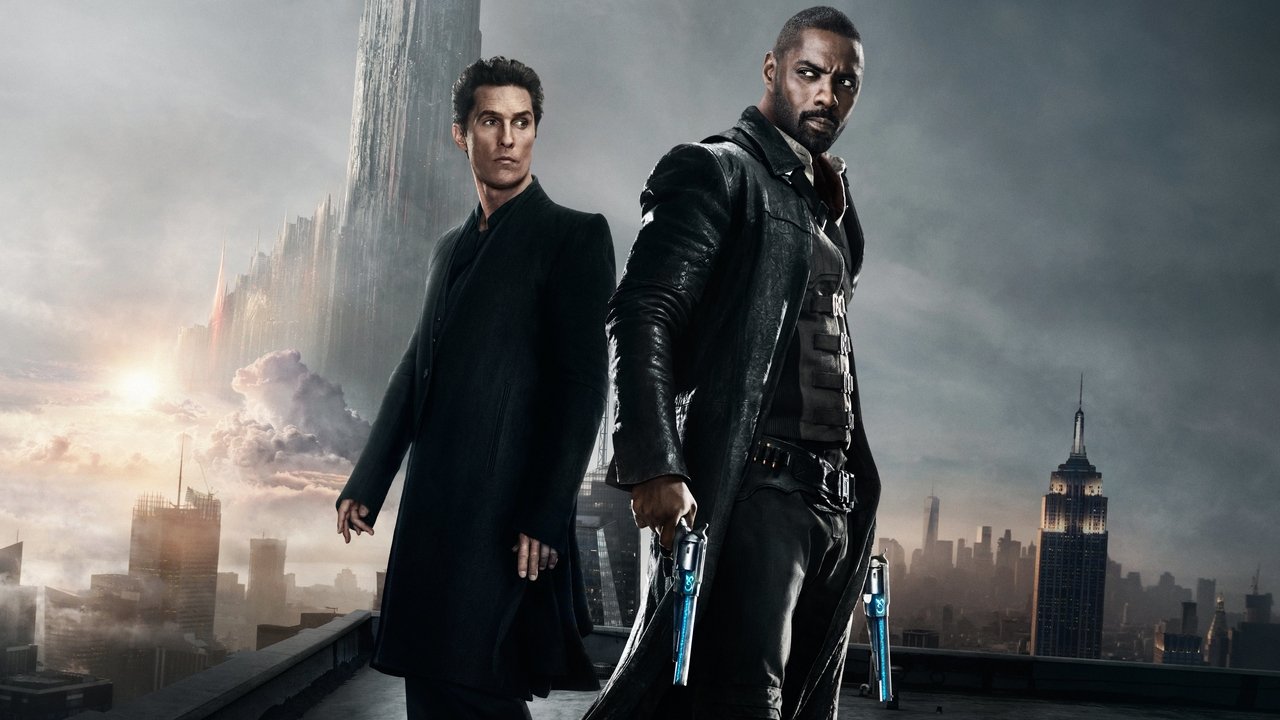
The Dark Tower VII: The Dark Tower (2004) — The seventh and final book in a sprawling saga. Sony's 2017 film (starring Idris Elba and Matthew McConaughey) earned a 37% on Rotten Tomatoes, but the source material ranks far higher.
-
11/22/63 (2011) — Time-travel historical thriller. Hulu's 2016 miniseries adaptation with James Franco and J.J. Abrams producing. Eight episodes. Still streaming on most platforms. This is the King entry point for people who don't like horror.
-
Misery (1987) — Two characters, one house, mounting psychological terror. Rob Reiner's 1990 film adaptation won Kathy Bates an Academy Award for Best Actress. The hobbling scene still feels real because Bates plays it with such methodical calm.
-
The Dark Half (1989) — Psychological thriller about a writer whose fictional killer comes to life. George A. Romero directed the 1993 adaptation with Timothy Hutton. Worth tracking down.
-
It (1986) — King's sprawling childhood-trauma horror-thriller. The two-part film adaptation (2017, 2019) grossed $1.17 billion combined worldwide—the moment studios realized King could anchor theatrical franchises.
-
Carrie (1974) — King's debut. Adapted three times: Brian De Palma's 1976 film (still the best), a 2002 TV version, and a 2013 Kimberly Peirce film with Chloë Grace Moretz. Available on multiple platforms depending on region.
-
Mr. Mercedes (2014) — A retired detective hunted by a maniac driver. Peacock and the AT&T Audience Network ran three seasons (2017–2019) with Brendan Gleeson. All episodes are on Peacock now.
-
Desperation (1996) — A small town terrorized by a mysterious force. ABC adapted it as a TV film in 2006 directed by Mick Garris. Less celebrated than the novel, but worth a look.
-
The Running Man (1982) — Dystopian game-show thriller. Published under King's Richard Bachman pseudonym. The 1987 Arnold Schwarzenegger film is a loose, action-heavy adaptation. Edgar Wright is directing a new version with Glen Powell attached, expected 2027.
Why Bachman Books Hit Different (And Why The Running Man Matters Now)
King published five novels under the Richard Bachman pseudonym between 1977 and 1984—The Running Man, The Long Walk, Rage, Roadwork, and Thinner. His explanation was simple: he wanted to test whether his success was tied to his name or his writing. The answer was both. But the Bachman books have a stripped-down quality. They're meaner. Faster. Less interested in world-building and more interested in plot.
The Running Man is the clearest example. A hunted-for-sport premise that predates The Hunger Games by 26 years, it reads like a 1990s action script—relentless pacing, minimal character work, pure forward momentum. Most coverage treats the Wright adaptation as just another King remake; the more honest read is that Wright saw a 219-page novella with zero fat on it and recognized the rarest thing in Hollywood development: source material that doesn't need to be "fixed," only filmed. Wright's done Baby Driver and Hot Fuzz. He understands propulsive storytelling. Glen Powell's casting suggests they're going for a leaner, meaner approach than the Schwarzenegger version.
Check Movie OTT for the 1987 Running Man film's current streaming status if you want to watch the original before Wright's version lands.
Where These Books Actually Stream (And Why It Matters for India)
Here's what's available on major platforms right now—and where to watch matters, because rights shift constantly in the Indian market.
Amazon Prime Video India is your best bet for King thrillers:
- 11/22/63 (all eight episodes, Hindi audio available)
- Mr. Mercedes (all three seasons)
- The Running Man (1987 film, periodically)
Netflix India has:
- Gerald's Game (2017 Mike Flanagan adaptation)
- 1922 (2018 short film)
- Rotating availability on the It films
Disney+ Hotstar India rotates King content depending on licensing windows. Check it weekly if you're hunting for something specific.
SonyLIV and Zee5 have limited King presence at the moment, though that can change.
The It films ($1.17 billion gross between both films—that's not a small number) appear and disappear based on licensing cycles. Both have Hindi dubbing, which broadens access considerably. Movie OTT's streaming tracker shows real-time availability across all these platforms simultaneously, which saves hours of searching.
For Indian readers new to King's thriller work, start with 11/22/63. It's King at his most accessible: science fiction, historical drama, genuine suspense, without the horror elements that can be a barrier. No monsters. No jump scares. Just a man trying to prevent an assassination and falling in love with a woman who'll age while he doesn't. The premise alone carries you through eight episodes.
The Edgar Wright Running Man: What's Actually Happening
This is the adaptation to watch for. Deadline confirmed Glen Powell attached to star in Edgar Wright's The Running Man reboot, though no release date has been announced publicly as of mid-2026. Wright's production pace suggests a 2027 theatrical window is realistic, but that's speculation.
What matters: Wright understands genre filmmaking at a level most directors never reach. Baby Driver's opening getaway sequence moves like a King thriller—propulsive, confident, no wasted beats. Hot Fuzz balances absurdity and genuine stakes. The Running Man is built for that sensibility: high concept, lean execution, no room for digression.
Glen Powell brings a particular flavor to action—he's not a superhero type. He plays guys who are smart and funny first, capable second. That's closer to King's conception of the protagonist in The Running Man than Schwarzenegger ever was. The part I'm most curious about is whether Wright keeps the novel's bleak, nihilistic ending (the protagonist crashes a plane into a skyscraper) or softens it for a theatrical audience that expects Glen Powell to survive.
Why Misery Still Beats Most Modern Thrillers
I keep coming back to Rob Reiner's 1990 Misery adaptation because it's one of those rare films where the constraints of the source material become a strength, not a limitation.
Two characters. One house. A writer held captive by his "number one fan." That's it. No subplots, no external threats, no plot twists that deflate the central tension. Just the slow realization that the woman keeping you alive is more dangerous than any escape attempt.
Kathy Bates won the Academy Award for Best Actress for her role as Annie Wilkes—and she deserved it. The scene where she hobbles Paul Sheldon is famous, but what's striking is how she plays it: methodical, calm, almost apologetic. She's not a ranting villain. She's someone who genuinely believes this is necessary. That's terror. Not screaming. Not violence. Certainty.
The film works because Reiner understands that the best thriller is the one where the protagonist and audience have nowhere to go. Check your platform's current availability on Movie OTT—Misery pops up regularly on rental platforms if not on subscription tiers.
The Dark Tower Problem: Why Book 7 Ranks So High (And Why You Probably Won't Read All Seven)
Here's the thing about Stephen King's The Dark Tower series: the final book is genuinely extraordinary. Also, you have to read 3,000+ pages across six prior novels to earn the payoff.
The Dark Tower VII: The Dark Tower ranks number two on Urquhart's thriller list—a bold call. But the book itself, taken on its own terms, is a relentless climax: a gunslinger with nothing left to lose facing down an ancient force of evil. It's Western mythology colliding with horror and science fiction. It should work as a film.
Sony's 2017 adaptation, starring Idris Elba and Matthew McConaughey, tried and failed. A 37% Rotten Tomatoes score tells you everything. The film tried to compress the entire saga into two hours, which meant cutting everything that made the books worth reading. For context, Sony spent a reported $60 million on production and the film grossed just $113 million worldwide against a break-even point north of $120 million (per Variety's post-release analysis). That financial sting is precisely why Amazon's planned TV series, which would have had the runway to do the material justice, has been languishing in development limbo since 2020 with no showrunner publicly attached.
Until that moves forward—or until you're willing to invest in the full saga—the original books are your best bet. Start with The Gunslinger and commit. Or skip it. Honestly, 11/22/63 gets you everything King does best without the seven-book commitment.
What Actually Changed After It Grossed $1.17 Billion
Before 2017, the assumption in Hollywood was that Stephen King adaptations were television events. Prestige, sure. But theatrical blockbusters? Not a chance.
Then It: Chapter One opened to $123.4 million domestically in its opening weekend. Everything changed.
Now every major streaming service has at least two King projects in development. The question isn't whether his work gets adapted anymore. It's which books, in what format, and who directs. Thriller-leaning titles like Mr. Mercedes and 11/22/63 work beautifully as limited series—they're built for episodic pacing. Horror-thriller hybrids like It and The Dark Half need significant budget to execute the supernatural elements without looking cheap.
That's probably why The Dark Half hasn't been revisited since Romero's 1993 film, despite being exactly the kind of high-concept premise that should work in a prestige TV era. The economics don't line up. A period thriller like 11/22/63 costs less to produce than a film where a writer's fictional character becomes real.
The Watch Order (And Why It Matters)
If you're starting from scratch, here's what actually works:
-
Start with 11/22/63 on Prime Video. Eight episodes, self-contained, no prior King knowledge required. This teaches you what King does best: character, stakes, and propulsive plotting. It'll take you through a weekend.
-
Then read or watch The Running Man. The novel is 300 pages, a quick read. The 1987 film is 100 minutes and completely unhinged in a way that's entertaining. When Edgar Wright's version lands, you'll appreciate what he's doing with the material.
-
If you want literary King, read Misery. The novel is tighter than the film. Then watch Reiner's adaptation to see how to translate internal terror into cinematic language.
-
Skip The Dark Tower unless you're committed. If you loved 11/22/63, you'll respect King's ability to balance genre and character. The Dark Tower is where he indulges his world-building instincts. It's not bad. It's just long.
Next Steps: What's Actually Worth Your Time Right Now
Don't sleep on 11/22/63. It's the King adaptation that works for people who aren't necessarily horror fans—which, frankly, is most of us. The premise carries the whole thing: a man discovers a portal to 1963 and tries to prevent JFK's assassination. From there, King does what he does best: character work, moral complexity, genuine stakes.
Check Movie OTT for the current streaming window. Prime Video usually has it locked down, but licensing shifts. The moment you find it available, watch it. Eight hours well spent.
And when Edgar Wright's The Running Man lands—probably 2027—you'll understand why King's thriller instincts matter as much as his horror ones. Streaming platforms are finally catching up to that fact.