10 Suspenseful Thrillers That Actually Work on Skeptics
TL;DR: Ten films that prove suspense doesn't require spectacle — just the ability to trap an audience before they realize it's happening. Where to stream them, which ones justify their reputation, and which ones don't quite hold up on a second watch. Start with Knives Out if you're new to this list.
The difference between a thriller that grabs everyone in the room and one that only works if you're already a genre fan comes down to a single contract the film makes in its opening minutes: I will make you feel trapped before you notice the cage.
Every film here honors that contract. Some do it with a phone booth. Some with a first-class airplane seat. Some with a country house full of people who smile too much. But they all accomplish the same trick, and here's what surprised me: a few are far more psychologically sophisticated than their mainstream reputations suggest, while others are more limited than the critical consensus admits.
The streaming picture for these titles is genuinely scattered. Movie OTT tracks real-time availability across Netflix, Prime Video, Disney+, and regional platforms—worth bookmarking if you're serious about working through the list, because licensing shifts weekly and regional access varies wildly.
The Actual Mechanics of Great Suspense (It's Not What You Think)
"Suspense is not about noise. It is about control," Collider's Safwan Azeem wrote in May 2026 when covering this exact list. That's obvious once you hear it. And Hollywood forgets it constantly.
The films that last across decades locate their tension in the ordinary. A phone ringing. A seat assignment. A stranger's face that's slightly off. Wes Craven understood this instinctively when he made Red Eye (2005). He took a delayed flight and a chatty seatmate—two things every traveler has endured—and engineered an 85-minute pressure cooker that earned $96 million worldwide on a $26 million budget.
Not a blockbuster. A perfect efficiency ratio.
That's the model worth studying: restraint, not spectacle.
Where to Actually Watch These (The Honest Breakdown)
Here's the practical rundown for anyone who wants to stop reading and start watching:
Tier 1: Easy to Find
- Knives Out (2019, 130 min) — Daniel Craig, Ana de Armas, Chris Evans. Prime Video globally. Director Rian Johnson's murder mystery that's actually about class warfare.
- North by Northwest (1959, 136 min) — Cary Grant, Eva Marie Saint. Max in the US. Hitchcock's crop-duster sequence still hits differently.
- The Fugitive (1993, 130 min) — Harrison Ford, Tommy Lee Jones. Max in the US. A chase film that understands pacing.
Tier 2: Scattered Availability
- Red Eye (2005, 85 min) — Rachel McAdams, Cillian Murphy. Paramount+ and Pluto TV in the US. Confined-space thriller that actually sustains tension.
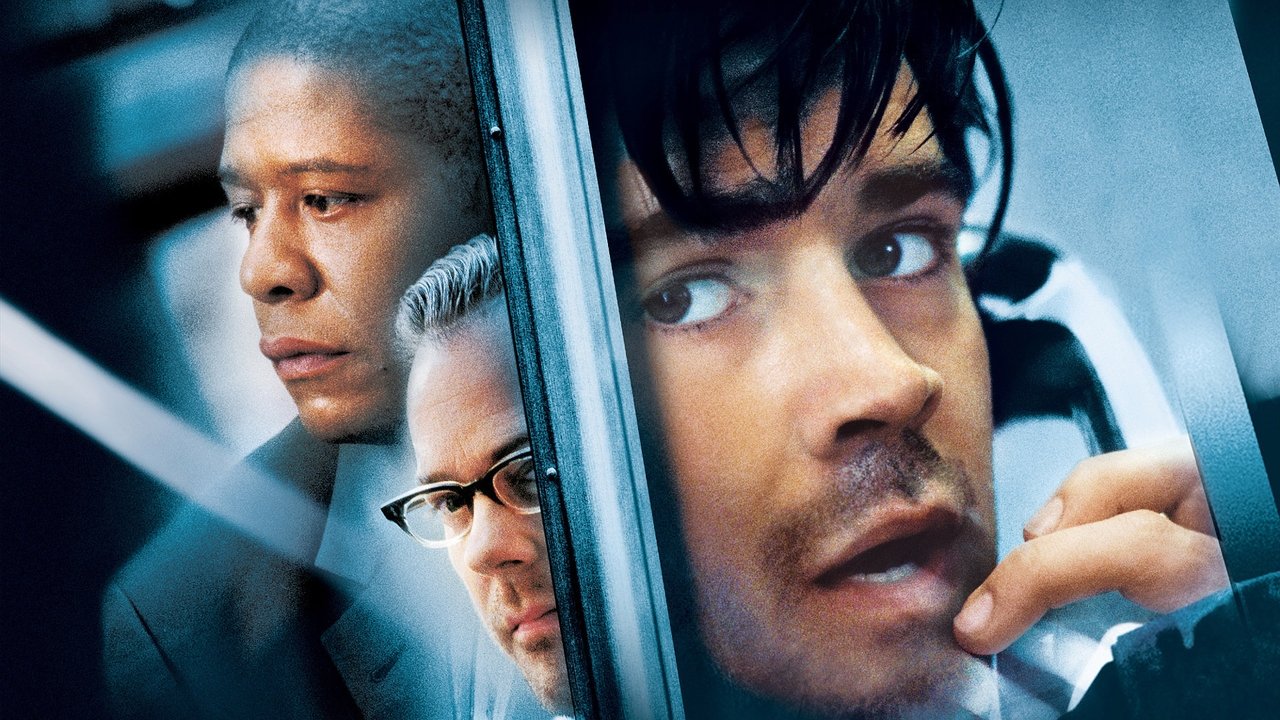
- Phone Booth (2002, 81 min) — Colin Farrell, Kiefer Sutherland (voice). Available regionally; check Movie OTT for your area.
- Breakdown (1997, 93 min) — Kurt Russell, J.T. Walsh. Prime Video in the US. Solid, functional, carried by performances.
- The Game (1997, 129 min) — Michael Douglas, Sean Penn. Max in the US. Fincher's most underrated work.
- Wait Until Dark (1967, 108 min) — Audrey Hepburn, Alan Arkin. Rent on Prime Video and Apple TV+. The gold standard for single-location tension.
For Indian audiences specifically, Prime Video India has Knives Out with English audio and subtitles in multiple languages. The Fugitive and North by Northwest are on Max, though coverage remains spotty—regional dubs are essentially nonexistent for this catalog, so subtitles are your best bet. Older titles like Wait Until Dark and Breakdown cycle through Zee5 and Eros Now unpredictably; rental through Apple TV+ or Google Play is your safest option.
Why Hitchcock Still Wins (And Why That Matters)
Most "best suspense" lists lean on Hitchcock out of habit. North by Northwest earns its place on merit that actually survives pressure—97% on Rotten Tomatoes, 98 on Metacritic.
What Hitchcock grasped, and what David Fincher rebuilt in The Game, is that the most destabilizing suspense isn't physical danger—it's epistemological danger. The moment Roger Thornhill stops being able to trust what he knows about his own identity, the film becomes about something much larger than a chase. Same with Michael Douglas in The Game, where Fincher systematically attacks his character's faith in causality itself. Every room contains a second script. Every handshake could be a setup.
That's a very specific kind of horror. It doesn't require a single gunshot.
Honestly, The Game is the most underrated film on this entire list. It gets sorted into "puzzle movies" by people who watched it once and thought they'd cracked the code. They haven't.
Why Knives Out Is More Than Just a Whodunit
Calling Rian Johnson's Knives Out (2019) a murder mystery is like calling Parasite a home-invasion thriller—technically accurate, practically misleading.
The film grossed $311.4 million worldwide against a $40 million budget. That's not accidental. Johnson builds suspense not from concealment but from information imbalance. The audience knows more than the characters think we do, and that knowledge becomes its own trap. Marta Cabrera (Ana de Armas) isn't a detective. She's a decent person trying to survive a machine built by wealth and entitlement. The anxiety comes from watching her navigate that without losing herself.
What aggregator coverage misses is that Knives Out cares more about class warfare than mystery mechanics. The "who done it" is almost beside the point. The real question is who gets to write the story afterward—and who gets believed. The sequel, Glass Onion, proved the limits of that formula: same structural DNA, weaker tension, $209 million worldwide against roughly the same budget. Netflix paid $469 million for two sequels and got diminishing returns on the first. Read that as a warning, not a franchise blueprint.
The Confined-Space Thrillers (And Why They Work)
Red Eye, Phone Booth, and Wait Until Dark all operate on the same principle: trap the protagonist in a space where escape is theoretically possible but practically blocked. The anxiety compounds because the audience can see the exit and understands why the character can't use it.
Red Eye is the most modern of the three. Wes Craven took the airplane as setting—a space where security is supposed to protect you—and inverted it. Cillian Murphy's Jackson Rippner isn't theatrical. He's methodical. Speaking to Deadline about antagonist work, Murphy noted that "the most frightening characters are the ones who are completely reasonable until they aren't." That describes Rippner with uncomfortable precision.
Phone Booth is a one-trick exercise. Joel Schumacher's direction never pushes past competent. Colin Farrell carries it on pure screen presence. What's striking is that the film knows it can't afford to slow down—there's nothing underneath the premise if it does. Eighty-one minutes is a feature, not a limitation.
Wait Until Dark (1967) remains the gold standard. Audrey Hepburn plays a blind woman defending her home from criminals who believe she's protecting something valuable. The film's restraint is almost unbearable. Terence Young shoots it like a stage play—lots of darkness, lots of listening. By the time the violence comes, you're genuinely unsettled. Alan Arkin's performance as the lead villain is the only moment where menace feels theatrical, and that's actually the point. His character is performing danger because he doesn't actually feel secure.
Watch them in this order: Wait Until Dark first (to see the template), then Red Eye (modern refinement), then Phone Booth (the limits of the form).
The Films That Don't Quite Hold Up (And Why That Matters)
Breakdown (1997) is a solid, functional thriller that does exactly what it promises. Jonathan Mostow's direction is workmanlike. Kurt Russell carries it on pure presence. J.T. Walsh—who died in 1998—gives the only genuinely unsettling moment: a villain whose menace is practical rather than performed. Without those two, Breakdown is a forgettable cable movie. It isn't forgettable. But it's also not a masterpiece.
The thing nobody mentions about limited-location thrillers is that they often feel more impressive in memory than on a second watch. The trap springs once. After that, you're watching the mechanism. The tension comes from novelty, and novelty doesn't survive a rewatch.
Breakdown and Phone Booth are both victim to this. They're worth seeing. They're not worth revisiting unless you're specifically studying structure.
What These Films Are Actually Teaching Modern Directors
The current streaming landscape is producing a second wave of single-location thrillers, partly because they're cheap and partly because post-pandemic audiences apparently haven't recovered from the anxiety of being stuck with the wrong people. Hard to say if that's creative choice or just economics wearing creative clothing. Most coverage frames this wave as a creative renaissance; the more honest read is that streamers discovered confined-space scripts cost $15–25 million and reliably clear 2x their budget, which makes them the safest possible bet dressed up as artistic risk.
What's clear is that Rian Johnson and David Fincher both cite Hitchcock openly—Johnson in multiple interviews, Fincher in his commentary tracks. The lineage is direct. The question is whether the next generation of thrillers learns the actual lesson from these films, which is restraint, or just borrows the visual grammar and fills it with noise.
Recent evidence suggests the latter. But the originals aren't going anywhere. We shall see.
Your Actual Watch Order
Start here:
- Knives Out — newest, most accessible, legitimately great
- North by Northwest — the foundation; explains why confined-space thrillers work
- Wait Until Dark — the template for what happens when you remove escape routes
- Red Eye — modern refinement of that template
- The Game — if you want something psychologically ambitious
The rest fill in gaps. Worth watching, not essential.
For current availability in your region—and trust me, it changes—Movie OTT maintains weekly updates for Indian, UK, US, and Spanish audiences. If you're building this list, start there. Availability shifts constantly for older titles, especially across regional platforms.