Zero Dark Thirty at 14: The Procedural Thriller That Still Outpaces Its Imitators
TL;DR: Kathryn Bigelow's Zero Dark Thirty (2012) is a 157-minute procedural masterwork starring Jessica Chastain as CIA analyst Maya Lambert, tracking the decade-long hunt for Osama bin Laden. Fourteen years on, it streams across multiple global platforms and holds up as one of the finest political thrillers of the 21st century — sharper, colder, and more morally complex than almost anything that followed it.
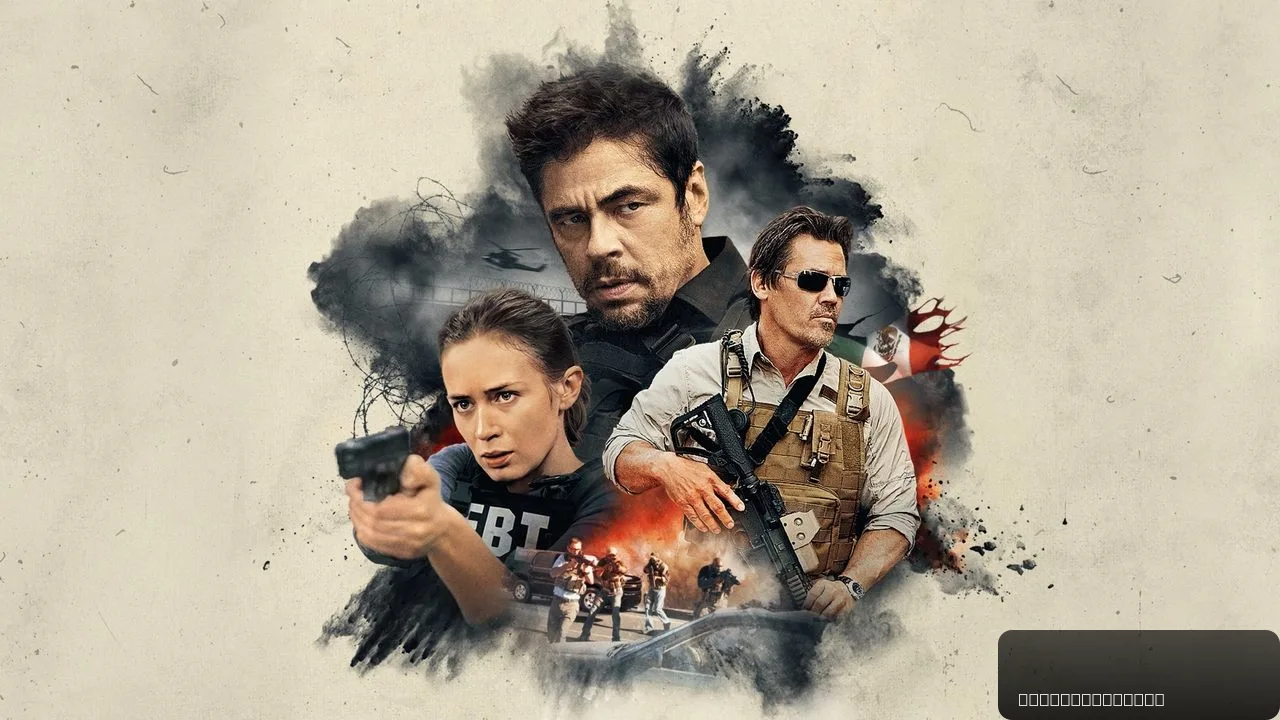
Three years before Denis Villeneuve made cartel violence feel suffocating in Sicario, Kathryn Bigelow released a film covering different geography but the same emotional temperature: the grinding, thankless, psychologically corrosive experience of pursuing a target the world has already decided must die. Zero Dark Thirty arrived in December 2012 to immediate controversy, enormous box-office returns, and a level of critical consensus that the intervening fourteen years have only solidified. The film isn't remembered as a post-9/11 document anymore. It's remembered as a lesson in how procedural cinema actually works when a filmmaker refuses to make it comfortable.
What Makes This Film Different From Everything Since
Here's the thing nobody mentions when Zero Dark Thirty comes up in 2026: it arrived before the prestige-streaming era reshaped audience expectations for this kind of content, and it still runs laps around most of what the platforms have produced since.
The market for serious political thrillers on streaming is crowded now. Netflix has Munich: The Edge of War, The Spy, Zero Zero Zero. Apple TV+ has Slow Horses. Prime Video has Jack Ryan across four seasons. Most of these shows are technically accomplished and adequately written. None of them carry the specific weight of Zero Dark Thirty because none of them are willing to be as withholding. The streaming thriller has become a genre of reassurance — each episode structured to deliver a dopamine hit of revelation on schedule, each season engineered to retain subscribers through cliffhanger mechanics. Bigelow's film operates on the opposite principle: it withholds, and withholds, and withholds, and then when the payoff arrives it doesn't feel like a payoff at all.
What Bigelow understood — and what most streaming thrillers have forgotten in the race to service subscribers — is that procedural tension requires the audience to do some work. The film's first act is genuinely uncomfortable to sit through, not because of the interrogation content alone, but because Bigelow refuses to orient you with the kind of expository scaffolding modern prestige TV treats as mandatory. You're dropped into a world already in motion and expected to catch up.
That formal confidence is rarer than it should be. Movie OTT's streaming tracker shows the film currently available in several major territories, making this an ideal moment to revisit it — or to discover it for the first time if the 2012 controversy kept you away.
The Core Details: Who Made It, Who Stars, Where to Watch
Director: Kathryn Bigelow. Lead: Jessica Chastain. Runtime: 157 minutes. Release: December 19, 2012 (limited US), expanding wide in January 2013.
Columbia Pictures and Annapurna Pictures produced the film on a $40 million budget, according to The Numbers, and grossed approximately $132.8 million worldwide — a substantial return for a serious, non-franchise political thriller with no action-hero mythology propping it up. To put that $40 million budget in perspective: the same year, The Avengers cost $220 million. Bigelow delivered a film that outperformed its budget by 3.3x while competing against franchise spectacles that had five times her resources. That ratio tells you something about what's possible when craft substitutes for scale.
Key cast:
- Jessica Chastain as Maya, the composite CIA analyst at the film's center
- Jason Clarke as Dan, a CIA operative whose interrogation scenes remain the film's most contested sequences
- Joel Edgerton, Chris Pratt, and Taylor Kinney as members of SEAL Team Six
- Kyle Chandler as Maya's station chief
- Jennifer Ehle as a fellow analyst whose fate shifts the film's emotional axis in a single, brutal scene
Chastain received an Academy Award nomination for Best Actress for this performance. The film earned five nominations total — Best Picture, Best Original Screenplay, Best Film Editing, Best Sound Editing, and Best Actress. It won none of them. A fact that still prompts genuine puzzlement among serious film observers, given how technically accomplished the final raid sequence is.
Streaming availability has shifted across services over the years. As of this writing, Prime Video India carries Zero Dark Thirty with English audio and English subtitles. For current listings across Netflix, Hotstar, and other regional platforms, Movie OTT tracks real-time availability across territories — worth bookmarking if you're trying to confirm where it's streaming this week.
Bigelow and Boal Built This Two Films in a Row
You can't understand Zero Dark Thirty without understanding what Kathryn Bigelow and screenwriter Mark Boal created together in The Hurt Locker (2008). That film won six Academy Awards including Best Picture and Best Director — making Bigelow the first woman to win the directing prize — and established a template for war cinema that prioritized psychological texture over combat spectacle.
Zero Dark Thirty scales that approach up considerably. Where The Hurt Locker followed three soldiers in a confined, episodic structure, this film spans a decade across multiple continents, tracking a single analyst's obsession as it consumes everything around her. It's a longer, more demanding piece of work, and in some ways a braver one. Bigelow doesn't give Maya a personal life to retreat into. No romantic subplot. No family scenes to humanize her in the conventional sense. Just the mission, the wall of photographs, the years.
Boal won an Oscar for The Hurt Locker alongside Bigelow, and he brought that same research discipline to this script — years of reporting with intelligence community sources, according to interviews from the awards season. The result was procedurally authentic enough to draw a Senate Intelligence Committee investigation. Which is either a sign of serious overreach by politicians or the highest possible compliment a thriller writer can receive. Probably both.
The film's DNA is visible in nearly everything that followed it in the political-thriller space. Sicario owes a clear debt to its moral ambiguity and its refusal to identify a clean protagonist. Netflix's Narcos borrowed its procedural structure and its willingness to present state violence without flinching. Neither fully matches the formal control Bigelow brings to the Abbottabad raid sequence — 25 minutes of near-silent night-vision footage that plays like a documentary someone accidentally shot inside a nightmare.
What Bigelow Actually Said About the Film's Moral Weight
Bigelow has been consistently direct about her intentions. "I wanted it to be almost journalistic," the director told the Los Angeles Times during the film's awards campaign, "a reported film — not an editorial." That framing matters because it explains why Zero Dark Thirty doesn't offer catharsis in the conventional Hollywood sense. There's no triumphant score when the mission concludes. There's Chastain's face, alone on a military transport plane, tears running without explanation.
What's striking is how that final image has only gained weight over time. In 2012, some critics read it as vindication. Now it reads more clearly as exhaustion. Bigelow's refusal to explain Maya's tears — to tell you what you're supposed to feel — is exactly what keeps the film from becoming propaganda. She shows you a woman who's spent a decade hunting a ghost, who got her target, and who's completely hollow. Make of that what you will.
How This Plays Differently for Indian Audiences
For Indian viewers, Zero Dark Thirty occupies an interesting position. The geopolitical subject matter — US counterterrorism operations in Pakistan and Afghanistan — isn't distant from the region's own security conversations, which gives the film a different resonance than it carries for purely Western audiences (or at least, a more charged one). The procedural structure, the bureaucratic obstruction, the sense of an analyst fighting an institutional system as much as an external enemy: these aren't unfamiliar dynamics in the Indian security context.
For audiences who came to political thrillers through The Family Man or Special Ops, Zero Dark Thirty is an obvious and rewarding next step. Same genre instincts. Considerably higher budget. But the more honest comparison for Indian audiences isn't those shows — it's Neeraj Pandey's Special 26 and A Wednesday!, films that understood the same principle Bigelow builds her entire project around: that the procedural grind, the waiting and the paperwork and the dead ends, can generate more tension than any gunfight. Chastain's performance has no real equivalent in the Indian streaming space — that specific combination of cold professional competence and barely suppressed grief. If you haven't seen it yet, start there before moving backward to The Hurt Locker.
Why the Controversy Mattered Less Than the Craft
The Senate investigation, the arguments about whether the film endorsed torture as an effective intelligence tool — those debates were loud in 2012 and 2013, and they shaped how many critics approached the film on first viewing. Fourteen years of distance has allowed audiences to engage with it on purely cinematic terms. The Blu-ray and 4K restorations have circulated widely. Bigelow's director's commentary offers a measured, research-grounded account of the creative decisions behind the film's most contested moments.
I keep coming back to this: the interrogation scenes aren't presented as heroic or justified. They're presented as a fact of the operation. Bigelow doesn't look away, but she doesn't celebrate either. That's a harder position to hold than either "torture works" or "torture doesn't work" — and it's also a lot harder to make cinematically without tipping into exploitation.
The film holds a 91% critics score on Rotten Tomatoes and an 83 Metascore on Metacritic — numbers that reflect a critical consensus that has, if anything, grown more settled over time rather than fracturing the way controversial films sometimes do in retrospect.
The Verdict: Watch It in One Sitting
Zero Dark Thirty is 157 minutes long and earns every one of them. Don't watch it in two parts. The cumulative pressure of the runtime is part of how the film works — by the time the helicopters drop into Abbottabad, you've spent two and a half hours inside Maya's obsession, and the raid lands with weight precisely because of that.
The comparison to Sicario that the film's renewed attention has generated is apt but incomplete. Sicario is about moral corruption from the outside in. Zero Dark Thirty is about moral erosion from the inside out. Both are essential. But if you're choosing one to watch this weekend, the Bigelow film is the one that'll stay with you longer.
The final image — Chastain's face on that empty plane — is one of the most quietly devastating endings in American cinema this century. Not a victory lap. The cost.
Watch the official trailer: