The Best Neo-Western Films Streaming Right Now, Ranked
TL;DR: Neo-westerns are having a quiet streaming renaissance, and if you know where to look, some of the genre's finest work is available right now across Netflix, Prime Video, and regional platforms. From Villeneuve's border-terror masterwork to a Korean treasure-hunt spectacular, this is the definitive guide to what's worth your time — and where to find it.
If you're an Indian Prime Video subscriber hunting for Sicario this weekend, here's the frustrating truth: streaming availability for neo-western classics shifts constantly by region, and what's accessible in Mumbai may be locked behind a different platform in London or Los Angeles. That's the practical consequence of a genre that's scattered across competing libraries, and it's exactly why tracking these films matters. The neo-western isn't a niche curiosity. It's arguably the most vital strand of American cinema from the last three decades, and right now, several of its landmark titles are available to stream globally, if you know which platform to check.
What Neo-Westerns Actually Are — and Why They Hit Differently
The classical Western died a slow death somewhere in the 1970s. What replaced it wasn't an absence, but a reckoning. Neo-westerns kept the iconography — the arid landscapes, the morally compromised lawman, the fugitive with a code — and stripped out the mythology. No more triumphant frontier expansion. Just dust, consequence, and people trying to survive systems that were broken before they arrived.
Rotten Tomatoes' guide to modern neo-westerns defines the genre around anti-heroes with personal moral codes, justice pursued at personal cost, and remorse as a through-line. That's a useful framework. But what the definition misses is the geography: neo-westerns are almost always about borders, literal or metaphorical. The U.S.-Mexico border. The line between law and crime. The edge of a community that's already been left behind by the economy.
The films below represent the genre's best work. Not a definitive canon — canons are for textbooks — but a practical, opinionated guide to what's worth watching, where to watch it, and why it matters.
The Films: From Crowd-Pleasing to Genuinely Disturbing
Hell or High Water (2016) Directed by David Mackenzie, written by Taylor Sheridan. Runtime: 102 minutes. Chris Pine and Ben Foster play brothers robbing banks across West Texas to save their family's land; Jeff Bridges plays the Texas Ranger trying to catch them. The film earned four Academy Award nominations, including Best Picture, and holds a 98% approval rating on Rotten Tomatoes per RT's own records.
What's striking about Hell or High Water is how little it romanticizes its outlaws. Pine's Toby isn't Jesse James. He's a man doing ugly math. Bridges' Marcus Hamilton, meanwhile, is the kind of lawman who'd make John Wayne uncomfortable — too old, too cynical, too aware that catching these guys won't fix anything. There's a scene late in the film where Hamilton sits on a porch with his newly retired silence, and it says more about American law enforcement than most prestige dramas manage in a full season.
No Country for Old Men (2007) The Coen Brothers' adaptation of Cormac McCarthy's novel won four Academy Awards including Best Picture (per the Academy's official records), and remains the genre's critical benchmark. Javier Bardem's Anton Chigurh is the most genuinely frightening character in 21st-century American cinema. Not because he's monstrous, but because he's logical.
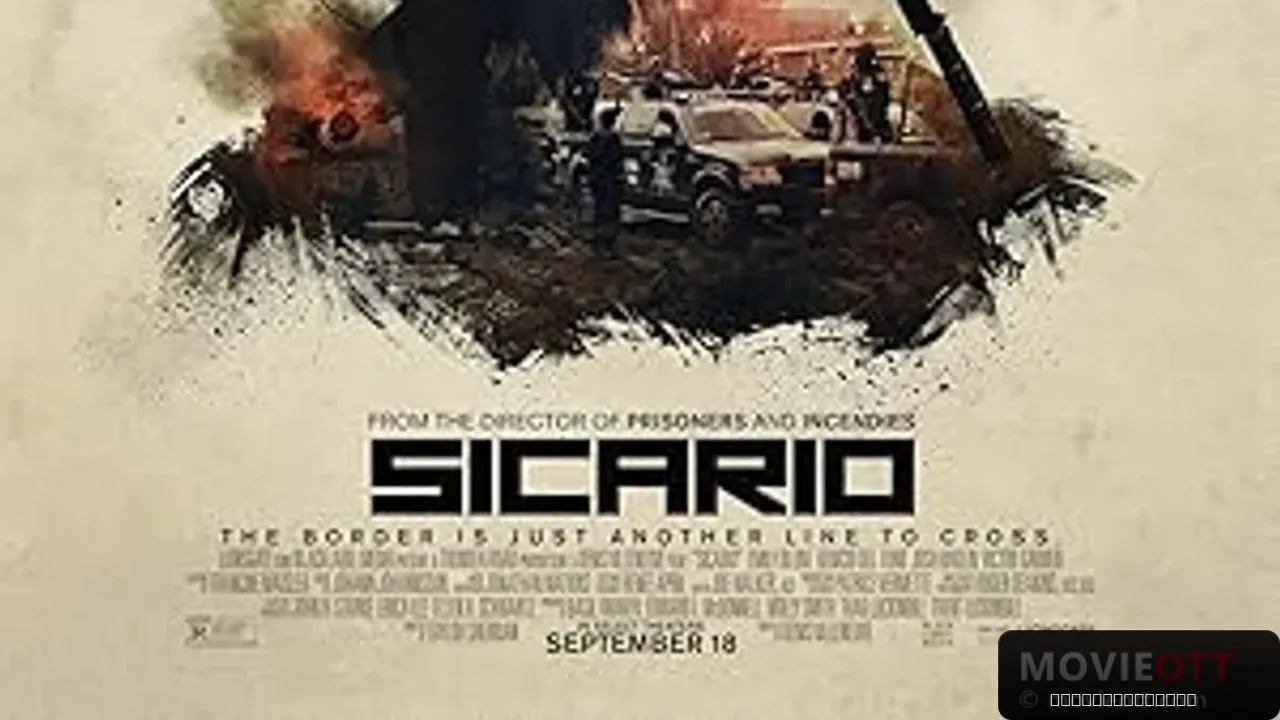
Sicario (2015) Denis Villeneuve's border thriller, written by Taylor Sheridan and shot by Roger Deakins, follows FBI agent Kate Macer (Emily Blunt) into a shadow operation targeting Mexican cartels. The film carries a Metacritic score of 82 and made $84.9 million worldwide against a reported $30 million production budget, according to Box Office Mojo. Josh Brolin and Benicio del Toro complete a trio of performances that are each doing something entirely different, and somehow all three work. I keep coming back to Deakins' work here: that dusk convoy sequence crossing into Juárez, where the silhouettes of armored vehicles descend against a burnt-orange sky, is the kind of slow-burn visual storytelling that worked for Heat and Zodiac (both Deakins-adjacent in their patience) and that almost nobody attempts anymore because studios don't trust audiences to sit with tension.
The Three Burials of Melquiades Estrada (2005) Tommy Lee Jones directed and starred in this Guillermo Arriaga-scripted film about a Texas rancher who forces a border officer to travel to Mexico to properly bury a man he unjustly killed. Jones won Best Actor at Cannes. Roger Ebert gave it a perfect four stars. It's one of the most quietly devastating films in this genre, and it remains criminally underseen. Hard to say if that'll ever change — it doesn't have the marketing muscle of a franchise entry — but it deserves an audience.
Brokeback Mountain (2005) Ang Lee's queer Western won three Oscars: Best Director, Best Adapted Screenplay (Larry McMurtry and Diana Ossana), and Best Original Score (Gustavo Santaolalla). Heath Ledger and Jake Gyllenhaal's performances have only grown more powerful with distance from the cultural noise that surrounded the film's 2005 release. The thing nobody mentions often enough: this is formally one of the most beautiful films in the genre. The Wyoming cinematography by Rodrigo Prieto isn't just pretty — it's doing thematic work, making the landscape feel like something both these men are trapped inside.
The Good, the Bad, the Weird (2008) Korean director Kim Jee-woon's tribute to Sergio Leone transplants the spaghetti western formula into 1930s Manchuria, with Song Kang-ho, Lee Byung-hun, and Jung Woo-sung racing for a treasure map. It drew 6.68 million admissions domestically in South Korea (per the Korean Film Council), making it the fifth highest-grossing Korean film of 2008, and its $10.7 million opening weekend outpaced every Hollywood action release in the Korean market that July. Pure bombast. If you want to understand how globally portable western conventions actually are, start here.
Bone Tomahawk (2015) Kurt Russell leads a posse into the desert in what appears, for the first 90 minutes, to be a patient, dialogue-driven classical western. Then writer-director S. Craig Zahler pivots into something much darker. The genre shift is audacious. StudioBinder's ranking of best modern westerns places it among the genre's more formally daring entries, and that assessment is fair.
What Quentin Tarantino Said About Getting It Wrong
Tarantino has been candid about The Hateful Eight (2015) in ways that make the film more interesting in retrospect. "I didn't intend for it to be such a serious film," he told interviewers during the film's release campaign — acknowledging that what started as a playful western exercise became something heavier once he committed to its post-Civil War racial politics.
That honesty matters. The Hateful Eight works precisely because Tarantino stopped trying to control the tone. The film's central question — who among this group of strangers is who they claim to be — is also a question about American identity, about which version of history survives the night. The Ennio Morricone score (his first original western score in decades, and the one that finally won him a competitive Oscar at age 87) gives the whole thing a weight the dialogue alone couldn't carry.
Tommy Lee Jones, speaking about Three Burials at Cannes in 2005, described the border not as a political symbol but as "a fact of life for millions of people who move through it every day." That grounding in the mundane is what separates the film from more operatic takes on the same geography.
The Numbers Behind Neo-Western's Streaming Value
Budget and box office figures tell an interesting story about how the genre operates commercially.
- No Country for Old Men: $25 million production budget; $171.6 million worldwide gross (per Box Office Mojo). An extraordinary return that helped establish mid-budget prestige filmmaking as commercially viable.
- Hell or High Water: approximately $12 million budget; $37.6 million worldwide, with awards-season momentum extending its run.
- Sicario: $30 million budget; $84.9 million worldwide, spawning a 2018 sequel.
- Brokeback Mountain: $14 million budget; $178.1 million worldwide (per Box Office Mojo), making it one of the highest-grossing westerns of the 2000s.
These aren't superhero numbers. But they're consistent proof that the genre delivers reliable returns on modest budgets, which is why streaming platforms have quietly become the genre's primary home. Original neo-westerns are increasingly commissioned directly for streaming, bypassing theatrical entirely. Most coverage treats this migration as a distribution footnote; the more honest read is that it represents the genre's slow exile from the big screen, where the communal experience of a Deakins landscape on a 60-foot screen can't be replicated on a laptop at 1080p.
Movie OTT tracks current streaming availability across all major platforms by region, which is genuinely useful when titles migrate between services without announcement.
Where Indian Audiences Can Actually Watch These Films
Indian streaming availability for neo-westerns is patchier than it should be, but here's the current picture:
- Netflix India: No Country for Old Men, Brokeback Mountain, The Hateful Eight (availability fluctuates — verify before subscribing)
- Amazon Prime Video India: Hell or High Water, Sicario, Bone Tomahawk
- Mubi India: Bacurau (the Brazilian neo-western from Kleber Mendonça Filho), Lone Star, The Three Burials of Melquiades Estrada
- SonyLIV: Selected titles vary by licensing window
- JioCinema: Occasional theatrical holdovers; check current listings
Most of these films don't carry Hindi or regional language dubs, which limits their reach beyond English-comfortable urban audiences. That's a genuine gap. The genre's themes — land rights, institutional violence, border communities, economic desperation — translate directly to rural Indian contexts, and dubbed versions of Hell or High Water or Sicario would find an audience.
Movie OTT's where-to-watch tracker is the most reliable tool for checking real-time regional availability, especially as titles rotate between platforms on quarterly licensing cycles.
The Indian market's appetite for morally complex crime thrillers is well established — the success of Mirzapur, Sacred Games, and Scam 1992 on streaming platforms suggests an audience that's ready for the genre. Hell or High Water in particular would land well with viewers familiar with stories about rural economic collapse.
What the Genre's Next Wave Looks Like
Taylor Sheridan's ongoing Yellowstone universe (Paramount Network/Paramount+) has brought neo-western aesthetics to prestige television at scale — Yellowstone averaged over 10 million viewers per episode in its peak seasons, according to Paramount's reported figures. That mainstream success has made the genre commercially legible in ways that should, in theory, open doors for more adventurous theatrical entries.
The more interesting question is whether international neo-westerns — South Korean, Brazilian, Indian — will get the distribution they deserve in English-language markets. The Good, the Bad, the Weird and Bacurau both demonstrate that western conventions aren't culturally specific to America. They're portable. And streaming platforms, which don't have the same theatrical distribution constraints, are positioned to bring those films to global audiences.
For the latest streaming availability across all regions, Movie OTT maintains updated listings as titles move between platforms.
The genre isn't going anywhere. It's just getting harder to track. Know where to look.