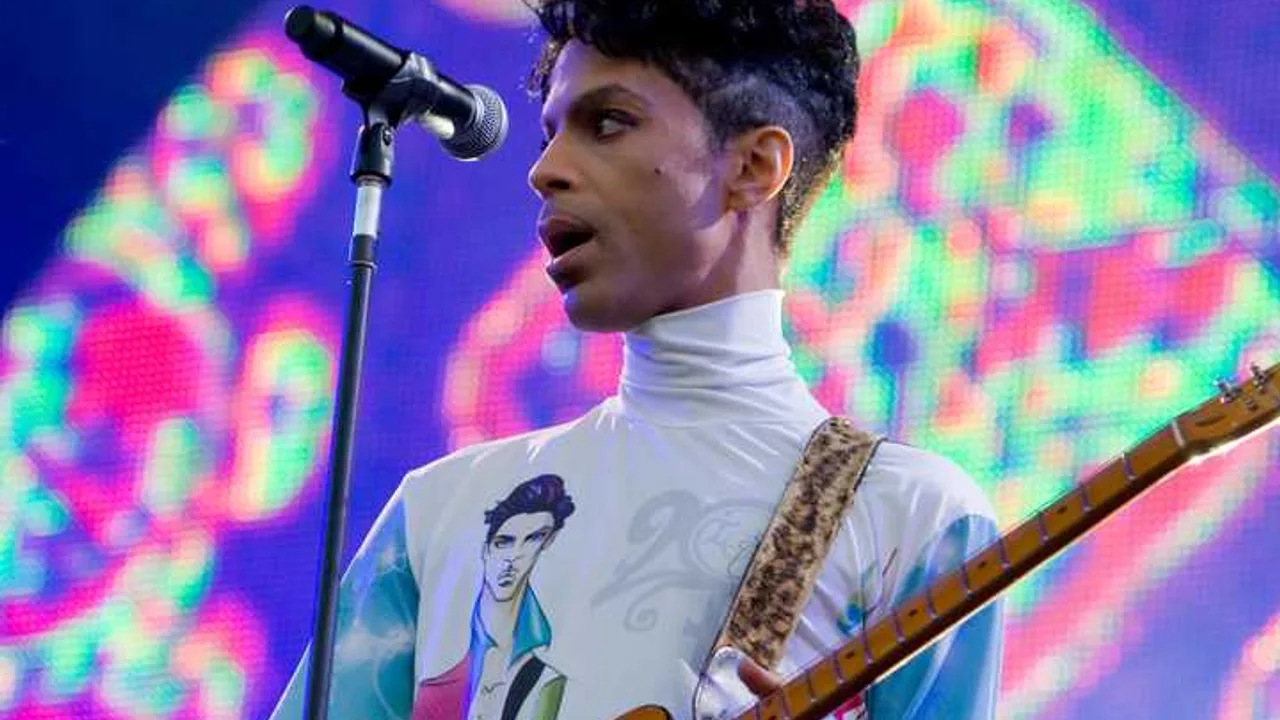
Prince's Batman Soundtrack at 37: The Superhero Album That Changed Everything
TL;DR: In summer 1989, Prince released a funk-pop concept album written entirely from each Batman character's perspective — three days before the film dropped. It hit No. 1 worldwide, spawned a Grammy-winning hit single, and remains the most audacious thing any pop artist has ever done for a superhero film. Here's why it still matters, where to watch the movie, and what made this collaboration with Tim Burton impossible to replicate.
How Prince Delivered Two Soundtracks Instead of One
June 20, 1989. Prince Rogers Nelson finished a funk record in his Minneapolis studio that nobody had asked for and nobody knew how to categorize. Three days later, Tim Burton's Batman opened in theaters with two completely separate soundtracks running parallel to each other — Danny Elfman's brooding orchestral score underneath the film, and Prince's neon-lit pop record playing in every car, dorm room, and record shop on the planet.
Here's the thing nobody mentions: they were supposed to collaborate. Elfman and Prince. One score, two voices. Elfman said no. Bluntly. According to music reporting at the time, his answer was: "I can't do that." And by refusing, he accidentally created something that's never been matched since.
The album went to No. 1 in the US and UK. "Batdance" — the lead single, a genuinely strange piece of music that somehow worked — hit No. 1 on the Billboard Hot 100. Prince won a Grammy for Best Album of Original Score Written for a Motion Picture or Television Special in 1990. That's not revisionist praise. That's the chart.
What Prince Actually Made: Nine Songs, Nine Perspectives
Prince didn't write a soundtrack. He wrote a parallel narrative. According to the album's liner notes, which Prince wrote himself, each track belonged to a specific character's inner life.
The breakdown:
- "The Future" and "Scandalous" — Batman's perspective
- "Electric Chair" and "Trust" — the Joker's
- "Vicki Waiting" — Bruce Wayne's longing for Vicki Vale
- "Lemon Crush" — Vicki Vale's perspective
- "The Arms of Orion" (featuring Sheena Easton) — the love between them
- "Batdance" — the chaos itself
Nine songs. All written and produced by Prince. Released on June 20, 1989 on Warner Bros. Records. And none of them sound like anything else in his catalog, which is saying something for an artist who'd already released Purple Rain (1984).
What strikes me about the album now is how committed it is to character work. These aren't songs that happen to be Batman-themed. They're interior monologues set to music — the Joker's manic energy compressed into a 4-minute track, Batman's isolation rendered as minor-key funk. Prince understood something about superhero storytelling that most artists miss: the music doesn't need to explain the movie. It needs to live in the movie's psychology.
The Collaboration That Almost Happened (And Why It Didn't)
Here's the part that explains everything that came after.
Tim Burton wanted Prince and Danny Elfman to work together — Prince providing the pop momentum, Elfman shaping it into something cinematic. The idea made sense on paper. In practice, Elfman refused. He understood that having two composers pulling in different directions would dilute both voices. Better to stay separate. Better to own different territories of the same film.
Elfman went on to build one of the most distinctive compositional voices in Hollywood — gothic, percussive, rooted in minor keys and carnival dread. His Batman theme remains, alongside John Williams' 1978 Superman score, the most recognizable piece of superhero music ever written. But it doesn't fight with Prince's album because it's not even trying to occupy the same space. Elfman owns the screen; Prince owns everything around it.
What's fascinating is that Elfman had already collaborated with Burton on Pee-wee's Big Adventure (1985) and Beetlejuice (1988). The Batman refusal was a moment of real artistic clarity — knowing when to step back. They'd work together on Edward Scissorhands (1990) and Batman Returns (1992), but on the 1989 film, Elfman stayed in his lane. That constraint created something neither artist could have made alone.
The Michael Jackson Detail Nobody Talks About
In a 2010 interview with Rolling Stone Germany, Prince mentioned something that had been almost entirely forgotten: the album was originally supposed to be a duet between Michael Jackson and Prince. Jackson as Batman, Prince as the Joker.
Prince delivered that detail with his typical casualness, as if he was mentioning a minor scheduling conflict. Jackson, at the time, was 16 months into his Bad World Tour — one of the most logistically demanding concert tours ever mounted. Unavailable. So the concept collapsed, and Prince took the entire project himself.
Would a Jackson-Prince collaboration have been better? Louder, definitely. But we'll never know. What we got instead was Prince's singular vision, uncompromised by negotiation or credit disputes. Sometimes the thing that falls apart is what makes the thing that survives.
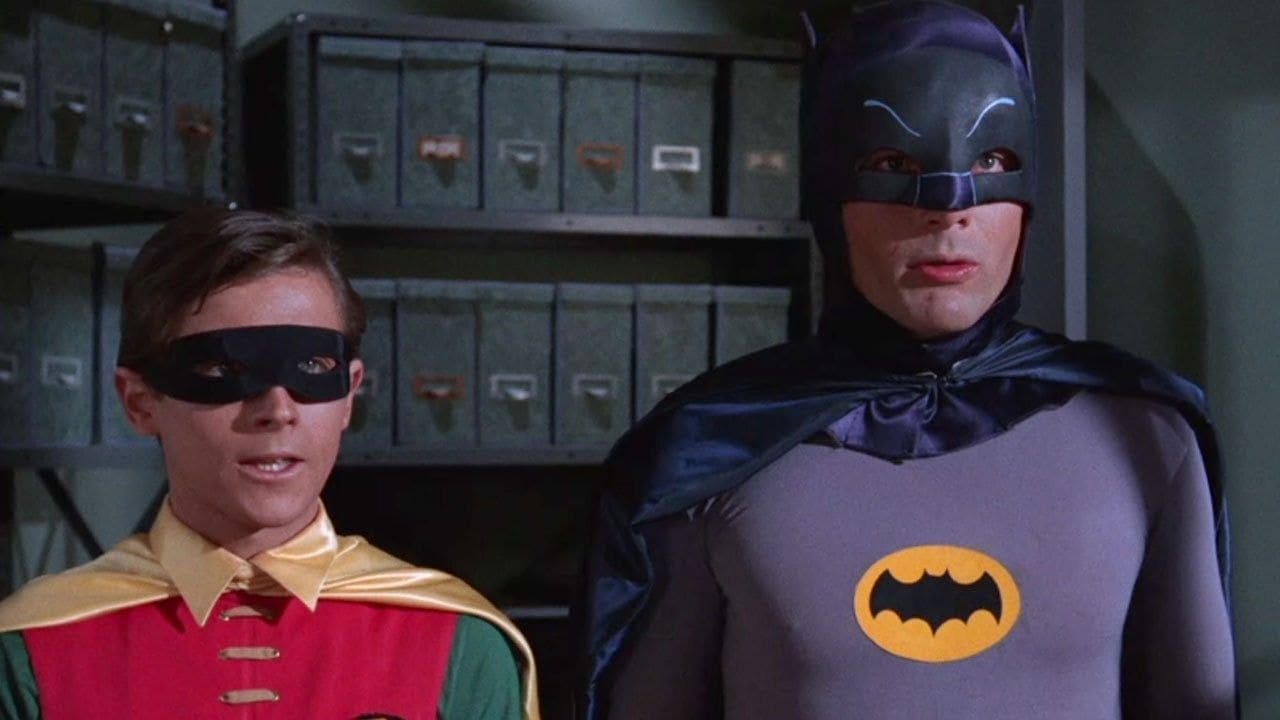
The Film Itself: Burton, Keaton, and Nicholson
Release date: June 23, 1989
Director: Tim Burton (age 30 at the time — a genuine risk for Warner Bros.)
Stars: Michael Keaton as Bruce Wayne/Batman, Jack Nicholson as the Joker, Kim Basinger as Vicki Vale
Runtime: 126 minutes
Budget: $35 million
Box office: Over $400 million worldwide
Michael Keaton was cast against enormous public skepticism. Nobody believed a comedic actor could carry Batman. He delivered a performance that reframed what a superhero protagonist could be: interior, strange, slightly broken. Not the square-jawed confidence of Christopher Reeve's Superman. Something more complicated and human.
Jack Nicholson's Joker — campy, violent, funny in ways that feel slightly dangerous — remains one of the best villain performances in the genre. Watch the scene where he's alone in the Gotham Museum, destroying paintings and sculptures. That's Nicholson unhinged in a way that later Joker interpretations have tried to replicate but never quite matched.
Kim Basinger's Vicki Vale is, honestly, the weakest element by modern standards. She's more plot device than character. But she's also the emotional anchor that keeps the story human-scaled amid all the production design and gothic excess.
Prince's Other Superhero Moments (Yes, There Were Others)
The 1989 Batman album is the centerpiece, but it wasn't his only brush with superhero material. As Diffuser.fm reported, Prince later wrote and produced a track called "Super Hero" for Earth, Wind & Fire's 1993 album Millennium. He then recorded his own version with the New Power Generation and the Steeles for the 1994 comedy Blankman — the Damon Wayans film about a socially awkward inventor who builds a crime-fighting suit out of household materials.
The Blankman version exists in the margins of Prince's catalog. It's not "Batdance." But it shows a consistent interest in superhero theatricality — a willingness to engage with the genre on his own terms, without pretension.
Purple Rain (1984) had already established that Prince understood how music and narrative could interlock in ways that went beyond simple licensing. Batman was the logical extension of that instinct — applied to someone else's story, in someone else's world, without losing any of his singular voice.
Where to Watch Batman (1989) Right Now
If the anniversary has you wanting to revisit the film (or discover it for the first time), here's where it's currently available:
- United States: Max (HBO Max) — cycles in and out, so check current availability
- United Kingdom: Sky Cinema and Now TV
- Spain: Max Spain (Warner Bros. back catalog)
- India: Amazon Prime Video India; also periodically on BookMyShow Stream
Movie OTT tracks regional streaming availability across Netflix, Prime Video, JioCinema, SonyLIV, and Zee5 in real time. If you're in India specifically and want the most current options, their where-to-watch tracker has the latest picture on which platform has it this week.
The film is 126 minutes. English-language version. It doesn't require you to have seen any other Batman films — this is a complete story. Even if you've seen it before, the Keaton-Nicholson dynamic holds up in ways that feel almost unfair to every actor who followed them into those roles.
Why 37 Years Later, Nothing Has Quite Matched This
The superhero genre has never made music like the Batman album again. Probably never will. There are a few reasons why.
First: the market has fragmented. In 1989, a single soundtrack album could dominate radio and MTV simultaneously. Prince's "Batdance" was inescapable. Now, streaming algorithms and playlist culture have splintered that kind of cultural moment into pieces. A song can trend without anyone knowing where it came from.
Second: the economics have changed. Studio music departments now treat soundtracks as promotional tools for the film, not as standalone artistic statements. The idea of giving a pop artist complete creative control, with their own vision running parallel to the score, seems almost impossibly reckless by modern standards.
Third: Prince's leverage was singular. He was at the absolute peak of his artistic and commercial power in 1989. Michael Jackson was unavailable. Prince was the only artist who could have pulled this off, which means the moment was unrepeatable by definition.
The superhero genre has never quite made music like this again. Probably never will. What makes the anniversary worth marking isn't nostalgia — it's the fact that the album still sounds like nothing else, even now. The film still works. The collaboration between Burton, Prince, and everyone else still feels impossible in the best way.