Hello Kitty's Finally Getting Her Live-Action Movie — Here's What Actually Matters
TL;DR: Warner Bros. is making a live-action/animation hybrid Hello Kitty film, directed by David Derrick Jr. (Moana 2) and John Aoshima (Ultraman: Rising). Expected 2027 release. Cast and streaming rights for India are still unconfirmed, but Netflix India and Prime Video are the likely contenders.
The Hello Kitty live-action movie is actually happening. Not in development purgatory. Not "still being figured out." Happening — with directors attached, a studio locked in, and a release window that puts it roughly two years away.
I keep coming back to how long this took. Sanrio announced the project back in 2019. Seven years is a long time to wait for a character with no mouth to get her big-screen moment. But the momentum shifted when Warner Bros. stepped in and the creative team finally came together in a way that felt executable rather than wishful.
Why These Two Directors Matter (And What It Says About the Film's Tone)
Here's the core setup: David Derrick Jr. (who co-directed Moana 2) and John Aoshima (director of Netflix's Ultraman: Rising) are co-directing this thing. That pairing isn't accidental. One director brings Disney animation expertise. The other understands Japanese IP sensibility without flattening it into Western convention.
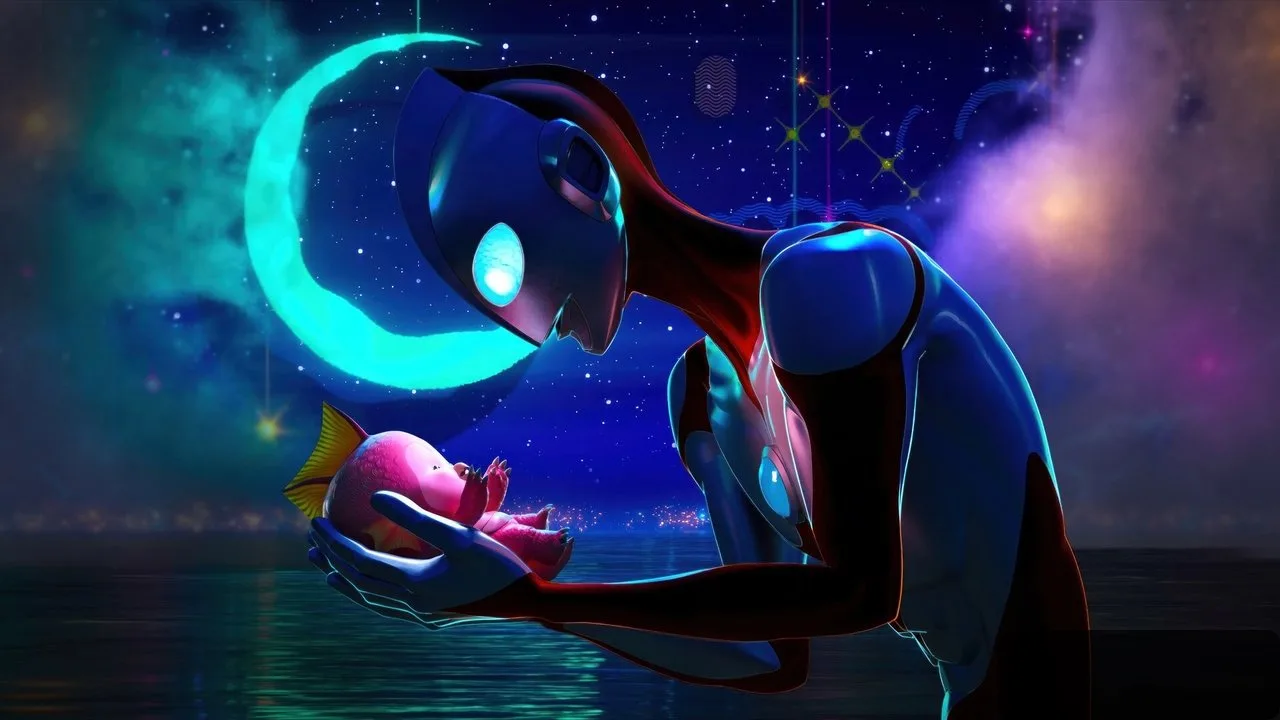
Derrick spent years at Walt Disney Animation Studios and proved with Moana 2 that he can keep emotional character work intact even when spectacle is everywhere. Aoshima's Ultraman: Rising — honestly, one of the more underrated Netflix originals — showed he knows how to blend anime language with family-film structure. (There's a sequence midway through Ultraman: Rising where the giant baby kaiju mimics Ultraman's fighting pose that tells you everything about Aoshima's instinct for character-driven comedy.) That balance is exactly what Hello Kitty needs. A character who's existed for fifty years without a mouth, without dialogue, without conventional narrative can't just be another Hollywood IP cash-grab. It needs filmmakers who respect both the animation grammar and the cultural specificity.
On the production side: Ramsey Naito (The SpongeBob SquarePants Movie) and Beau Flynn (Black Adam) are producing. Lindsey Beer wrote the screenplay—her last major credit was Chaos Walking, which had its own production complications, so there's a minor question mark there. But otherwise, the lineup signals genuine investment.
What we know so far:
- Format: Live-action/animation hybrid
- Studio: Warner Bros. (New Line Cinema label)
- Directors: David Derrick Jr. and John Aoshima
- Screenplay: Lindsey Beer
- Producers: Ramsey Naito, Beau Flynn
- Reported release: Approximately 2027 (not yet official)
- Cast: Not announced
No runtime. No trailer. But the machine is moving.
The $80 Billion Franchise Hollywood Somehow Kept Ignoring
Hello Kitty debuted in 1974. That's over fifty years of presence, and the franchise now ranks among the top 10 highest-grossing media franchises globally — sitting between Harry Potter and Call of Duty in the rankings. Total valuation: north of $80 billion, according to industry tracking. For a character with no mouth.
Pokémon, another Japanese franchise that launched in 1996, currently tops the global franchise rankings. But Hello Kitty's Hollywood moment is roughly a decade overdue. The character has appeared across animated series, web shows, and a licensing empire spanning fashion, food, theme parks, and consumer goods. What's missing until now? A theatrical feature. Most coverage frames this as a simple brand extension; the more interesting question is why the highest-grossing character brand on the planet that isn't tied to a single narrative (no canonical backstory, no trilogy, no cinematic universe) took this long to get a feature greenlit, and what that says about Hollywood's inability to develop IP that doesn't arrive pre-packaged with a three-act structure.
The character already has surprising depth across platforms. Movie OTT's streaming tracker shows more Hello Kitty animated content is available than most casual fans realize — it's scattered across multiple services. Sanrio's historically protective about the character's presentation (no mouth, no canonical backstory for decades), which means the screenplay likely went through significant back-and-forth between Hollywood storytelling needs and Sanrio's brand parameters. From what I gather, Sanrio retained unusual levels of creative approval on this deal, though that part is still rumour.
What the Filmmakers Have Actually Said
David Derrick Jr., discussing his approach to animation and hybrid filmmaking during the Moana 2 press cycle, kept returning to the same point: "The spectacle has to serve the story," he told an interviewer, "otherwise you're just making a very expensive screensaver."
Ramsey Naito — whose producer credits span some of the most commercially successful animated features of the past decade — has been more direct about the Hello Kitty project's ambitions. According to reporting from Collider, her involvement signals a serious commitment to theatrical quality. In general terms about franchise animation, she's indicated: "This is a character with fifty years of emotional equity. You don't squander that."
Hard to argue. The real question isn't intent. It's execution, and that's what the 2027 window will eventually answer.
Why This Matters in India Right Now
For Indian audiences, Hello Kitty isn't a niche import. Sanrio merchandise has consistent retail presence in Indian metros, and the character's appeal to the 6-to-14 demographic is well-established. The live-action hybrid format positions this squarely in the family-film space that Indian theatrical audiences have historically supported — especially post-pandemic, when family-friendly Hollywood titles showed real resilience at multiplexes.
Streaming rights for India aren't confirmed yet. But Warner Bros.' distribution relationships make the likely homes:
- Netflix India (Warner Bros. has routed several recent releases here)
- Prime Video India (increasingly competitive for Hollywood family titles)
- JioCinema (possible theatrical-adjacent window)
Hindi, Tamil, and Telugu dubs — the standard triple-track for major Hollywood family releases in India — depend on theatrical performance expectations. A full dub package seems more likely than not, given the franchise's recognition among younger Indian audiences.
Here's what's worth noting: the anime wave currently running through Indian streaming audiences (Jujutsu Kaisen, Demon Slayer, One Piece) creates a more receptive moment for Japanese-IP adaptations than existed even three years ago. Hello Kitty isn't anime, strictly speaking, but the appetite for Japanese cultural exports is broader than it's ever been.
Box Office Comparison: What the Numbers Suggest
The obvious parallel is Sonic the Hedgehog (2020), which opened to $58 million domestically on an $85 million budget and eventually grossed over $319 million worldwide, per Box Office Mojo. That film became the template for handling beloved character IP in live-action/animation hybrid format — get the character design right (after the infamous redesign crisis), keep the tone accessible, let nostalgia do the marketing work.
Hello Kitty has broader global licensing recognition than Sonic had in 2020. Especially in Asian markets. The thing nobody mentions in most coverage is that Sanrio generated approximately $4.5 billion in annual licensed merchandise revenue across Japan and Southeast Asia alone as of their most recent fiscal reports, dwarfing the pre-film merchandise footprint Sonic had before Paramount's 2020 release. That kind of pre-built commercial ecosystem gives this project a floor that Sonic had to earn from scratch. The box office ceiling here could be meaningfully higher than early comparisons suggest.
Watch for: first trailer (likely late 2026 or early 2027), cast announcements (that's the real signal of budget ambition), and any Sanrio-side marketing activations that tend to precede their major licensing moves. Movie OTT will track streaming and theatrical release dates across India, the US, the UK, and Spain as they drop.
What's Next
The Hello Kitty live-action movie is real, it's at Warner Bros., and it has the creative team to be genuinely good rather than just profitable. The 2027 window gives Derrick and Aoshima room to work properly, which the project needs. Cast announcements are the immediate next domino. Whoever they put in the live-action frame opposite an animated Hello Kitty will tell us a lot about the film's tonal register and commercial ambitions.
For streaming availability across all regions as announcements come in, check Movie OTT — it's the fastest place to track without wading through studio press releases.