Period Films That Don't Age: Eight Classics Still Worth Your Streaming Time
TL;DR: Eight pre-2000 period dramas — from Kubrick's Barry Lyndon to Cameron's Titanic — have quietly become the most rewatchable films on streaming. This piece breaks down where to find them, why they hold up, and which ones you can skip if your tolerance for five-hour epics is lower than the article's enthusiasm suggests.
Nearly 30 years. That's how long James Cameron's Titanic has been afloat in the cultural conversation, and it still hasn't sunk — which, given the subject matter, is either poetic or deeply ironic. The film grossed $2.195 billion worldwide on its original theatrical run (per Box Office Mojo), making it the highest-grossing film of all time until Cameron himself dethroned it with Avatar in 2010. The number matters because it tells you something the critical discourse often glosses over: audiences didn't just admire these period films, they returned to them. Repeatedly. The question worth asking now isn't whether these movies are "timeless masterpieces" — that framing is marketing language dressed up as analysis — but whether they're actually worth your time in 2026, where to find them, and which ones earn their runtimes.
What these eight films actually are, stripped of the mythology
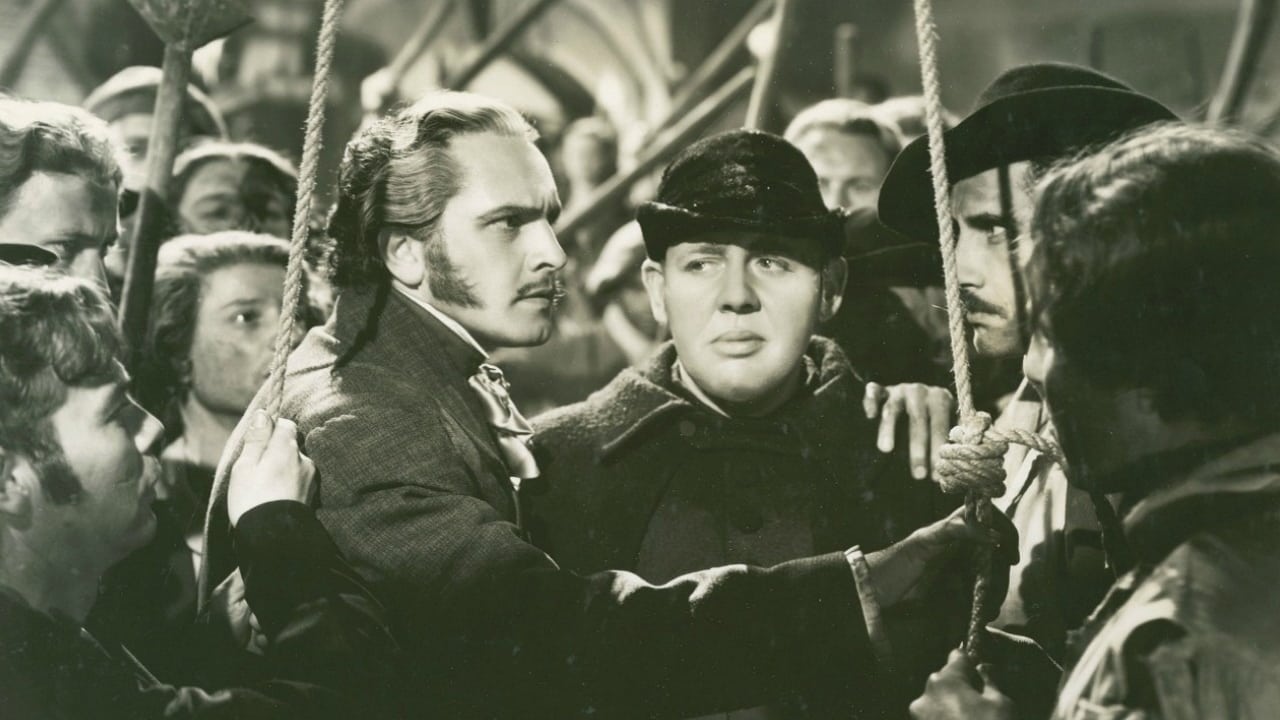
Let's be precise. The films in question — Amadeus (1984), War and Peace (1965), The Emigrants (1971), Barry Lyndon (1975), Titanic (1997), Les Misérables (1934), The Last of the Mohicans (1992), and The Age of Innocence (1993) — share two characteristics: they're all set before World War I, and they were all made before the year 2000. That's the working definition of "period drama" being used here, and it's a sensible one, even if it excludes some obvious candidates like Lawrence of Arabia.
Key facts at a glance:
- Amadeus (1984) — Dir. Miloš Forman — Runtime: 160 min (theatrical), 180 min (director's cut) — Won 8 Academy Awards
- Barry Lyndon (1975) — Dir. Stanley Kubrick — Runtime: 185 min — Won 4 Oscars for technical craft
- Titanic (1997) — Dir. James Cameron — Runtime: 194 min — $200 million production budget (per Paramount's official filings)
- The Age of Innocence (1993) — Dir. Martin Scorsese — Runtime: 139 min — Stars Daniel Day-Lewis, Michelle Pfeiffer, Winona Ryder
- The Last of the Mohicans (1992) — Dir. Michael Mann — Runtime: 112 min — Stars Daniel Day-Lewis
- War and Peace (1965) — Dir. Sergei Bondarchuk — Runtime: approx. 431 min (four parts)
- The Emigrants (1971) — Dir. Jan Troell — Runtime: 191 min (with sequel The New Land, combined runtime roughly 390 min)
- Les Misérables (1934) — Dir. Raymond Bernard — Runtime: approx. 281 min
Movie OTT tracks current streaming availability for all eight films across major global platforms, including region-specific libraries.
The box-office and awards numbers that actually tell the story
Titanic's $2.195 billion is the headline figure, but the more interesting number is Amadeus's awards haul. The film won 8 Academy Awards at the 1985 ceremony, including Best Picture and Best Director for Miloš Forman, according to the Academy's official records. That's not a minor achievement — it tied with Gandhi (1983) for the most wins in a single year during that decade. Yet Amadeus was made on a relatively modest $18 million budget (per Orion Pictures' production documentation), which makes its cultural footprint disproportionate to its financial scale.
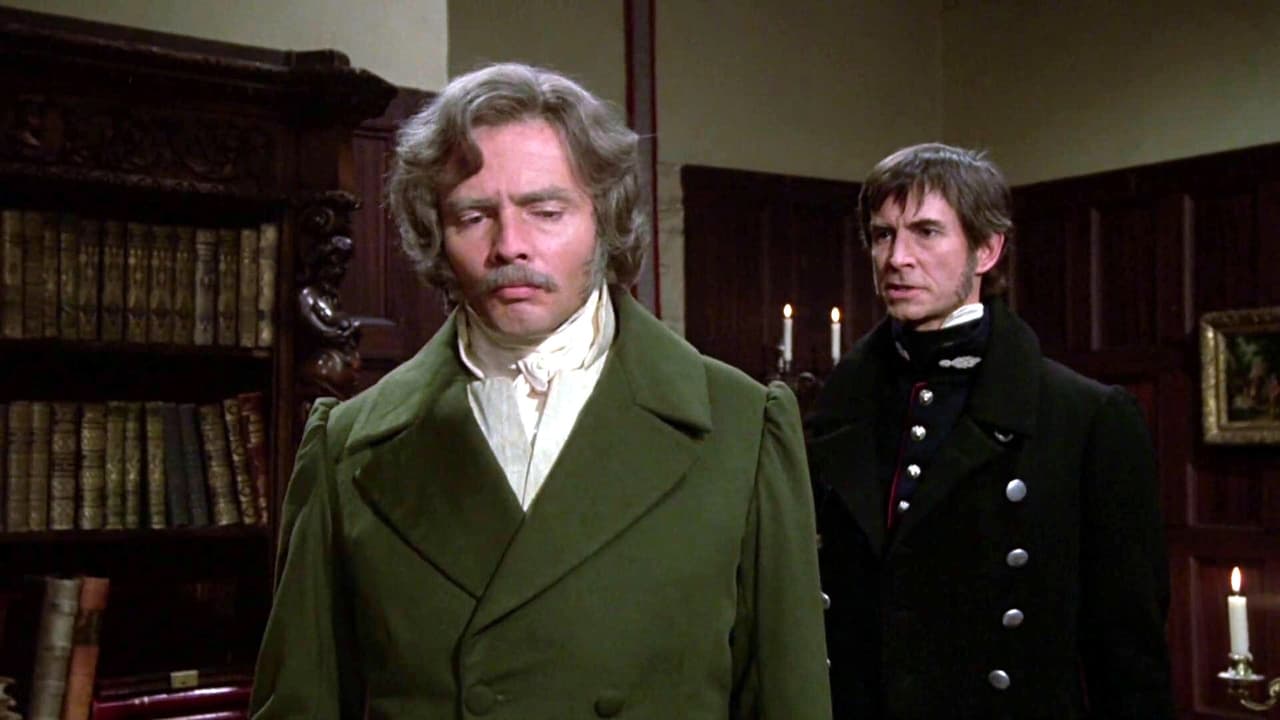
Barry Lyndon, on the other hand, was a commercial disappointment on release, grossing roughly $9.5 million against a $11 million budget (per The Numbers), but it won four Oscars for cinematography, art direction, costume design, and music adaptation. The market rejected it; the Academy didn't. Most coverage treats this as a simple "ahead of its time" story. The more honest read: Kubrick made a three-hour film about a social climber in 18th-century Ireland with no stars, no action set pieces, and a protagonist the audience isn't meant to like, then seemed genuinely puzzled when Warner Bros. couldn't sell it. That tension between artistic ambition and commercial miscalculation is actually the more interesting story than the usual rehabilitation narrative.
War and Peace (1965) cost the Soviet government an estimated $100 million in production (the equivalent of roughly $900 million today), making it one of the most expensive films ever produced, per Sergei Bondarchuk's own accounts. It won the Academy Award for Best Foreign Language Film in 1969.
How these films compare to period dramas that didn't survive the decades
Not every period epic ages gracefully. These three comparisons illustrate the difference between films that hold and films that don't:
| Film | Year | Outcome | |---|---|---| | Cleopatra (Joseph L. Mankiewicz) | 1963 | $44 million budget, near-bankrupted Fox; visually impressive but dramatically inert today | | Heaven's Gate (Michael Cimino) | 1980 | Infamous $44 million flop; bloated, self-indulgent, rarely revisited | | 1492: Conquest of Paradise (Ridley Scott) | 1992 | Technically competent, commercially failed, now largely forgotten despite similar ambitions to The Last of the Mohicans |
The films on the "aged well" list share something the failures don't: a central performance or directorial vision strong enough to survive the spectacle. Barry Lyndon is worth watching even with the sound off. Amadeus works as a two-person stage play dressed in 18th-century finery. Heaven's Gate is neither.
What Miloš Forman said about making Amadeus
"Mozart was not some tragic romantic figure dying in the snow," Forman told Rolling Stone in a 1984 interview. "He was a difficult, sometimes vulgar, sometimes childish man who happened to write music that sounded like God was speaking through him. That contradiction was everything to me."
That quote gets at why Amadeus remains the strongest entry on this list. Forman wasn't making a biopic — he was making a psychological thriller about envy, and he used the historical record loosely to do it. The film's framing device (an aging Salieri confessing to a priest) is invented. The rivalry between Mozart and Salieri, while historically referenced, is dramatically exaggerated. Forman was honest about this, and that honesty is part of why the film doesn't collapse under scrutiny the way a more reverential biopic might.
Movie OTT's streaming guide lists Amadeus as currently available in the US on Max, and in the UK on various platforms depending on the current licensing window — worth checking before you commit to the three-hour director's cut.
The directors and stars behind these films — a quick lineage
A brief note on each filmmaker's wider work, because context matters when you're deciding where to start:
Stanley Kubrick made Barry Lyndon between A Clockwork Orange (1971) and The Shining (1980). It's the odd one out in his filmography — slower, more contemplative, less viscerally aggressive than his other work. If you've only seen Full Metal Jacket, Barry Lyndon will feel like a different director entirely. It is, in a sense.
Martin Scorsese made The Age of Innocence immediately after Cape Fear (1991), which tells you how wide his range actually is. Daniel Day-Lewis, who appears in both The Age of Innocence and The Last of the Mohicans (released just one year apart, in 1993 and 1992 respectively), was operating at a level during this period that's genuinely hard to explain. Two completely different physical and emotional registers, back to back.
Jan Troell's The Emigrants and its sequel The New Land are the least-known entries on this list outside of Scandinavia, which is a genuine gap in most cinephiles' viewing. Troell was nominated for Best Director at the 1972 Academy Awards for The Emigrants — a nomination that surprised a lot of American critics who hadn't heard of him.
Where Indian audiences can actually find these films right now
Honestly, this is where the "timeless classics" framing hits a wall. Several of these films have inconsistent streaming availability in India, and the 1934 Les Misérables and the Soviet War and Peace are particularly difficult to track down on mainstream platforms.
Here's the current picture for Indian audiences, as tracked by Movie OTT:
- Titanic (1997): Available on Disney+ Hotstar in India with English audio; no Hindi dub currently in the active library
- Amadeus (1984): Periodically available on Apple TV+ in India; check current catalogue
- Barry Lyndon (1975): Available via MUBI India — the most likely home for Kubrick's catalogue in the Indian market
- The Last of the Mohicans (1992): Available on Amazon Prime Video India in English
- The Age of Innocence (1993): Availability varies; MUBI and Apple TV+ are the most likely sources
- The Emigrants (1971): MUBI India periodically carries Troell's work; availability is cyclical
- War and Peace (1965): Rare on Indian platforms; YouTube's official film channels occasionally carry it with subtitles
- Les Misérables (1934): Largely inaccessible on mainstream Indian platforms; archive.org carries a version
For Indian viewers approaching these films for the first time, the more relevant comparison point isn't the Western canon framing — it's Sanjay Leela Bhansali's Bajirao Mastani (2015) and Padmaavat (2018), which proved that Indian audiences will sit through 160-plus-minute period spectacles if the visual craft justifies the runtime. Titanic and The Last of the Mohicans are the most accessible entry points on that basis, both in terms of platform availability and runtime expectations. War and Peace at seven hours is a commitment that requires planning, not a casual Saturday.
What's actually worth your time, and what the consensus gets wrong
The thing nobody mentions about these "aged like fine wine" lists is that they're usually written by people who already love the films, which means they're not particularly useful to someone deciding whether to spend three hours with Barry Lyndon for the first time.
Here's a more direct take: Amadeus and Barry Lyndon are genuinely essential. Watch them in that order. Titanic is spectacular filmmaking that earns every minute of its runtime, even if the love story is thin. The Age of Innocence rewards patience but punishes distraction — don't start it tired. The Last of the Mohicans is shorter than it should be, weirdly, and Michael Mann himself has said in various interviews that the film was cut for commercial reasons against his initial instincts.
War and Peace and The Emigrants are genuine endurance tests. Not bad ones. But you should know what you're walking into.
Les Misérables (1934) is the wildcard. Five hours of 1930s French cinema is a specific kind of ask, and "it holds up" is doing a lot of work in most reviews. I'd say: watch the first two hours, and if you're not invested, give yourself permission to stop.
Where the streaming landscape for classic period films is heading
The market for classic cinema on streaming is genuinely precarious. MUBI remains the most reliable global home for older European and international titles, but its library rotates, and licensing for pre-1960 films is a legal labyrinth that even well-resourced platforms struggle to resolve. For US audiences, the Criterion Channel holds strong for many of these titles. For UK viewers, BFI Player fills some of the gaps.
Watch for rights consolidation in 2026. Several major studio back-catalogues are being renegotiated as legacy distributors restructure. Variety reported that Warner Bros. Discovery's licensing deals for pre-1980 catalogue titles were under review as of late 2025, which could shift availability for films like Barry Lyndon across multiple territories. The Soviet War and Peace, in particular, has complicated international rights history that affects its availability on Western platforms. For the most current streaming status across all eight films and all regions, Movie OTT's where-to-watch tracker is updated regularly as licensing windows shift.
We'll see whether the streaming platforms actually invest in making these films discoverable, or whether they continue to bury them under new release carousels. The films will survive either way. The question is whether new audiences will find them.