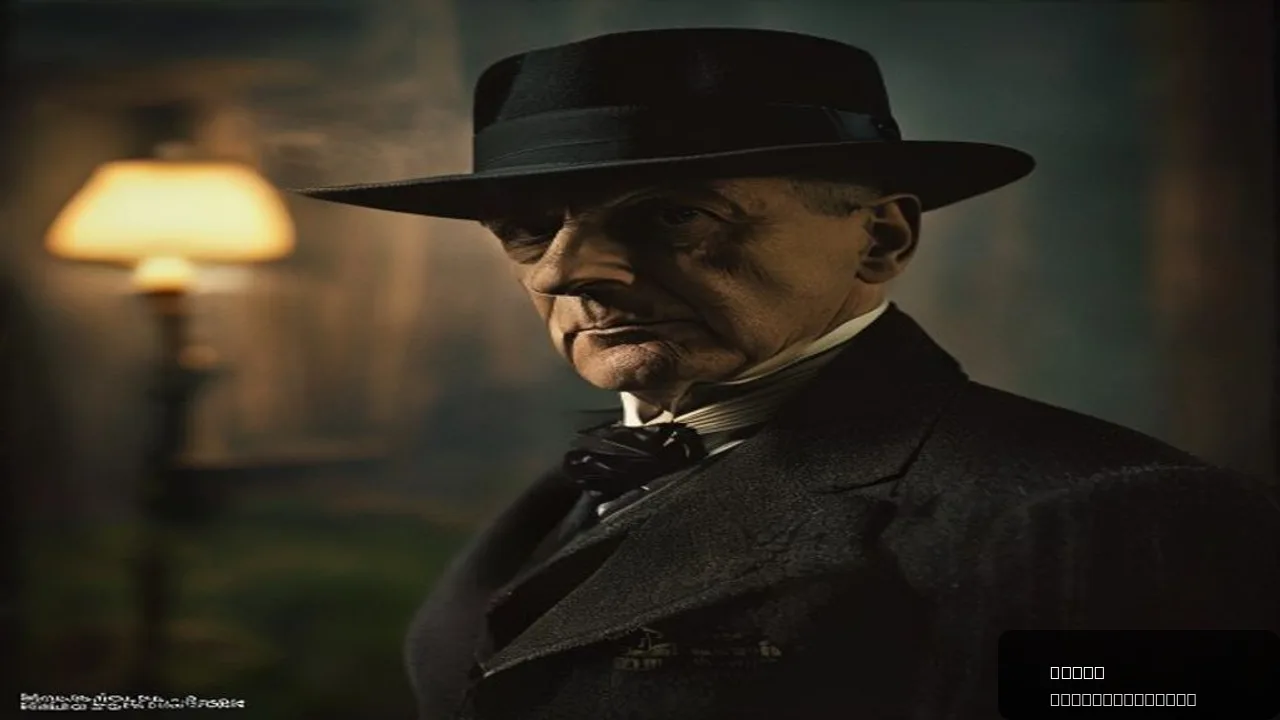
New BBC Hercule Poirot Series: Everything We Know About the 2027 Revival
TL;DR: The BBC won a competitive bidding war to produce a new Hercule Poirot series launching late 2027, filmed in Liverpool starting summer 2026. Casting is underway. The real question: can anyone step into David Suchet's 25-year shadow, or will this become another Branagh-style spectacle that misses the character's actual appeal?
The competitive bid that changes everything (and maybe nothing)
The BBC didn't inherit this project—it fought for it. Multiple streamers entered the bidding for Hercule Poirot television rights, and the BBC emerged as the winner. That detail matters more than it might initially seem, because it means there's genuine commercial appetite for this IP across the industry right now, not just nostalgic inertia from people who grew up watching David Suchet.
Mammoth Screen is producing. Benji Walters is overseeing (exact creative title TBD). Agatha Christie Limited is co-partnered, managing the estate's intellectual property. And here's what actually sticks with me: the series has been greenlit with potential for three seasons, not a one-off special or limited event. The BBC is betting this becomes an anchor drama, which is either confidence or delusion. I'm genuinely unsure which.
The production starts filming in Liverpool and Northwest England this summer (2026), targeting a late-2027 premiere. No confirmed casting yet. That's the detail that matters most right now. Everything else is infrastructure.
Why David Suchet's 25-year run is the real problem here
Look — Suchet played Poirot across 70 episodes and 25 years (1989–2013) on ITV, and the Christie estate publicly endorsed it as the character brought fully to life. That's not hyperbole. That's institutional blessing. Even Agatha Christie Limited, which controls the IP and could have pushed for something flashier decades ago, seemed satisfied with what Suchet built: a fastidious, psychologically complex detective whose method was as much about reading people as solving puzzles.
Then Kenneth Branagh arrived. Two theatrical films — Murder on the Orient Express (2017, which grossed $352 million worldwide) and Death on the Nile (2022, which underperformed badly at $137 million against a reported $90 million budget). Branagh's Poirot was all mustache and spectacle. Gorgeous production design. Thin dramatically. The character became a supporting player in his own story.
Between Suchet's psychological depth and Branagh's visual excess, there's a narrow path this BBC series has to walk. A reboot can't just split the difference — that's how you get bland. So the casting choice becomes everything. Because the writing, production design, and episode structure are all secondary to whether the lead actor understands that Poirot's appeal isn't his accent or his fastidiousness. It's his mind.
Mammoth Screen's Christie track record (uneven, but present)
This production company isn't new to Agatha Christie territory. Mammoth Screen delivered And Then There Were None (2015, BBC One), a three-part adaptation that pulled 7.3 million viewers for its Boxing Day premiere and earned a BAFTA nomination for Best Mini-Series. Then came Murder is Easy (2023), which landed with considerably less impact and drew mixed reviews for flattening Christie's dark comedy into a standard procedural. That gap is relevant. Their Christie work is inconsistent — sometimes sharp, sometimes forgettable — which means the 2027 series isn't automatically going to inherit quality just because the production company has the pedigree.
The broader adaptation landscape is worth noting too. Christie's novels have been adapted "numerous times over the years," as the original facts state, but the recent wave — Branagh's films, John Malkovich's deeply revisionist ABC Murders (2018), BritBox's Why Didn't They Ask Evans? (2022) — shows that the estate is working this catalogue hard. Almost aggressively hard. Which makes you wonder: is there actually hunger for another Poirot, or is this just because the IP exists and generates numbers?
The Malkovich experiment is the cautionary tale here. He divided audiences sharply with a more psychological, troubled version of the character. It didn't get renewed. Most coverage frames this BBC revival as a prestige opportunity; the more honest read is that it's the estate's fourth attempt in seven years to find a post-Suchet Poirot that sticks, and the previous three — Branagh twice, Malkovich once — all failed to build a sustainable screen franchise. That pattern should worry anyone treating this announcement as automatically good news. A revisionist take is a gamble. Fidelity to the source is a safer bet, but risks feeling redundant after Suchet already did fidelity perfectly.
Where you'll actually watch this in India (and when)
Here's what matters if you're in India: the international distribution hasn't been formally announced yet, but the pattern from recent BBC dramas is predictable.
Most likely streaming homes:
- BritBox India (available via Amazon Prime Channels) — the primary BBC content pipeline in the subcontinent. This is where I'd bet first.
- Amazon Prime Video India — possible if a separate deal is struck, though less certain than BritBox
- Netflix India — unlikely; Netflix's Christie relationship is limited compared to Amazon's ecosystem
- Disney+ Hotstar — only if a specific BBC-Disney agreement is negotiated, which isn't standard
The India premiere will almost certainly lag the UK debut by weeks, not months. Expect a late-2027 UK release followed by an early-2028 India arrival. Whether it gets Hindi dubbing is an open question — Movie OTT tracks streaming availability across Indian platforms as deals are confirmed, which is worth bookmarking once the title goes live in their database.
The one thing that's clear: if you speak English, you won't have to wait long to access this. If you prefer dubbed content, that depends on whether Amazon Prime or another platform picks up international rights. No confirmation on either front yet.
The franchise history nobody talks about: why this moment exists
Christie adaptations have been catnip for British broadcasters for the past decade — BBC, BritBox, streaming services all competing for catalogue rights. The estate has been systematically reviving the IP, which is smart business but also exhausting. The thing nobody mentions is that Christie's mysteries are structurally perfect for streaming economics: self-contained, puzzle-driven (which rewards rewatching), and carrying enough brand prestige to reduce acquisition risk.
A three-season Poirot commitment from the BBC is essentially a content hedge. Even if season one underperforms, the IP retains enough cultural weight to justify continuation. It's not reckless.
The comparable success case is ITV's Endeavour (2012–2023), another British detective revival that ran 11 years as a prequel and maintained consistent audience loyalty through careful casting and writing quality. The comparable failure: Malkovich's ABC Murders, which didn't generate a second season. This new series is being built against both blueprints — the question is which one it actually follows.
What comes next: the casting announcement that changes everything
The lead actor announcement is the only development that actually matters right now. Everything else — the writing, the production design, the runtime — can be evaluated later. But who plays Poirot will define whether this series generates genuine excitement or becomes a footnote between two more memorable versions.
Principal photography wrapping by early 2027 tracks with the late-2027 target. Expect a first-look image around mid-2027, full trailer roughly two months before premiere. The casting reveal will come first — probably late 2025 or early 2026, given that production starts this summer.
Hard to say whether spin-offs are in the pipeline. Miss Marple is perpetually available IP, and Mammoth Screen has the Christie relationship. But that's speculative. The three-season structure is what signals actual commitment here. If the first season lands well, the franchise could expand. If it doesn't? At least the BBC will have tried.
The realistic outlook: Suchet's shadow is long
We shall see. That's the only honest position. The BBC has the right producer, the right IP, and institutional commitment. But Poirot has been done brilliantly already (remember Suchet's final scene in Curtain, where he lets a man die and then confesses to Hastings in a letter from beyond the grave — that wasn't just good television, it was a definitive closing argument for the character), and audiences in 2027 will have even less patience for a version that doesn't justify its own existence.
Suchet's run didn't just define the character on screen. It exhausted the best of what Poirot could be on television. Branagh's films proved that spectacle alone doesn't sustain him. So this BBC series has to find something genuinely new — not a revision, not a remake, but a legitimate reason for this character to exist again right now. High bar. Very high bar.
For the latest confirmed streaming availability across UK, US, India, and other regions as distribution deals are announced, Movie OTT's where-to-watch tracker will have the current picture. The next update to watch for: confirmed lead actor. That's when this story actually gets real.