Amazon's Alexa+ Just Entered the Podcast Business — and the Audio Industry Should Worry
TL;DR: Amazon launched AI-generated podcasts on Alexa+ featuring two synthetic co-hosts discussing any topic on demand. It's free for US Prime members, pulls from 200+ news outlets including Reuters and AP, and expands to personalized briefings soon. The feature could reshape mid-tier podcast production faster than anything since Spotify's exclusive deals.
Monday morning, Amazon announced something that should've caused more panic in podcast studios than it did: Alexa+ can now generate a full podcast episode in minutes. No host to book. No editor at midnight. No guest cancellation drama. Just tell the AI what you want to hear about, and it delivers.
The reaction from producers I've talked to lands somewhere between "that's genuinely clever" and "okay, this changes everything."
What Alexa Podcasts Actually Does — and Why the Demo Sounds Better Than You'd Expect
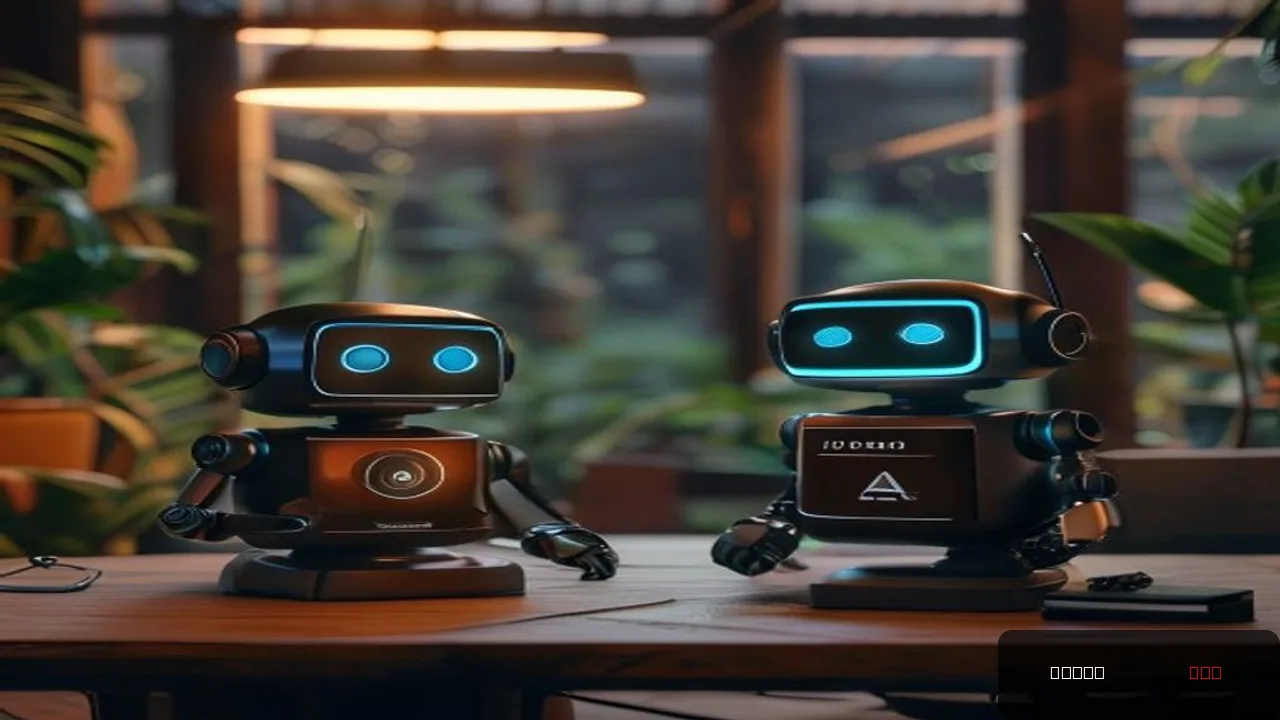
Here's how it works: You ask Alexa to generate a podcast on any topic. The AI creates an outline, lets you adjust the length and direction, then delivers a finished episode featuring two synthetic co-hosts — one male-voiced, one female-voiced — having what sounds like an actual conversation.
The whole process takes minutes.
Alexa+ bundles this for free with Amazon Prime membership in the US. Non-Prime users pay $19.99/month for access. Right now it's US-only, though Amazon's hinting at expanded formats: personalized news briefings, document-based audio, custom briefings from PDFs you upload.
What caught me in the demo Amazon shared: these voices don't sound like a FAQ being read aloud. They have rhythm. In the example about recent music releases, the male host drops a stat — more than 50% of music listening now comes from unsigned artists — and the female voice actually reacts. "The monoculture is just gone," she says. Then he pivots to stoner metal and experimental hip-hop, adding: "That's not chaos — that's the healthiest the music ecosystem has ever been."
Is it NPR? No. Better than half of what's on Spotify right now? Honestly, yes.
Someone at Amazon trained these voices to interrupt, affirm, volley. That's not nothing.
Amazon's Smart Move: 200+ News Partners Before Launch
The obvious objection: AI that sounds confident while being wrong is worse than silence.
Amazon clearly knew that. Before launch, the company secured licensing with the Associated Press, Reuters, Washington Post, Time, Forbes, Business Insider, Politico, USA Today — plus Condé Nast, Hearst, and Vox Media publications. And here's the part that actually matters: more than 200 local US newspapers.
That last detail is the strategic play. Local news has been collapsing structurally for years. Amazon just created a new distribution and revenue channel for publishers desperate for both. Whether the financial terms are fair is still unclear — from what I gather, the per-play revenue share hasn't been disclosed to anyone outside the deals, and that part is still rumour — but the infrastructure is smart. Publisher-backed content partnerships are what separate sustainable AI media products from the ones that get pulled after three months of backlash.
Movie OTT tracks these kinds of partnerships across streaming platforms, and they're the strongest signal of whether an AI audio feature will actually stick around.
Google Did This First — and That Lawsuit Is Still Hanging Over Everything
Google's NotebookLM tool launched AI podcast generation last year using synthetic voices. People loved it. Then former NPR "Morning Edition" host David Greene sued, claiming Google cloned his voice without permission.
The case is still in court. And it cast a shadow over the entire space.
Amazon's approach looks deliberately designed around that lawsuit. The Alexa co-hosts are clearly synthetic — no attempt to replicate a real broadcaster's voice — and the publisher partnerships add a sourcing layer that NotebookLM's more freeform approach never had.
Here's what most coverage misses: Greene's lawsuit wasn't just about voice rights. It raised a journalism ethics question — when an AI uses a trusted broadcaster's voice to deliver information, whose credibility does it borrow? Amazon's dual synthetic hosts with no real-world voice basis sidesteps that entirely. It's a legal move, but it's also smart editorial thinking.
India Still Waiting — But the Implications Are Massive If Amazon Expands
Right now, Alexa Podcasts is US-only. If you're in India, you can't access it yet. Amazon hasn't announced a timeline for international expansion.
But the trajectory matters. Here's what Movie OTT's streaming tracker is watching:
- India availability: Not yet launched. No announced timeline.
- Pricing in India: Amazon Prime Video bundles at much lower rates in India than the $19.99/month US tier. Any Alexa+ expansion would likely require localized pricing.
- Device penetration: Echo devices have solid presence in urban Indian households. Prime membership numbers in India are substantial.
- Market potential: The Indian podcast market has exploded — Spotify, JioSaavn, and Audible India have all invested heavily in local-language audio. If Amazon brings Alexa Podcasts with Hindi, Tamil, or Telugu support, it could reshape that space overnight.
That last part — local-language support — is the real wildcard. The podcast ecosystem in India isn't built the same way as the US market. If Amazon moves fast here, they could own the space before competitors even realize what happened.
The Feature Amazon Really Wants to Build (And the Legal Risk Nobody's Talking About)
Amazon's official language is careful: "thinking about how you'll be able to create different types of custom audio on demand, from personalised news briefings to content based on the information and documents you want to share."
That last part — "documents you want to share" — is doing a lot of work. It suggests a future where Alexa Podcasts works like Google's NotebookLM. Upload a PDF, get a podcast. Your own documents, your own sources, your own custom audio.
That's powerful. It's also where the David Greene lawsuit shadows loom again.
Once user-generated source material enters the equation, Amazon loses its publisher-backed safety net. The editorial and legal risks scale differently. The question I keep coming back to: can Amazon maintain editorial credibility guardrails once users are feeding it arbitrary documents?
Who Actually Gets Threatened by This — and Who Doesn't
The top 1% of podcasts — Joe Rogan, Serial-level prestige productions — aren't at risk. They sell access to specific people. Audiences come for the host.
The middle tier is exposed. News roundups, topic explainers, weekly briefings, formatted information delivery — that's where Alexa is pointing directly. Most trade write-ups frame this as an innovation story, but the more honest read is that it's a labor-replacement product for the roughly 500,000 active podcasts on Spotify that average fewer than 100 listeners per episode and exist primarily as structured information delivery with a human voice on top. Amazon just automated that layer, and no amount of "AI and humans can coexist" framing changes the math.
That's not a small thing.
The real test comes down to the publisher deals. If local news organizations start seeing meaningful traffic or revenue from the Alexa pipeline, others will follow. If the numbers disappoint or the terms feel extractive, expect the journalism community to push back hard.
Movie OTT will track how this feature evolves — especially if Amazon pushes into non-English markets where the OTT audio landscape is still wide open and fragmented.
What Comes Next: Expansion and Competition
The immediate questions: Does Amazon expand Alexa Podcasts beyond the US in 2026? Do competitors accelerate their own AI audio products?
Apple Podcasts, Spotify, and iHeartRadio all have AI investment pipelines. None has launched anything this consumer-facing yet. The word on the lot is that Spotify's internal AI audio team (roughly 40 people, from what I hear, split between Stockholm and New York) has been prototyping something similar since late 2024, but they've held off partly because of the Greene litigation and partly because cannibalizing their own creator ecosystem is a harder sell to the board than it is for Amazon, which doesn't have one.
The publisher partnerships — particularly those 200-plus local newspaper deals — are the real proof of concept. They'll determine whether this becomes a sustainable revenue stream for struggling outlets or just another platform extraction play.
For current availability and where this rolls out next, Movie OTT has the tracking as it develops across regions.