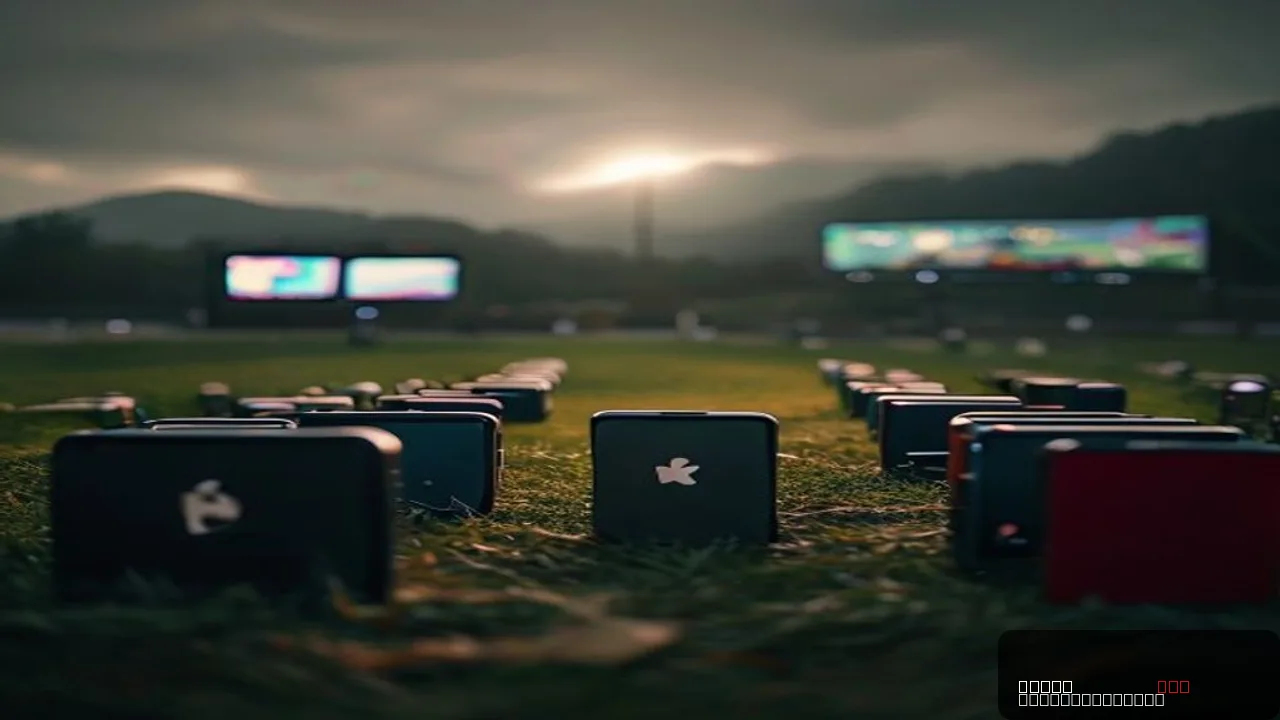
Apple's All-iPhone Soccer Broadcast Is About to Change Live Sports Forever
TL;DR: On May 23, 2026, Apple TV+ streams LA Galaxy vs. Houston Dynamo FC shot entirely on 15 iPhone 17 Pros — the first major professional live sports event captured exclusively on smartphones. Kickoff is 7:30 p.m. PT (8:00 a.m. IST on May 24). It's free with Apple TV+ access, and the production specs alone signal a seismic shift in broadcast equipment costs.
Imagine being a camera operator at Dignity Health Sports Park in Carson, California, and instead of hauling a broadcast-grade Sony or RED cinema rig worth $150,000, you're handed an iPhone 17 Pro. Not a prototype. Not some secret lab device. A phone you could buy at the Apple Store on Saturday morning, then use to broadcast a professional soccer match to hundreds of thousands of viewers that same evening.
That's exactly what's happening this Saturday.
Fifteen crew members will position iPhone 17 Pros across the stadium — goal-line angles, in-net perspectives, crowd coverage, player intros. No traditional broadcast cameras. No backup cinema rigs. Just consumer-grade hardware that Apple sells at retail, capturing a live MLS match that'll stream to millions.
The audacity of it is what makes this worth paying attention to.
Why This Isn't Just a Tech Stunt — It's a Broadcast Revolution
Here's what the industry coverage keeps glossing over: Apple isn't doing this to save money. A single professional broadcast camera costs $80,000 to $200,000. Fifteen iPhone 17 Pros run roughly $24,000 total. Apple doesn't need to cut corners. The point is the demonstration.
If Apple TV+ can pull off a clean, watchable, professional live MLS broadcast on hardware people carry in their pockets, every regional sports network suddenly has different options. Every streaming startup trying to break into live sports coverage. Every minor league, women's league, and emerging sports property in South Asia now has a proof-of-concept that says: you don't need a quarter-million-dollar camera truck.
That's the part that matters.
The Galaxy-Dynamo match on May 23, 2026 is the culmination of Apple's year-long broadcast experiment. According to Variety's reporting, this marks the first time any major professional live sporting event has been captured entirely on smartphones. No hybrid approach. No safety net of traditional cameras running alongside.
Apple's Quiet Path to This Moment: From MLB to Soccer
Apple didn't wake up one day and decide to shoot an entire MLS match on phones. They tested the waters first.
On September 26, 2025, Apple integrated iPhone 17 Pro footage into the MLB "Friday Night Baseball" broadcast — a Boston Red Sox vs. Detroit Tigers matchup. Specific angles. Cinematic in-stadium shots. Proof the sensor could handle live sports lighting and movement. The company then donated that original iPhone to the National Baseball Hall of Fame and Museum. A smartphone in a museum case. The symbolism was almost too neat.
That validation opened the door. By MLS Cup 2025, iPhones were part of the regular production rotation. By the 2026 season, they were integrated into multiple matches. Each step widened the scope. The May 23 Galaxy-Dynamo broadcast is the logical endpoint.
What makes this specific production technically interesting:
- 15 iPhone 17 Pros deployed across the venue
- Three 48-megapixel Fusion cameras per device, offering eight lens equivalents per phone
- Apple Log 2 color science for wider color gamut, recorded in ProRes or HEVC
- Goal-angle, in-net, crowd, and warmup positioning
- The match is the final MLS fixture before the FIFA World Cup 2026 pause
That in-net goal angle deserves emphasis. Putting a traditional broadcast camera inside a goal net is logistically nightmarish. Housing constraints alone make it nearly impossible. An iPhone? Zip-tie it to the post and walk away. That's not gimmickry. That's genuinely useful production innovation that opens camera placements nobody's had before.
For Indian Soccer Fans: How to Watch (and Why the Timing Matters)
Apple TV+ is available in India at roughly ₹99/month, though MLS Season Pass requires its own subscription tier on top. Here's what you need to know:
Broadcast Details:
- Platform: Apple TV+ (MLS Season Pass required)
- Live date: May 23, 2026 — 7:30 p.m. PT
- IST time: May 24 at approximately 8:00 a.m. (early morning, admittedly brutal)
- Devices: Web, iPhone, iPad, Apple TV 4K, Samsung/LG smart TVs with Apple TV app
- Commentary: English; no confirmed Hindi or regional language tracks for this broadcast
The early-morning IST timing won't help casual viewers, but the replay will likely be available within hours. Movie OTT tracks Apple TV+ availability and replay windows across India, particularly useful if you're chasing the Galaxy-Dynamo match after it airs.
Here's the broader context for Indian audiences specifically: MLS hasn't historically commanded the viewership that the Premier League or Champions League does in India, but the comparison that actually matters isn't European football — it's what JioCinema did with the NFL in 2024, proving that Indian streaming audiences will show up for American sports leagues if the price point is right and the access is frictionless. Apple's MLS package is riding a similar bet. If you follow international player movements (or you're curious how a smartphone-shot broadcast actually looks), this match functions as both a sporting event and a technical showcase.
What Apple Actually Said (and What It's Signaling)
Apple hasn't released a formal press statement for this specific broadcast, but their framing of the production tells you what they care about. Variety reported that the company stated iPhone's small form factor allows the production team to capture "dynamic new perspectives that bring viewers closer to the action."
That's doing a lot of heavy lifting — but it isn't wrong. The in-net perspective, the low-angle warmup shots, the crowd coverage from angles a full-size cinema rig can't physically reach — these aren't cosmetic additions. They're new storytelling tools.
The real question isn't whether the footage will look "good." It's whether it'll look professional. Live sports broadcasting stress-tests equipment in ways a narrative film shoot simply doesn't. Latency shifts. Unpredictable lighting as the sun moves. Crowd interference. Autofocus hunting on rapid athletic movement. All of that happens in real time, with no second takes.
Apple's been touting iPhone's filmmaking capabilities for years — Steven Soderbergh shot Unsane on an iPhone 7 Plus back in 2018. But that was a controlled narrative environment. Live sports is a different beast entirely. Most coverage frames this broadcast as the next logical step from Soderbergh's experiment; the more honest read is that there's almost nothing connecting a locked-down horror film set to a 90-minute outdoor match with 27,000 screaming fans and a sun that won't stay put. This is Apple starting from near-zero in a domain where failure happens in front of a live audience.
Why the Broadcast Industry Is Watching This So Closely
What strikes me is that most coverage treats this as an Apple marketing stunt. It's not. It's Apple demonstrating that the barrier to entry for professional live sports broadcasting just dropped by roughly 90 percent.
Consider the economics: a traditional broadcast setup for a soccer match includes multiple camera positions, wireless video transmission systems, color grading suites, and on-site technical staff. Call it $300,000 in equipment and infrastructure. An all-iPhone setup scales down to maybe $30,000 in phones plus existing Apple infrastructure the company already owns.
That gap — $270,000 — is exactly what's going to matter to every regional league, every women's sports property, every emerging market broadcaster who's been priced out of live sports coverage until now. Movie OTT covers these kinds of emerging sports properties and their streaming availability, and the implications of this broadcast extend well beyond Saturday night soccer in California.
The thing nobody mentions is what happens after this works. And it probably will work. The iPhone 17 Pro's low-light performance is legitimately good. The sensor stabilization handles motion. The multiple lens options give directors compositional flexibility. Once Apple proves it's viable in a major league match, smaller organizations won't even hesitate.
The In-Net Shot Is the Real Story Here
If the Galaxy-Dynamo match delivers three or four memorable visual moments from that in-net goal camera, this entire experiment justifies itself. That's the shot type that could genuinely shift how networks think about camera placement going forward.
A goalkeeper sees the world differently than a broadcast director does. An in-net angle — looking outward as a striker bears down — is perspective television has never had access to before. Not because of technical limitation. Because nobody could fit a $150,000 camera in a goal net and have it survive a soccer ball traveling at 60 miles per hour.
An iPhone? Barely costs more than the post-match sponsorship deal. The part I am most curious about is whether the audio pickup from that in-net position captures the actual impact of ball on net, the goalkeeper's shout, the crowd roar arriving a half-second late. That's the kind of sensory detail that could make this feel less like a broadcast and more like being inside the match.
What Comes Next
The May 23 broadcast is timed as the last MLS match before the FIFA World Cup 2026 pause — which means it functions as both a technical showcase and a farewell to the regular season. After the World Cup, MLS returns with what will presumably be an audience primed for North American soccer in a way it hasn't been in years.
Whether Apple expands the all-iPhone production model to more matches, or keeps it as a periodic showcase, depends on viewer response and technical performance. If the broadcast runs clean with no dropped feeds, no autofocus failures, no latency issues — it's the proof point the industry's been waiting for.
Hard to say if casual soccer fans will notice the difference in picture quality compared to a traditional broadcast. The real audience for this story is the industry itself: equipment manufacturers, regional broadcasters, streaming platforms trying to build sports libraries without enterprise budgets.
For anyone tracking where this broadcast and future MLS fixtures land across global streaming platforms, Movie OTT keeps regional availability current. The replay will likely surface within 24 hours of the live match, and Apple typically makes key sporting moments available on-demand across all regions where Apple TV+ operates.
Fifteen phones. One match. The broadcast industry won't look quite the same after this.