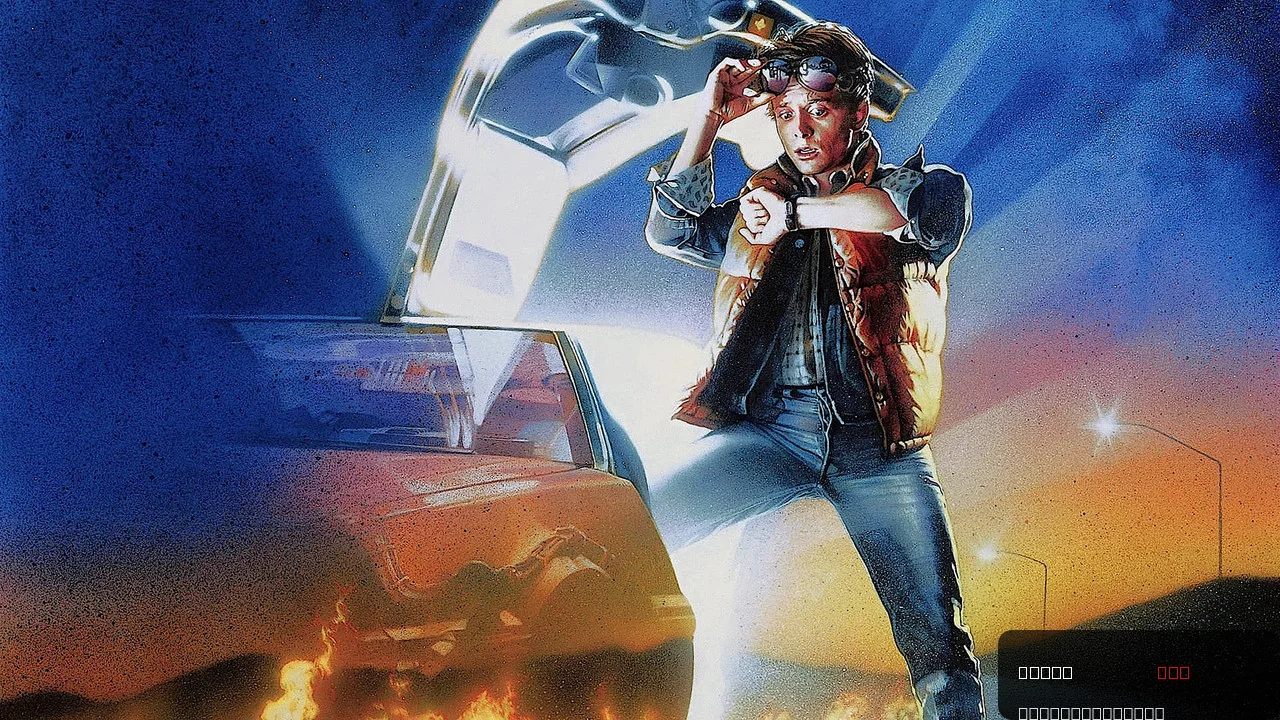
Back to the Future's Nuclear Ending: Why a $1 Million Budget Cut Saved the Franchise
A mushroom cloud almost ended one of cinema's greatest films. Not the kind that destroys a city — the kind that would've destroyed Back to the Future itself.
In 1985, director Robert Zemeckis and co-writer Bob Gale had planned something audacious for the finale: Marty McFly racing a DeLorean toward an active nuclear test site in the desert, Doc Brown timing the detonation via radio, the bomb going off at precisely 88 miles per hour. It should've been the climax. Instead, it became the road not taken, and the film's survival depended on that choice.
Here's what actually happened.
The $1 Million Decision That Rewrote Hollywood History
The clearest account comes from Bob Gale himself, speaking to The Collider Podcast in 2020. The studio wanted a budget reduction. A big one.
"The most expensive thing was going on location and building this town," Gale explained. "If we could cut that out — if we could cut going on location and building a town and do something on a location that we already have, namely the backlot — that would save us $1 million easy."
One million dollars. That's the price of the clocktower. The rain. The DeLorean hitting 88 mph with lightning crackling overhead. That's the price of a film that would spawn two sequels, a theme park ride, an animated series, and a Broadway musical — instead of a loud spectacle people would've forgotten by 1990.
Gale didn't know he was making a creative decision. He was solving a math problem. Sometimes that's how the best art happens.
What Got Cut: 113 Storyboards of Nuclear Fire
The bomb ending wasn't just a discarded script page. It was fully realized — illustrated across 113 storyboards by production artist Andrew Probert. In 2016, those boards surfaced at auction and sold for $6,000 to a collector who understood what they were looking at: a complete alternate history of American cinema.
The visuals were spectacular. Military personnel prepping a test site. A DeLorean racing toward ground zero. That final explosion swallowing the frame. What's striking is how structurally similar this ending is to what made it to screen — the broken car, the ticking countdown, Doc communicating from a distance. Same skeleton. Completely different movie.
One ending says: We built something clever enough to survive anything.
The other says: We got lucky.
There's a detail buried in Probert's contribution that nobody talks about. He convinced Gale to have Doc stuff the torn pieces of Marty's warning letter into his jacket pocket instead of throwing them away. That small staging choice — jacket pocket instead of garbage can — is what makes Doc's survival land as a genuine surprise in the filmed version. Not a logical necessity. A miracle. One storyboard artist. One suggestion. One moment that changed how 100 million people would feel watching the ending.
The Film Itself: Released July 3, 1985. 116 minutes. Rated U/A.
Directed by: Robert Zemeckis
Written by: Robert Zemeckis and Bob Gale
Stars: Michael J. Fox (Marty McFly), Christopher Lloyd (Doc Brown), Lea Thompson, Crispin Glover, Thomas F. Wilson
Studio: Universal Pictures / Amblin Entertainment
Box office: $210.6 million domestic (highest-grossing film of 1985)
The setup is deceptively simple. A teenager gets accidentally transported to 1955 in a time machine. His parents haven't met yet. He's accidentally making his mother fall in love with him instead of his father. He's got to fix it or he'll literally cease to exist.
On paper? Genuinely weird premise. On screen? Somehow it works. The film's genius is how it takes that inherently awkward situation and makes it funny without ever winking at the audience. And it does all of that in 116 minutes without wasting a single scene.
How Eric Stoltz Became Michael J. Fox (And Why It Mattered)
The production history reads less like a greenlight and more like a series of near-misses. Disney reportedly passed because they felt uncomfortable with a teenage boy becoming his own mother's romantic target. Fair point — the premise is weird. But Zemeckis understood something they didn't: if you handle it with wit instead of creepiness, it becomes charming instead of disturbing.
Then there's the casting swap. Eric Stoltz shot significant portions of the film as Marty before being replaced by Michael J. Fox. That's not a small reshuffle — that's reshooting most of what's already in the can. The decision speaks to how clearly Zemeckis understood what the film needed tonally. Stoltz is a fine actor. But Fox is Marty in a way that makes you forget anyone else ever auditioned.
Fox was carrying Family Ties on NBC at the time, which meant he worked nights on Back to the Future and days on television. Compressed schedule. Night shoots. And somehow his performance feels effortless — the physical comedy especially. That's either proof that some actors are just born to certain roles, or a testament to the kind of work ethic that doesn't read on screen but makes everything else possible.
Why The Clocktower Ending Opened Every Door the Bomb Would've Closed
Here's what matters: Back to the Future is about ingenuity and trust. A kid and an old man figuring out how to survive using what's available to them. The bomb ending would've made it about spectacle and survival — something closer to WarGames (1983) than to the warm suburban adventure it became.
Most retrospectives treat the nuclear ending as a fun "what if" footnote, but the real lesson is about genre grammar: the bomb ending belongs to a Cold War thriller, and the clocktower ending belongs to a Capra-esque comedy of human resourcefulness. Zemeckis wasn't just cutting a set piece for budget reasons. He was, whether he knew it or not, choosing which genre his film would live inside forever. That choice is why the film still plays to packed repertory screenings while genuine Cold War thrillers from the same year (Invasion U.S.A., anyone?) collect dust.
The franchise that followed — the sequels, the Universal Studios ride, the London West End musical that opened in 2022 — none of that exists if the first film ends on a mushroom cloud. You don't build a theme park attraction around nuclear destruction. You don't write a stage musical with that kind of ending.
Compare it to Indiana Jones and the Kingdom of the Crystal Skull (2008). You probably remember that Harrison Ford survived a nuclear blast by hiding in a refrigerator. That sequence became shorthand for franchise overreach — the moment a beloved series jumped the shark so hard it crashed into the desert. Here's the thing: Jon Cryer, who auditioned for Marty McFly back in 1985, mentioned in a 2020 tweet that an early Back to the Future script contained a nearly identical fridge-and-bomb scene. Spielberg, who produced both films, may have been drawing from that same discarded well decades later. The first time it got cut for budget reasons. The second time it made it to screen. The results speak for themselves.
Where to Watch It Right Now (And Why Availability Still Matters)
In the US: Back to the Future cycles between Netflix, Amazon Prime Video, and Apple TV+ depending on the licensing window. Movie OTT's streaming tracker has current availability across platforms if you want to know where it's playing today.
For Indian viewers: Streaming presence has been inconsistent, which is frustrating because this film is genuinely useful as an introduction to classic Hollywood filmmaking for younger audiences. To put the demand in perspective, when Netflix India briefly added the trilogy in late 2023, the films trended in the platform's top 10 within 48 hours despite zero promotional push — a telling signal that the appetite for well-crafted '80s Hollywood extends well beyond nostalgia-driven Western markets.
Current options for India (verify on Movie OTT for real-time updates — rights windows shift):
- Netflix India: Check current availability; it cycles in and out
- Amazon Prime Video India: Available for rental or purchase
- Apple TV / YouTube Movies / Google Play: Rental at approximately ₹99–149
- JioCinema / SonyLIV / Zee5: Not currently part of subscription catalogs
Rated U/A for Indian audiences. Hindi dubbing has been available in past licensing windows, but the English version with subtitles is the more reliable option right now.
If you haven't seen it, watch it in the original English. The pacing and comedic timing are built for that audio track. And if you have seen it before, watch it again knowing what the ending replaced — you'll notice how the clocktower sequence is actually more satisfying once you understand what it cost to film.
What This Story Reveals About Blockbuster Decision-Making
There's an uncomfortable lesson buried in this for studios and IP holders in 2025-26. The instinct toward bigger, louder, more expensive often works against the thing that makes audiences want to return.
Back to the Future survived because of constraint. Because someone looked at the budget and said no, not yes. Because that no forced creativity instead of crushing it. The bomb ending would've been expensive and forgettable. The clocktower ending was cheap and timeless.
Watch for any movement on a theatrical rerelease tied to the film's 40th anniversary (2025 was the official milestone). Watch for updates on the Broadway production's potential filmed version for streaming. Watch for whether Universal eventually negotiates permanent streaming homes for all three films.
As for whether a reboot happens — that depends on whether Zemeckis and Gale are still alive to resist it. Both have been publicly resistant to legacy sequels and reboots. But studio pressure increases every year. The original ending was saved by a budget cut. The franchise's future may depend on something far less elegant.
Should You Watch It?
Yes. Without qualification.
Back to the Future is 116 minutes of precisely engineered storytelling. Every scene earns its place. The alternate-ending story makes rewatching it actively more interesting — you'll find yourself watching the clocktower sequence differently knowing what it replaced. I keep coming back to that moment where Marty checks his photograph and his siblings are vanishing, one limb at a time (a practical effect, not digital, which somehow makes it more unsettling). For streaming availability in your region, check Movie OTT for current listings across Netflix, Prime, and local platforms.
The bomb ending would've been a spectacle. What we got instead was a film that earned its joy. That's the rarer achievement.
Watch the official trailer: