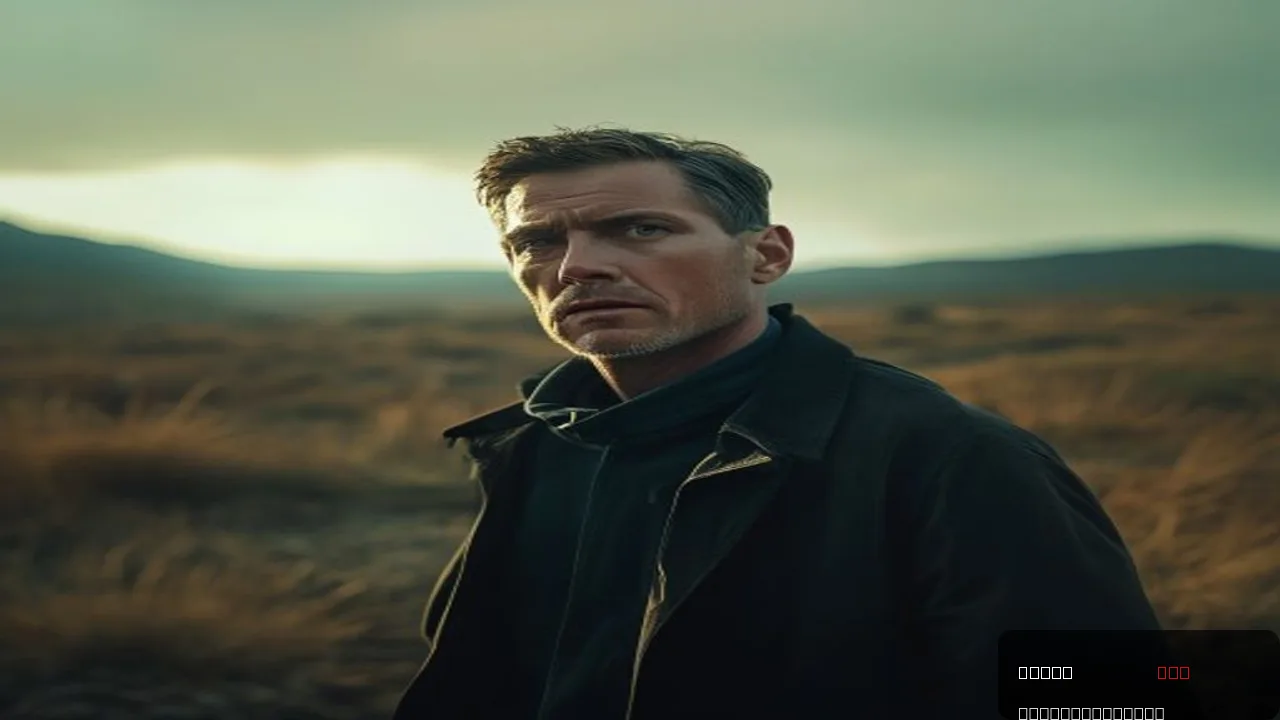
Ben Affleck Narrates Hulu's Three-Part Whitey Bulger Documentary — Here's Why It Matters
TL;DR: Hulu has ordered a three-part docuseries called Hunting Whitey Bulger, narrated by Ben Affleck and directed by Zackary Canepari. The project draws on never-before-seen prison letters and fresh testimony. It's in active production with no premiere date confirmed yet, but it's shaping up to be Hulu's most serious true-crime bet of 2026.
Ben Affleck is narrating a three-part Hulu docuseries about James "Whitey" Bulger, the Irish mob boss who spent 16 years as a fugitive before his 2011 capture. Here's the thing that makes this more than just another celebrity narration gig: Affleck's production company, Artists Equity, is producing it alongside Tom Forman's Terminal B TV. This isn't a paycheck move. It's a project he's genuinely invested in.
The series, titled Hunting Whitey Bulger, is directed by Zackary Canepari, whose Emmy-nominated Netflix docuseries Flint Town demonstrated a real gift for making institutional failure feel personal and urgent. What separates this from the two major Hollywood dramatizations — Scorsese's The Departed (2006, starring Jack Nicholson) and Black Mass (2015, with Johnny Depp) — is the source material. The production team has secured Bulger's handwritten prison letters and gotten key figures to speak on camera for the first time. That's the kind of exclusive access that changes what a documentary can actually say.
Why Affleck as Narrator Is Actually the Right Call
Most documentary casting decisions happen as afterthoughts. A famous voice reads the script, adds a veneer of prestige, and that's that. This feels different.
Affleck grew up in Cambridge, Massachusetts, in the shadow of Whitey Bulger's mythology. He's spent his career circling Boston's underworld, most directly in The Town (2010), where he directed and starred in a film whose DNA traces straight back to the Winter Hill Gang. He was even attached to direct a Bulger film with Matt Damon before that project stalled. Hunting Whitey Bulger reads like unfinished business, and his involvement as narrator and producer signals he's thinking about this story in a different way than Hollywood dramatization allows.
The casting also matters because Bulger's story isn't really about the crime. It's about how a federal informant became more dangerous than the criminals he was informing on, how the FBI enabled him. That's an institutional story, not a gangster-cool story. Affleck's presence, grounded in Boston specificity, keeps the documentary honest. He won't let this become mythology.
The Directors, Producers, and Investigative Backbone
Canepari's credentials carry weight. Flint Town didn't just document a city's police force; it showed how systemic failure crushes individual lives. There's a sequence in the second episode where an officer responds to a domestic call alone because there simply aren't enough cops on shift, and Canepari holds the shot long enough that you feel the absurdity of it in your chest. That's exactly the kind of slow-burn patience a Bulger documentary needs — keep the focus on the human cost, not the criminal mystique.
The production pulls from Casey Sherman and Dave Wedge's 2017 book Hunting Whitey: The Inside Story of the Capture and Killing of America's Most Wanted Crime Boss. Both are executive producers on the series, which means the journalists who originally broke this story are embedded in the production. That connection is crucial. Sherman and Wedge spent years cultivating sources. If they're involved, the documentary likely has access and testimony that casual crime documentaries never touch.
Tom Forman's Terminal B TV is producing (Forman's recent work includes Netflix's Unknown Number: The High School Catfish). David Metzler, Claire Read, Jesse Kerns round out the producing team.
Who Was Whitey Bulger, and Why Hollywood Keeps Returning to Him
Here's the uncomfortable part: Bulger was an FBI informant who became more violent precisely because he had FBI protection.
He ran the Winter Hill Gang out of South Boston for decades. In 1995, his former FBI handler, John Connolly, tipped him off about a pending RICO indictment. Bulger fled and evaded capture for 16 years. When he was finally arrested in 2011 in Santa Monica, he was convicted on 31 counts, including involvement in 11 murders. He died in prison in 2018 at age 89, beaten to death by fellow inmates.
The tragedy isn't just the body count. It's that the FBI's relationship with Bulger made him nearly untouchable for decades. Connolly, the agent who protected him, was eventually convicted of second-degree murder in connection with a Bulger-ordered killing. A federal agent. Convicted of murder. That detail alone should anchor the entire docuseries.
Hollywood has tried twice. Scorsese's The Departed (2006) used Bulger as the template for Jack Nicholson's Frank Costello, a character so operatically villainous the film won four Academy Awards including Best Picture, with a worldwide gross of $290 million. Then came Black Mass (2015), with Johnny Depp, which earned $99 million globally but landed as a film that had the facts and lost the feeling. What most coverage of this new docuseries glosses over: both films treated the FBI corruption as background texture, a plot device to generate tension, rather than as the actual subject. Canepari's documentary doesn't have that excuse. If it sidesteps the institutional rot the same way, it will have failed at the one thing a documentary can do that a feature film can't.
Hulu's True-Crime Push — and Why It Matters
Hulu's documentary slate has been expanding with visible intention. Friends Like These: The Murder of Skylar Neese, Devil in the Family: The Fall of Ruby Franke, Perfect Wife: The Mysterious Disappearance of Sherri Papini — these are all in the past 18 months. Hunting Whitey Bulger is the prestige anchor that slate needed.
True-crime documentaries remain a structural part of how audiences use streaming platforms. Nielsen data from early 2026 shows documentaries account for roughly 18% of total streaming hours consumed in the US, a number that's held stable for three years. Not a trend. A habit.
For Hulu, this is also a competitive chess move. Netflix has dominated prestige true-crime documentary territory with Making a Murderer and The Jinx: Part Two. Deadline reported that the project was "fast-tracked" after Artists Equity brought the package to Hulu, suggesting the platform moved quickly to lock it down before competitors could circle. Movie OTT's streaming tracker shows Hulu's documentary library growing faster than its scripted content in 2025-2026, which tells you where the platform sees its differentiation.
The three-part structure also plays to documentary strength. You've got the rise, the flight, the fall, the kind of episodic architecture that worked for The Vow and Wild Wild Country. Each episode can build genuine suspense around events whose outcomes the audience already knows.
How to Find This in India (and Everywhere Else)
Hulu doesn't operate as a standalone service in India. Indian viewers will access Hunting Whitey Bulger through Disney+ Hotstar, which carries Hulu originals under regional licensing arrangements.
Here's the practical breakdown:
- Platform: Disney+ Hotstar (Premium tier likely required)
- Audio: English confirmed; Hindi dubbing/subtitles not yet announced
- Release timing: Typically lags US by 2–4 weeks for Hulu originals
- Comparable content available now: The Jinx: Part Two (Hotstar), Making a Murderer (Netflix India)
Indian audiences have shown real appetite for true-crime documentaries — partly homegrown (House of Secrets: The Burari Deaths on Netflix India, which hit Netflix's global top ten within its first week of release in October 2021) and partly imported. The production values here, plus Affleck's profile, will likely drive viewership in Indian markets.
Movie OTT tracks streaming availability across all major Indian platforms in real time, so that's the place to check once release windows are confirmed. Hotstar premiere dates and any dubbed tracks will post there first.
What Makes This Different From the Movies
The handwritten prison letters are the wildcard. If Bulger wrote with anything like the lucidity he showed during his trial (and that's a big if), those letters could fundamentally reframe how we understand his thinking. Or they could just be the ramblings of an aging sociopath. That uncertainty is exactly what makes the documentary worth watching.
I keep coming back to one detail: Bulger was protected by the FBI because he was more valuable as an informant than as a prosecuted criminal. That's the institutional story the movies sidestepped. Dramatizations are drawn to the gangster mystique. Documentaries can actually interrogate the system that created him. Canepari knows this. Sherman and Wedge know this. Affleck, someone who's spent years thinking about Boston's underworld mythology, definitely knows this.
Hard to say whether Hunting Whitey Bulger will crack something the dramatizations missed. But the ingredients are there. The access is there. The creative team is there. That's more than most true-crime documentaries get to work with.
No Release Date Yet, but Here's What to Watch For
As of late May 2026, Hulu hasn't confirmed a premiere date. Production appears active, with a likely fall 2026 or early 2027 release window. A trailer drop will signal we're close, and those letters will likely be part of the promotional campaign.
For updates on US release dates, international availability, and India premiere timing on Hotstar, check Movie OTT's where-to-watch tracker. They update in real time as platforms confirm dates, so bookmark it if you're planning to watch.