Ben'Imana Is Rwanda's First Film in Cannes' Official Selection—and It Deserves More Than That Label
TL;DR: Marie-Clémentine Dusabejambo's debut feature premiered at Cannes 2026 in the Un Certain Regard sidebar—a landmark moment for Rwandan cinema. The 101-minute Kinyarwanda-language drama stars Clémentine U. Nyirinkindi and explores reconciliation versus personal grief in post-genocide Rwanda. Streaming availability hasn't been confirmed for most regions yet, but Movie OTT tracks where-to-watch updates as distribution deals close.
When a woman stands in front of survivors and says "I forgive," but her clenched fists tell a different story—that's the opening image of Ben'Imana. That's also the entire film, compressed into a single gesture.
What happens when a country mandates forgiveness but one person refuses? Writer-director Marie-Clémentine Dusabejambo doesn't flinch from that question. She doesn't let anyone off the hook—not the perpetrators, not the survivors, and definitely not Vénéranda, the woman preaching reconciliation while silently rejecting her own daughter's Hutu boyfriend.
The film landed at Cannes in May 2026 in the Un Certain Regard section. Yes, it's historic. Yes, it's the first Rwandan film ever to reach Cannes' official selection. But what matters more is this: it actually works. The milestone and the movie don't have to be the same conversation.
How Ben'Imana Builds Its Power Around One Woman's Contradiction
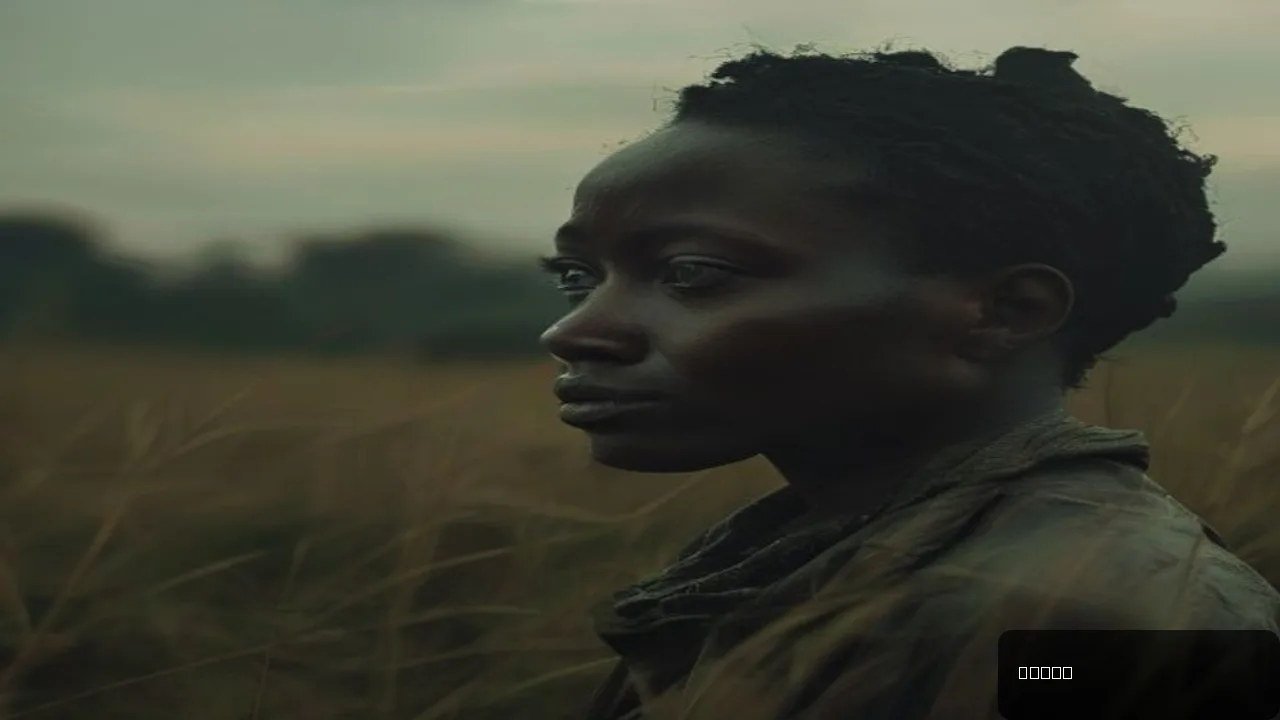
Vénéranda is the film's gravitational center. Clémentine U. Nyirinkindi carries her with the kind of physical precision that makes you forget you're watching a largely nonprofessional cast. A woman whose body contradicts every word her mouth speaks. The Hollywood Reporter's review nailed it: "her ferocious gaze and the clamp of her arms across her chest tell a different story" than her words.
Here's what Dusabejambo understands better than most filmmakers: you can forgive a genocide and still hate your neighbor. You can preach reconciliation at government-mandated Gacaca courts (the community tribunals that processed genocidal crimes at a local level in 2012, the film's setting) and still hold a grudge that's more personal, more primal, and therefore more honest.
Isabelle Kabano—the one professional actor in the principal cast, and the only face you might recognize from Eric Barbier's Small Country (2020)—plays Suzanne, Vénéranda's sister. When she hisses at her, "Can't you stop your bullshit on forgiveness?", it doesn't land as anger. It lands as love. The kind that refuses to let grief get bureaucratized. Kabano brings that precision to every scene; you can see the exact moment when family obligation cracks under the weight of actual emotion.
The third point in this triangle is Tina, Vénéranda's daughter, played by Kesia Kelly Nishimwe. Teenage, caught between her mother's ideology and her own heart. Watching these three women orbit each other—that's where the film lives. Not in the courtroom scenes. Not in the speeches about Rwanditude (the government's real identity-rebuilding program). In the kitchen. In the silences.
The Context That Makes This Film Necessary Right Now
Ben'Imana isn't the first genocide film to screen at Cannes. Son of Saul (2015) and Quo Vadis, Aida? (2021) proved that audiences will engage with atrocity narratives if they're told with enough emotional specificity, if the politics stay attached to actual human beings, not abstract principles.
What's different here: this is the first time we're seeing this story from inside Rwanda itself, told by a Rwandan filmmaker in Kinyarwanda. That matters because the film refuses the outsider's distance. There's no white savior. No international observer explaining things to us. Just women working out, in real time, how to live next to people who destroyed your family.
Most coverage will compare Ben'Imana to Son of Saul or Quo Vadis, Aida? because those are the obvious festival-genocide touchstones. The more revealing comparison is Ramata-Toulaye Sy's Banel & Adama (2023), the first Senegalese film in Cannes Competition, which arrived with a similar wave of "historic first" coverage and then struggled to secure wide distribution despite strong reviews. That trajectory is the real test facing Dusabejambo's film: whether the industry treats it as a programmable title with commercial legs or merely a symbolic achievement to applaud and move past.
The title itself is a political act. Ben'Imana is Kinyarwanda for collective identity, a direct counter to the Hutu/Tutsi categories that European colonizers imposed and that fueled the 1994 genocide. Dusabejambo doesn't explain this in dialogue. She trusts the audience to sit with the word's weight. (That kind of trust is rare in festival cinema, where explicitness usually wins.)
I keep coming back to the film's setting: Kibeho, Rwanda, 2012. The final year of the Gacaca courts. That specificity—that this is happening at the exact moment when the state is saying "we're done processing this now"—creates an unbearable pressure. The deadline is visible. The clock is running out, and Vénéranda still hasn't figured out what forgiveness actually costs.
Why This Matters for Global Audiences (Not Just Festival People)
Here's what the box office tells us about trauma-processing narratives: they travel. Quo Vadis, Aida? grossed around $1.2 million in limited US theatrical release before finding a much larger audience on streaming platforms. Capernaum (2018) followed a similar path—modest initial run, then sustained viewership once it hit Netflix.
Ben'Imana has mk2 Films handling international distribution. That name matters if you follow the festival circuit; mk2 has handled rights for Palme d'Or contenders and major Un Certain Regard selections for decades. Their involvement signals that this film will receive serious placement attention across territories.
The runtime—101 minutes—is worth noting because it's optimal for international art-house distribution. Under 110 minutes is the practical sweet spot for international programmers. Dusabejambo isn't precious with duration. Every scene earns its place.
Production companies involved include Ejo Cine, Ogweli Productions, Les Films du Bilboquet, DUOfilm, and Princesse M Productions, with cinematography by Mostafa El Kashef and a score by Igor Mabano. The screenplay was co-written by Dusabejambo and Delphine Agut, which means this isn't a solo vision handed down from on high. It's a collaboration, and you can feel that in the specificity of the dialogue, the way characters interrupt each other, the way arguments sound like they're happening for the hundredth time.
Where You Can Actually Watch Ben'Imana (and When)
The honest answer: not yet, not in most places. The film premiered at Cannes in May 2026 and is still in active festival circulation. No theatrical release date has been announced for the US, UK, India, or Europe. Distribution negotiations through mk2 Films are ongoing.
Here's the realistic timeline: Un Certain Regard titles with strong critical reception typically achieve limited theatrical runs of 200 to 500 screens before moving to streaming. That process usually takes six to twelve months from festival premiere. Watch for the film to hit festivals like Toronto (September 2026) next, which accelerates distribution conversations in North America.
For Indian audiences specifically: No Indian streaming platform has announced rights yet. That's not unusual for a May 2026 premiere. But the trajectory is predictable:
- Netflix India has been the most aggressive acquirer of Cannes Un Certain Regard titles in recent cycles and already has Capernaum and The Worst Person in the World in its library.
- MUBI India is the other likely candidate—the platform has built its entire Indian subscriber base on films exactly like this, and it's acquired several African art-house titles in the past two years.
- Amazon Prime Video India occasionally picks up festival selections, though less consistently than the first two.
A Kinyarwanda-language film won't receive a Hindi or regional dub. English subtitles would be the standard delivery. And honestly, that's the right choice; this film's power lives in the specific weight of the language, the way Kinyarwanda sounds when it carries grief.
Indian cinephile communities in Mumbai, Delhi, and Bangalore are already aware of the film through festival coverage. The historical subject matter—genocide, justice, women's narratives—has precedent for Indian engagement; Son of Saul found a real audience on Indian streaming despite its Hungarian-language barrier. Movie OTT's where-to-watch tracker is your fastest resource for real-time updates once deals are confirmed.
What Happens Next: Awards, Festivals, and Oscar Eligibility
The immediate question: does Ben'Imana pick up the Un Certain Regard jury prize? Awards from that sidebar materially accelerate distribution. They sometimes double the number of territories a film reaches in the six months post-festival.
Likely next stops for the film:
- Toronto International Film Festival (September 2026) — nearly certain, given the film's profile and TIFF's importance for North American distribution.
- African film festival circuit — including FESPACO, where a Rwandan film of this profile would be a major event.
- Oscar eligibility — Rwanda would submit Ben'Imana as its International Feature Film entry. Given that it's the country's first Cannes official selection, that submission seems near-inevitable. Whether it advances is a different question, but the film will be in the conversation.
The Take Nobody's Really Saying Out Loud
Most coverage of Ben'Imana will frame it as a "milestone" story: Rwanda's first Cannes selection, the history-making angle, the triumph of breaking through. That framing is accurate. But it risks reducing the film to its context, turning it into a symbol instead of an artwork.
The more interesting read is simpler: Dusabejambo has made a film that would be remarkable regardless of where it came from. The milestone is real and worth celebrating. The film is better than the milestone. That's rarer than it should be.
Right Now: Where to Track Availability
Ben'Imana is in active festival circulation as of May 2026. No theatrical release date for any major market. No confirmed streaming platform for India, the US, the UK, or Europe. But here's what you need to know: it's coming. The level of critical attention the film received at Cannes virtually guarantees that distribution will close within the next twelve months.
For real-time updates on where and when you can watch it, check Movie OTT—the site tracks global platform availability as deals are confirmed, with specific regional breakdowns for India and beyond.
Should you watch it when it arrives? Yes. Without hesitation. It's the kind of film that reminds you why the festival circuit still matters.