How Cannes Is Reinventing Its Film Market for the Creator Economy Age
TL;DR: The Cannes Marché du Film is expanding well beyond traditional film sales in 2026, launching its first-ever Creator Economy Summit on May 17 and deepening its AI programming under Executive Director Guillaume Esmiol. The market now hosts 16,000 registered professionals and 250 events per edition — and it's betting that YouTube stars, TikTok filmmakers, and AI tools are the industry's next frontier, not its enemy.
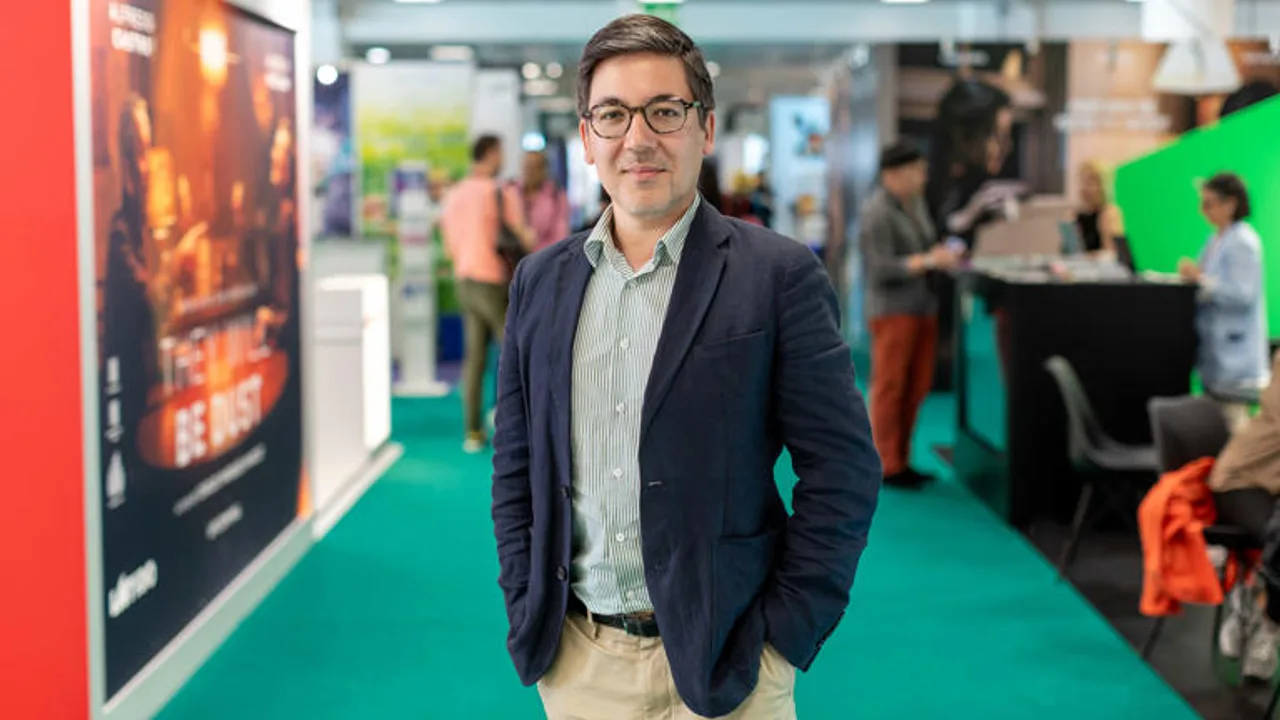
Guillaume Esmiol and the Quiet Revolution Inside the World's Biggest Film Market
Guillaume Esmiol didn't come up through film sales. No apprenticeship at a Parisian distribution house, no years spent hawking foreign rights at the AFM. He came from tech and digital media innovation — stints at French broadcaster TF1 and a corporate startup studio called Wefound — and when he took over as sole head of the Cannes Marché du Film in 2023, succeeding Jérôme Paillard, that background was going to show.
It has. Quietly but unmistakably, Esmiol has been remaking the world's most important film marketplace into something that looks less like a traditional film bazaar and more like a hybrid industry summit — one where a documentary about a YouTube star climbing Everest sits comfortably alongside conversations with Nvidia and OpenAI. The 2026 edition, running alongside the 79th Cannes Film Festival, is the clearest expression yet of where he wants to take it.
What's Actually New at the 2026 Marché du Film
The headline addition this year is the inaugural Creator Economy Summit, a half-day event scheduled for May 17, 2026, at Plage des Palmes on La Croisette, running from 10:00 to 13:00. Developed with support from ABEL Studios, the summit brings together film professionals and digital content creators to examine how platforms like YouTube, Instagram, and TikTok are reshaping the way stories get developed, financed, and distributed.
Key programming facts for 2026:
- Creator Economy Summit: May 17, 2026, Plage des Palmes, 10:00–13:00
- AI for Talent Summit: Features Google-Alphabet's James Manyika alongside director Darren Aronofsky
- Total events this edition: 250 panels, conferences, and sessions
- Registered market professionals: 16,000 at the Marché; 40,000+ across the wider Festival
- Net Promoter Score under Esmiol: Rose from 10 after his first market to 33 last year
That NPS climb — from 10 to 33 in just a few years — is the kind of metric that doesn't lie. It means people are leaving Cannes more satisfied than they were, which in a market known for its logistical chaos is genuinely impressive.
The AI programming is also more structured than it sounds. Rather than hosting a generic "AI summit," Esmiol rebranded it as the "AI for Talent Summit" — a deliberate framing choice that positions artificial intelligence as a tool in service of human creativity rather than a replacement for it. The Aronofsky-Manyika pairing on Saturday morning is the marquee session: a celebrated auteur filmmaker sitting down with one of Google's most senior research executives to talk, practically, about how AI is actually being used on real productions.
Why the Creator Economy Belongs at a Film Market — and Why Now
The thing nobody mentions often enough is how much the creator-to-cinema pipeline has already proven itself, without the industry really planning for it. Two cases have made Esmiol particularly attentive.
The first is Kaizen, a French documentary following YouTube phenomenon Inoxtag on his attempt to summit Mount Everest. Distributed by MK2, the film became a genuine theatrical event — not because of traditional marketing, but because Inoxtag activated his community directly. Audiences who had never set foot in a cinema for a documentary showed up. In numbers that surprised everyone.
The second is American. Markiplier — one of YouTube's most-subscribed gaming creators — self-produced and self-distributed Iron Lung, a horror film based on a game he loves. The film has earned over $50 million worldwide. Without a studio. Without a traditional distributor. Just a creator who understood his audience well enough to sell them a cinema ticket.
These aren't flukes. They represent a structural shift in how audiences form around content, and how that formation can be monetized in theatrical windows. According to Screen Daily's report on the summit, the Marché sees creators as "essential strategic partners rather than mere content amplifiers" — and the 2026 summit is designed to make that partnership legible to the traditional industry.
For audiences and industry watchers tracking these trends globally, Movie OTT has been monitoring how creator-led projects are finding streaming homes across regions — a pattern that's accelerating as platforms compete for audience loyalty in the post-peak-streaming era.
Darren Aronofsky, AI, and What "Responsible" Actually Means
Here's where the Cannes Market's AI programming gets genuinely interesting — and a little complicated.
Esmiol told The Hollywood Reporter that the Marché's role isn't to take sides in the AI debate but to "explain the topic and address those fears," while also providing concrete examples of how AI has been deployed on actual film productions. Not hypotheticals. Not pitch decks. Real use cases.
"We don't want to speak about AI replacing creativity," Esmiol said. "We want to speak about AI and tech enhancing creativity and creating new business opportunities."
That framing matters enormously right now. The AI-and-IP debate is one of the most contested legal and creative battlegrounds in entertainment — SAG-AFTRA only recently secured new AI protections in its studio deal, and the European Commission's presence at this year's Marché (including European Parliament-organized events) signals that regulatory frameworks are arriving whether the industry is ready or not.
The summit will feature tech companies and startups presenting new approaches to IP protection and author rights — a direct response to the anxiety that AI training on copyrighted material has generated across the creative community. Nvidia, OpenAI, and La Fémis director Guillaume Duchemin are all on the program, alongside director Xavier Gens.
The Pixar analogy Esmiol offered in conversation is worth sitting with: before Toy Story, nobody really believed 3D animation was a serious storytelling medium. After it, everyone was doing it. His suggestion that an "AI Pixar" moment might be coming — some startup producing something authentically disruptive — isn't hype. It's a genuine industry question, and it's the right one to be asking in 2026.
How This Lands for Indian Audiences and the Indian Film Industry
For Indian cinema professionals and streaming audiences, the Cannes Marché's evolution carries real practical weight. India is one of the most dynamic creator economies on the planet — the country has more than 500 million social media users and a YouTube creator ecosystem that rivals any in the world. The gap between Indian digital creators and theatrical cinema, however, remains wide.
The Creator Economy Summit's focus on bridging platforms like YouTube and TikTok with long-form storytelling and theatrical distribution is directly relevant to a market where creators like Bhuvan Bam (BB Ki Vines, Taaza Khabar) and Prajakta Koli have already made the leap to OTT originals. The question the Marché is asking — how do you translate a creator's community into a cinema audience? — is one Indian producers should be asking loudly.
On the AI side, Indian studios have been cautiously exploring AI in post-production and dubbing, particularly for regional-language content. Platforms accessible to Indian audiences — Netflix India, Amazon Prime Video, JioCinema, SonyLIV, and Zee5 — are all investing in AI-assisted localization. The regulatory conversations happening at Cannes, particularly around IP rights, will have downstream effects on how Indian content is licensed internationally.
Movie OTT's streaming tracker is a useful resource for Indian audiences trying to follow where creator-led international titles land across platforms — as more of these films find Indian distribution windows, availability tends to shift quickly.
It's worth noting that Kaizen, the Inoxtag documentary cited by Esmiol as a creator economy success story, hasn't yet confirmed an Indian streaming release. That may change — MK2's distribution relationships extend to international platforms — but as of now, it's one to watch.
The Marché's Longer Arc: From Film Market to Industry Laboratory
The Cannes Marché du Film has existed since 1959. For most of its history, it was exactly what it sounds like: a place where people bought and sold films. Booths, screening rooms, handshake deals over rosé on the Croisette. That core function hasn't disappeared — Esmiol is emphatic that film sales remain the market's heartbeat.
But the 250-event program tells a different story about what the Marché has become. It's now also a financing forum, a policy debate stage, a tech showcase, and — as of May 17, 2026 — a creator economy summit. That's a lot of identity for one institution to carry.
Esmiol's background helps explain the ambition. His time at TF1's digital innovation division and at Wefound gave him a framework for thinking about media markets that isn't purely transactional. He sees the Marché as what he calls "a laboratory for new business models, for new creations, for new kinds of creativity." That's language you don't often hear from film market directors.
Whether the traditional film sales community — the buyers and sellers who have been coming to Cannes for decades — fully embraces this expanded identity remains an open question. Post-COVID box office recovery has been uneven across territories, and some distributors are buying fewer films at lower prices than before. The market's core business is under genuine pressure. Honestly, no amount of AI summits fixes that structural problem directly.
What the expanded programming does, though, is give the Marché relevance beyond deal-making — and in a media landscape where relevance is increasingly hard to hold, that's not nothing.
Movie OTT covers international film market developments and streaming availability across India, the US, the UK, and Spain — tracking how titles from markets like Cannes find their way to audiences worldwide.
What Comes Next: The Signals Worth Watching After Cannes 2026
The 2026 Marché du Film runs May 13–23 alongside the Cannes Film Festival. The Creator Economy Summit on May 17 is the session to watch for anyone tracking the creator-to-cinema pipeline — particularly whether it produces any concrete partnerships or distribution announcements between digital creators and traditional distributors.
The AI for Talent Summit's Aronofsky-Manyika conversation on Saturday morning could generate significant industry commentary. Aronofsky hasn't been especially vocal about AI in the past, which makes his participation all the more interesting. What he says — and what he admits to actually using — will travel fast.
The European Commission's presence at this year's Marché is also a development worth tracking. Regulatory frameworks for AI and IP in entertainment are being written right now, and Cannes is one of the few places where American, European, and Asian perspectives collide in real time. For the latest on how those conversations affect global streaming availability, Movie OTT will be tracking developments as they emerge from the market.