Diego Luna's Ashes Takes Cannes: Immigration, Grief, and the Cinema He's Afraid of Losing
TL;DR: Diego Luna's directorial feature Ashes (2026), adapted from Brenda Navarro's novel and premiering at Cannes, follows two Mexican siblings navigating displacement in Madrid. It's a personal film from a filmmaker who's clearly got more to say behind the camera than in front of it — and it raises hard questions about where cinema goes from here.
What happens when the actor the world knows as Cassian Andor decides the camera's most interesting position is behind it? You get Ashes — and based on everything coming out of Cannes, the answer is: something worth paying attention to.
Diego Luna's latest directorial effort premiered at the 2026 Cannes Film Festival as a Special Screening, drawing immediate notice for the quiet precision of its storytelling. Variety reported on May 13 that Luna, who co-wrote the screenplay alongside Abia Castillo and Diego Rabasa, described the project as deeply personal — rooted in his firsthand understanding of what it means to leave a country and build a life somewhere that doesn't entirely want you. That's not marketing language. That's a filmmaker processing something real.
What Luna actually said — and why it landed differently this time
"It's everywhere," Luna told Variety via Zoom, speaking about anti-immigrant prejudice. "And it's based on ignorance and selfishness. It's related to this fear of what you have being taken away from you. It's this stupid idea of feeling like you need to protect yourself."
That's not a diplomatic quote. Luna, director and co-writer on the film, wasn't hedging. He went on to describe watching migrant caravans pass through Mexico — witnessing both extraordinary kindness from ordinary people and, in the same breath, fear-driven hostility from others. "That duality I witnessed in my own country," he said. Two sides of the same border, the same road, the same moment.
The personal layer runs deeper than politics. Luna lost his mother when he was two years old, a biographical detail that gives the film's central premise — a mother who leaves her children in Mexico to find work in Spain, and the emotional wreckage that decision leaves behind — a specific weight. "Often, we have to grow up to understand what our parents did for us or didn't do for us," he told Variety. That line isn't backstory. It's the spine of the whole film.
Movie OTT flagged Ashes as one of the Cannes 2026 titles to track for international streaming pickup, given the subject matter's cross-regional appeal.
The film itself: cast, source material, and what Screen Daily found
Ashes is based on Brenda Navarro's novel A Mouthful of Ash, a literary source that gives the film its structural seriousness. According to the film's Wikipedia entry, Luna co-produced the project alongside his writing collaborators, maintaining tight creative control from page to screen.
Key facts at a glance:
- Director: Diego Luna
- Screenplay: Diego Luna, Abia Castillo, Diego Rabasa (based on Navarro's novel)
- Lead cast: Anna Díaz as Lucila, Sergio Bautista as her younger brother Diego, Adriana Paz as the mother
- Premiere: Cannes Film Festival 2026, Special Screening category
- Source novel: A Mouthful of Ash by Brenda Navarro
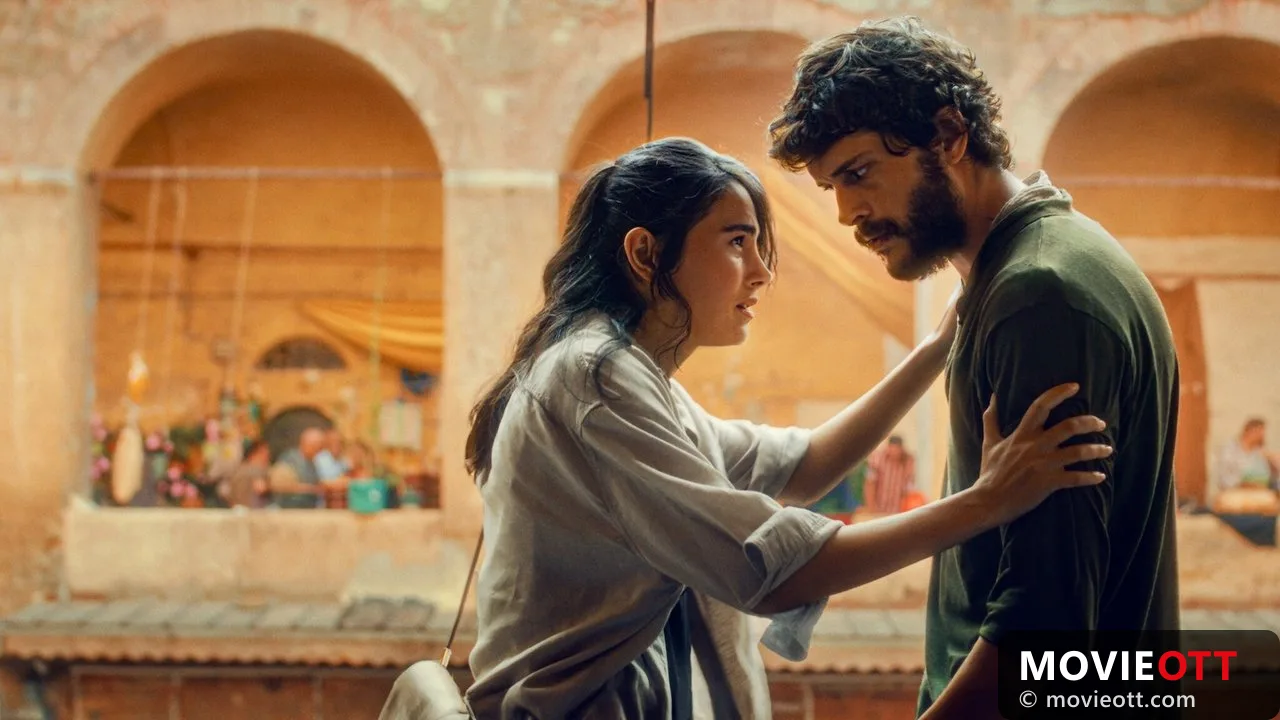
The plot follows 21-year-old Lucila and her teenage brother as they travel from Mexico to Madrid to reunite with a mother who relocated years earlier for economic reasons. What they find isn't a reunion so much as a reckoning. Screen Daily described it as "a quiet exploration of the Mexican immigrant experience" — which, for a film about displacement and fractured family bonds, reads as precise rather than understated.
No official runtime has been confirmed in distributed press materials at the time of publication. Hard to say if that changes before a wider release announcement.
Luna the director: a career track record the headlines keep burying
Most coverage leads with Andor. Fair enough — Diego Luna's performance as Cassian Andor across the Star Wars series is arguably the role that gave him his largest global platform. But his directing career predates the Disney+ era by years.
His previous directorial credits include César Chávez (2014), a biographical drama about the American labor organizer that showed his interest in political subject matter, and Mr. Pig (2016), a quieter character study that critics noted for its restrained emotional register. Both films signal a director who's more interested in mood and specificity than spectacle. What the trade write-ups keep missing: Ashes is Luna's first directorial feature in a full decade, and the first he's brought to Cannes rather than a North American festival. That's not a continuation of a career. That's a repositioning.
Luna told Variety he rarely appears in the films he directs — a deliberate choice. "As an actor, you're invited to a very short part of the process, but it's tiny compared to being on the whole journey of a film like you are as a director." He described directing and producing as "a much richer experience." He's currently writing his next script with the intention of directing it himself.
His next acting commitment is Disney's live-action Tangled remake. After that, based on his own statements, the camera stays behind him.
Movie OTT's streaming tracker has Luna's prior directorial work catalogued across regions for readers who want to catch up before Ashes lands on a platform near them.
Why Ashes arrives at exactly the wrong — and right — moment for this kind of film
The thing nobody mentions in the Cannes coverage is how strategically uncomfortable Ashes is as a 2026 release. Anti-immigrant policy isn't a subtext in the current political climate. It's the headline. Luna acknowledged as much, pointing out that the United States isn't the only country demonizing migrants — Spain, where the film is set, has seen its own surge in far-right political movements targeting immigration.
Compare Ashes to Alfonso Cuarón's Roma (2018), which also centered a Mexican woman navigating a world that undervalues her labor and her presence. Roma won three Academy Awards, including Best Director, and demonstrated that Spanish-language films about displacement can find massive global audiences when given proper platform support. Netflix acquired Roma for a reported $15 million, per trade coverage at the time, and the film went on to earn a 96% score on Rotten Tomatoes.
Ashes isn't Roma — it's a different register, a different family dynamic, a different destination. But the market precedent matters. Streaming platforms, particularly Netflix and Apple TV+, have shown consistent appetite for prestige Spanish-language titles with festival pedigree. A Cannes Special Screening is exactly the kind of credential that accelerates those conversations.
The theatrical-vs-streaming tension is real, though. Luna himself expressed concern about cinema's diminishing role in daily life, telling Variety: "I'm concerned with movies not being part of the life of people. I see my kids, and they don't go to the cinema the way I used to." That's a filmmaker worried about the form he's devoted himself to — which, honestly, makes Ashes feel like a film made with some urgency behind it.
How Indian audiences will find Ashes — and whether they will
Streaming availability for Ashes in India hasn't been confirmed at the time of writing. Not unusual for a Cannes title in May 2026 — platform deals typically close in the weeks following a festival premiere.
The most likely landing spots for Indian viewers, based on how comparable Spanish-language prestige films have been distributed:
- Netflix India — the most probable home, given the platform's track record with Spanish-language festival acquisitions and its existing investment in Latin American content. Netflix India added Cuarón's Roma within months of its Cannes debut in 2018 and, more recently, picked up Rodrigo Sorogoyen's Cannes-selected The Beasts (2022) for the Indian catalog within its first year of release. That pipeline hasn't slowed.
- MUBI India — a strong secondary candidate for a film of this critical register; MUBI has been aggressive about acquiring Cannes titles for Indian audiences
- Amazon Prime Video India — possible but less likely given the platform's current content priorities
- Apple TV+ India — worth watching; Apple has been building its festival-film catalog
No Hindi, Tamil, or Telugu dubbing is expected for a film of this profile, though Spanish-to-English subtitling will be standard. Indian audiences familiar with Roma, Parasite, or the Andor series on Disney+ Hotstar will find the subject matter accessible and the filmmaking language familiar.
Movie OTT will update Indian streaming availability for Ashes as distribution deals are confirmed — bookmark the title page for region-specific alerts.
What comes next for the film — and for Luna's directing career
Look — the trajectory from here depends almost entirely on who picks up distribution rights in the coming weeks. A Netflix or Apple acquisition would put Ashes in front of a global audience within months of Cannes. A smaller arthouse distributor means a slower, more limited rollout.
Luna is already writing his next directorial project. He's committed to the Tangled live-action remake as an actor, which keeps his name in the mainstream conversation while he develops work that's clearly closer to his actual interests. The question is whether the success or visibility of Ashes accelerates his pivot from star to auteur.
What's striking is that he's not treating these two careers as contradictory. He wants both. He's just honest about which one feels more complete.
The cinema Luna is afraid of losing — and what that means for Ashes
"Cinema lets audiences share an event with others and makes them feel part of a community you didn't know you belonged to," Luna told Variety. "Growing up, cinema was not an escape. It was a mirror I could reflect on. It was the place where I could dream. And I'm scared society will lose that opportunity."
That's not a throwaway quote. It's the argument Ashes is making by existing. A film about two people traveling across an ocean to find belonging, made by a director who believes the cinema itself is a place of belonging. The meta-text isn't subtle. And it doesn't need to be.
Whether audiences find it — in theaters, on a streaming platform, or wherever distribution eventually lands it — is the open question. For full streaming availability across India, the US, the UK, and Spain as deals are confirmed, Movie OTT has the current picture.