Coward Is the Queer WWI Love Story Cinema Has Been Waiting For
TL;DR: Belgian director Lukas Dhont brings his Oscar-nominated intimacy to the Western Front with Coward, a gay romance set in the trenches of World War I, premiering at Cannes 2025. Starring Emmanuel Macchia and Valentin Campagne, it's the kind of film that reframes what courage actually means — and it's already generating serious awards heat.
Lukas Dhont was driving through Flanders one morning, past the long rows of white grave markers, the flat fields that still hold the bones of a generation, when he understood exactly why this film had to exist. The Belgian director, just 34 years old and already carrying an Oscar nomination for Close (2022), had stumbled onto something most war films never touch: a series of archival black-and-white photographs showing soldiers in full drag, performing cabaret numbers for their fellow troops between bombardments. Can-can dancers. Grieving mothers. Lovesick wives. All played by men in uniform, with artillery rumbling somewhere just offstage.
That image — of men performing femininity while death waited in the mud — became the seed of Coward, Dhont's most ambitious film yet. It premieres at the Cannes Film Festival in May 2025, and if early buzz is any guide, it won't be leaving empty-handed.
What Dhont told Variety before the Cannes premiere
"It's a part of history I hadn't seen portrayed before," Dhont said via Zoom, speaking to Variety in the days before Coward's debut on the Croisette. "That got my ideas flowing. I thought, 'Wow, it would be really special to see these men creating a theater piece while in the background, there are explosions and the war is still going on and there's death all around them.'"
That's the directorial instinct that made Close so devastating — the ability to find emotional specificity inside situations that could easily become abstract or symbolic. With Coward, Dhont has scaled that instinct up dramatically. He's working with period sets, battlefield sequences, and a cast living inside one of history's most brutal conflicts. But the intimacy, he insists, had to stay intact. "I was making a war film, but I needed to find a way to keep the intimacy that I love from my previous work," he told Variety. "It was an exercise in trying to create a scale and a world... but try to keep it truthful to the emotions of the characters."
The film itself: who's in it, what it's about, when it arrives
Directed by: Lukas Dhont Starring: Emmanuel Macchia as Pierre, Valentin Campagne as Francis World premiere: Cannes Film Festival, May 2025 Production: Belgian-French co-production (exact studio distribution TBD at time of writing)
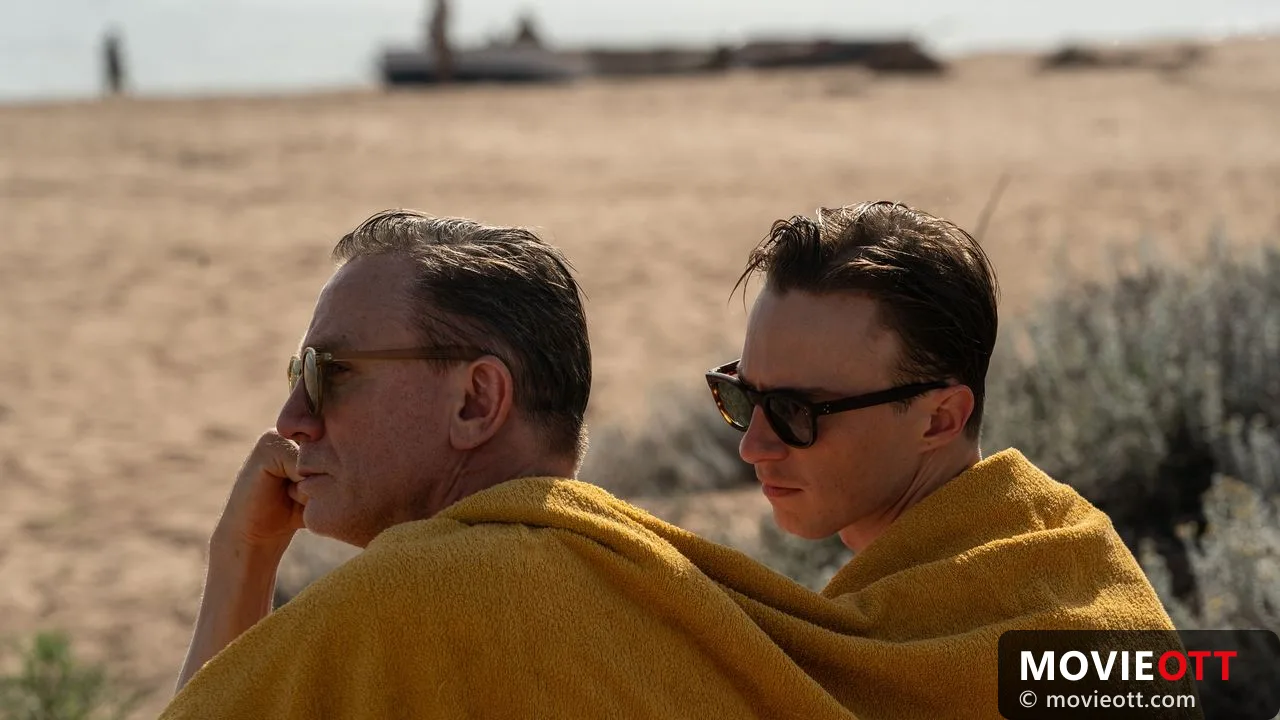
The story centers on Pierre, a Belgian soldier whose early idealism about the war erodes quickly once he encounters its actual horror. In the wreckage of that disillusionment, he falls into a passionate relationship with Francis, a fellow soldier who organizes gender-bending theatrical performances to keep the troops' morale from collapsing entirely.
The title carries real weight. "Coward" historically referred to soldiers who deserted their posts rather than continue fighting — men who, under threat of execution, chose to run. Dhont wants to interrogate that label directly. As he told Variety: "I wanted to examine our notions of heroism. In war films, masculinity is portrayed in a very narrow way. There's this idea that fighting for our country is always a noble goal, and the fear of being a coward has broken a lot of people or led to their deaths."
Runtime and UK/US distribution deals hadn't been formally announced at time of publication. Movie OTT will update streaming availability as soon as distribution is confirmed across regions.
Dhont's filmography and why this leap makes sense
Two films in, Dhont had already built a reputation as one of European cinema's most emotionally precise directors. His debut, Girl (2018), followed a trans teenager pursuing ballet and won the Camera d'Or at Cannes. Close (2022), the story of two teenage boys whose intense friendship fractures under social pressure, won the Grand Prix at Cannes and earned Belgium's Oscar nomination for Best International Feature Film, one of the most competitive categories at the Academy Awards.
Both films share a DNA: they're quiet, they're close to the face, and they treat their subjects with a seriousness that never tips into exploitation. Close in particular landed with audiences and critics because it refused easy resolution. It earned an 87 on Metacritic, which placed it among the best-reviewed films of 2022.
Coward represents a genuine departure in scale. War films require logistics, period authenticity, and the kind of production infrastructure that intimate character dramas simply don't. Dhont has called it "the most challenging film I've ever made." That's not false modesty from a director who made a film about a trans ballerina as his debut.
What most profiles of Dhont skip over: he's now three-for-three on Cannes selections, each time with a bigger canvas and a more politically charged subject. Girl won a sidebar prize. Close took the Grand Prix in competition. Coward arrives in competition again, which means Dhont is essentially being fast-tracked through the festival's hierarchy at a pace that recalls Xavier Dolan's early Cannes run — except Dhont's films have crossed over commercially in ways Dolan's rarely did outside Quebec.
Emmanuel Macchia and Valentin Campagne, both relative newcomers to international audiences, carry the central relationship. The casting of non-stars is a deliberate Dhont signature; he tends to prioritize emotional authenticity over marquee recognition.
Why this film matters beyond the festival circuit
Here's the thing nobody mentions when they talk about queer WWI stories: there basically aren't any. Not in mainstream cinema. Brokeback Mountain (2005) gave same-sex love a landscape and a tragedy; Call Me by Your Name (2017) gave it summer heat and literary longing. But the trenches? The specific horror of the Western Front, where men were simultaneously stripped of everything and, paradoxically, freed from the social surveillance of ordinary life? That ground has been almost completely untouched.
Dhont is onto something historically real. Homosexuality was criminalized across most of Europe in 1914-1918, yet the conditions of trench warfare — the forced proximity, the suspension of civilian norms, the constant presence of death — created spaces where relationships that would have been impossible at home became possible, even necessary. As Dhont put it to Variety: "What's really interesting is that in those darkest of times, they are more free than society allows them to be or that they will be when the war ends."
I keep coming back to that line. It's the kind of paradox that great war films live inside, the idea that catastrophe can simultaneously destroy and liberate. All Quiet on the Western Front (the 2022 German remake, which won four Oscars) showed the mechanical horror of WWI with extraordinary force. Coward seems positioned to show something that film didn't: what tenderness looked like inside that same horror.
The timing isn't accidental either. With active conflicts in Ukraine and the Middle East dominating European consciousness, films that interrogate mandatory service, heroism, and the "coward" label carry immediate political weight. Dhont acknowledged this directly: "I'm talking about the past but there's a sense that I'm telling a story about something in the present."
For streaming platforms competing for prestige acquisitions, Coward ticks every box: Cannes pedigree, awards potential, a director with a proven track record, and a subject matter that's genuinely underserved. Movie OTT's where-to-watch tracker is the fastest way to find out which platform lands it in your region once deals close.
How Coward is likely to reach Indian audiences
Indian OTT platforms have shown a growing appetite for European festival cinema, particularly after All Quiet on the Western Front cracked Netflix India's top-10 most-watched non-English films within its first two weeks of release in late 2022. Given Dhont's previous films — Close was available on MUBI in India, where it quietly built a word-of-mouth following strong enough to trend on Film Twitter India for several days after its MUBI drop — Coward is most likely to land on one of the following:
- MUBI India — the most probable home, given MUBI's relationship with European arthouse and Dhont's existing presence there
- Netflix India — possible if Netflix acquires international distribution rights, as they did with All Quiet
- Amazon Prime Video India — less likely but not out of the question for a prestige European title with awards traction
- Apple TV+ — worth watching; Apple has been aggressive about Cannes acquisitions
Hindi dubbing or Tamil/Telugu dubbed tracks are unlikely for a film of this profile, but English subtitles will be standard. Indian audiences who engaged with Close on MUBI will find Coward a logical next step from the same director.
Movie OTT tracks streaming availability across all major Indian platforms and will post confirmed availability details for Coward as soon as distribution agreements are announced.
The editorial take: heroism, queerness, and the war film's blind spot
Most coverage of Coward frames this as a "queer love story set in WWI." That's accurate but undersells the argument Dhont is actually making. The more interesting read is that this is a film about the performance of masculinity — specifically, how war weaponizes men's fear of being seen as weak, and how that fear has "broken a lot of people or led to their deaths," as Dhont put it. The drag performances at the film's center aren't incidental color. They're the thesis. Men dressing as women to entertain other men, in a context where conventional gender roles were enforced by execution. That's not just visually striking. That's a structural critique of what we've decided counts as courage.
What to watch for: awards season, distribution, and what comes next
Coward debuts at Cannes in May 2025 in competition, which means it's already in the conversation for the Palme d'Or. Dhont has been in competition before (Close won the Grand Prix in 2022), so the jury knows his work.
Key things to track over the coming months:
- Distribution deal announcement: who picks this up for the US, UK, and India will determine how wide its awards-season reach actually is
- Oscar submission: Belgium will almost certainly submit Coward as its International Feature Film entry for the 2026 ceremony
- UK theatrical release: likely autumn 2025, depending on acquisition
- Streaming window: expect a 90-day theatrical window before any platform premiere
Hard to say if Coward will match the global reach of All Quiet on the Western Front, which was a $20 million production that eventually grossed over $5 million theatrically before Netflix amplified it to a worldwide audience of tens of millions. But the ingredients are there. The part I'm most curious about is whether Dhont can sustain his signature close-up emotional language (think of that devastating schoolyard scene in Close, where a single glance does more work than pages of dialogue) across the scale of a full battlefield production without losing what makes his films feel so uncomfortably personal.
Should you watch it? Where to find it.
Yes. Watch it. Dhont hasn't made a false move yet, and everything about Coward — the historical setting, the thematic ambition, the casting philosophy — suggests a filmmaker operating at the peak of his powers. If you haven't seen Close yet, watch that first (it's on MUBI). Then come back for this.
Where to watch Coward (as of May 2025):
- Theatrical release: Cannes premiere; wider European release expected late 2025
- Streaming: TBC — check Movie OTT for confirmed platform availability by region
- India OTT: Most likely MUBI India or Netflix India; no confirmed deal yet
Comparable films if you want to prep:
- Close (2022, Dhont) — his previous film, same emotional register
- All Quiet on the Western Front (2022) — WWI scale, different emotional angle
- Brokeback Mountain (2005) — the obvious queer-love-in-hostile-landscape comparison