Double Freedom Review: Lisandro Alonso's Slow-Cinema Sequel Stays True to Its Roots—and Then Breaks Them
TL;DR: Lisandro Alonso's Double Freedom (La Libertad Doble) premiered at Cannes 2025's Directors' Fortnight, running 100 minutes with the same lead actor from his 2001 debut. It's a near-plotless arthouse drama that adds a major structural twist—an institutionalized sister subplot—without softening Alonso's uncompromising aesthetic. Streaming availability outside festival circuits is unconfirmed; expect a MUBI window in 12–18 months.
Lisandro Alonso just made his most accessible film in 25 years. And it's still barely a movie by mainstream standards.
The contradiction holds. Double Freedom (La Libertad Doble), which debuted at Cannes 2025 in the Directors' Fortnight sidebar, represents something real: a filmmaker with a loyal festival following making a deliberate structural shift—one that doesn't compromise his aesthetic but does expand his potential audience. According to the Hollywood Reporter's Jordan Mintzer, the film "posits that life is best lived on your own terms, with few concessions and compromises," which is basically Alonso's filmmaking philosophy stated plainly.
Whether that shift moves the needle for a streaming platform's acquisition team? That's still an open question.
What You're Actually Getting Into
Director: Lisandro Alonso. Runtime: 100 minutes. Festival premiere: Cannes 2025, Directors' Fortnight. Language: Spanish.
The cast:
- Misael Saavedra returns as Misael, the solitary woodcutter from Freedom (2001)—same role, 25 years later
- Catalina Saavedra plays Micaela, Misael's institutionalized sister. She's recognizable from Sebastián Silva's The Maid (2009)
- Adrián Fondari plays the doctor who triggers the film's central conflict
- Alcides Fink and Laura López Moyano in supporting roles
Production: Luxbox (Paris-based arthouse distributor) is handling international sales. The cinematographer is Cobi Migliora. Peter Rosenthal composed the score—used minimally, structurally, never to manipulate.
No confirmed streaming deal yet. No theatrical release date set. Standard for a Luxbox-handled Directors' Fortnight title: expect a slow European rollout through Spain, France, and Argentina before any platform picks it up. Movie OTT's streaming tracker will update availability across regions as deals close.
The Opening 30 Minutes Are Pure Alonso
What strikes me is how little he's actually changed. The first act of Double Freedom operates identically to La Libertad (2001): long takes, near-silent observation, a camera that frames its subject against landscape rather than close-up emotion. Cinematographer Migliora holds shots the way Alonso held them in his debut—patiently, without cutaway relief.
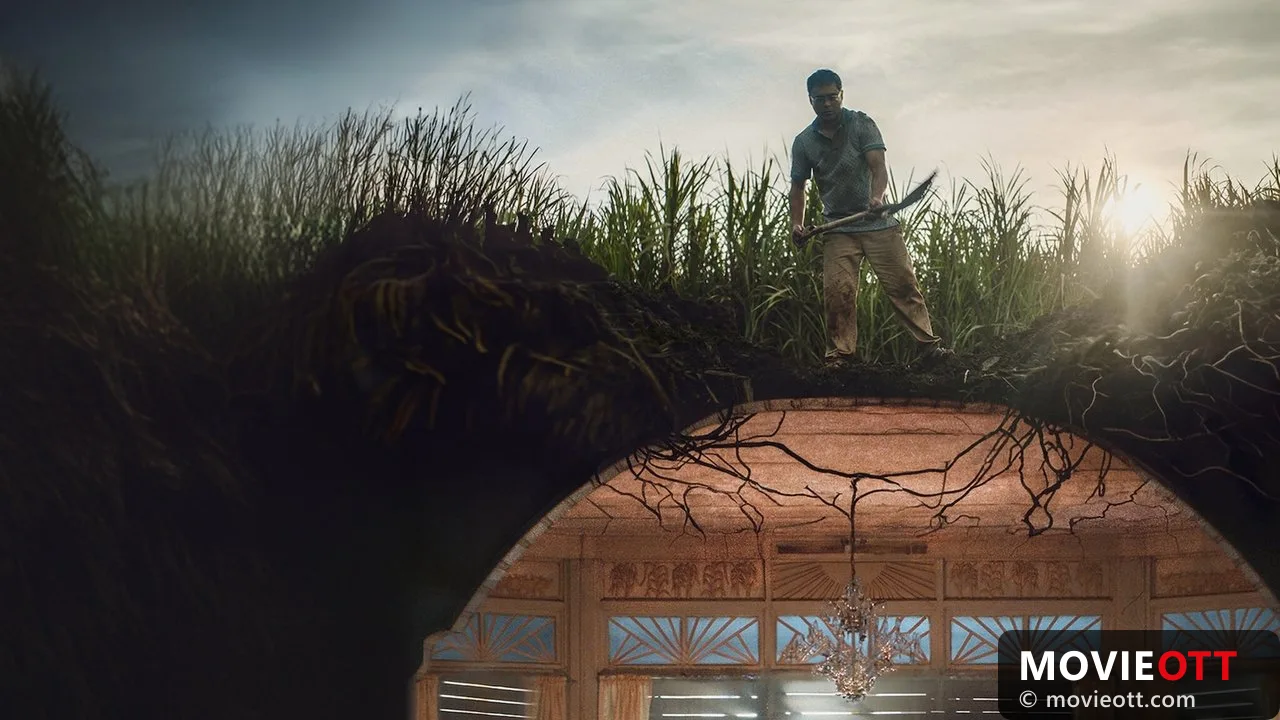
The opening image alone: Misael cooking over fire at night while a mountain range glows behind him. That's it. No score. No dialogue explaining the mood. Just a man and a landscape and five minutes of your time. This is the slow cinema grammar that made Alonso a Cannes fixture seven times across just six features, a ratio most directors would trade a distribution deal for.
If you've sat through Kelly Reichardt's Meek's Cutoff or Chantal Akerman's Jeanne Dielman, you know what you're walking into. If you haven't, don't start here.
Twenty-Five Years, Same Woodcutter, Different Chainsaw
Alonso's 2001 debut La Libertad premiered in Un Certain Regard and established the template he's been refining ever since. His subsequent features—Los Muertos (2004), Fantasma (2006), Liverpool (2008), Jauja (2014), and Eureka (2023)—escalated in co-production complexity without ever targeting mainstream distribution. Jauja, arguably his most commercially accessible prior work, earned a modest arthouse run. Eureka premiered at Cannes 2023 in Un Certain Regard and played the festival circuit without breaking into wider release windows.
Double Freedom is technically a sequel to La Libertad—though calling it that implies narrative momentum the film explicitly resists. It's more accurate to call it a 25-year check-in. Same actor. Same woods. Different chainsaw (gas-powered now, not manual), same axe. A New Mets cap on Misael's head that reads as either a random costume choice or a very dry joke about voluntary suffering (possibly both).
Most coverage is framing this as a rare slow-cinema sequel, a curiosity piece. The more interesting story from a market perspective: this is the first Alonso film where Luxbox is handling sales from the jump rather than picking it up post-premiere, which signals pre-existing buyer interest and a distribution strategy that's more proactive than his previous titles ever got. That's a quiet commercial shift dressed up as an artistic one.
The casting of Catalina Saavedra signals something important. She's not playing a warm, rehabilitative presence. Micaela is medicated, institutionally damaged—described by the film's doctor as having had her brain "boiled" by long-term pharmaceutical treatment. That's not a redemption arc. That's a complication. And it tells you Alonso isn't softening his worldview to reach a wider audience. He's just giving it a new structural container.
What the Film Says About Freedom (And What It Doesn't)
Alonso himself, speaking in press materials around the festival selection, has described the project as an examination of what freedom actually costs when responsibility enters the frame. According to Mintzer's Cannes account, "the question becomes whether freedom is still possible when you're no longer alone."
That's the thematic axis. But here's what matters: the film doesn't answer it. Not clearly. Not comfortably.
The second-act introduction of Micaela—the sister subplot—is the structural twist that changes the film's commercial calculus. It's what gives casual arthouse viewers a hook. But Alonso doesn't use it to soften his protagonist or prove that connection redeems isolation. Instead, the sister becomes evidence that institutional systems damage people in permanent, irreversible ways. Misael's freedom, if it exists at all, exists alongside his sister's total lack of it. The film holds both truths at once without resolving the contradiction.
That's not mainstream storytelling. But it's also not nihilism for its own sake—which is maybe why this film, more than his others, might actually find an audience beyond the festival circuit.
Where This Plays Outside the Festival Bubble
In India specifically, there's a real but small cinephile audience for slow cinema, concentrated in metropolitan centers (Mumbai, Delhi, Bengaluru, Kolkata) and on platforms that've invested in international cinema libraries.
Here's the practical picture for Indian viewers:
- MUBI India is the most likely acquisition home. MUBI has historically licensed Cannes Directors' Fortnight and Un Certain Regard titles, and they've already stocked Alonso's Eureka and Jauja. Worth noting: MUBI India's subscriber base crossed 1 million in 2024, and their acquisition pattern shows a clear tilt toward Cannes-premiered titles within 12–18 months of debut. Of the 14 Directors' Fortnight selections from 2023, MUBI picked up nine for its international catalog.
- Netflix India and Amazon Prime Video India are unlikely landings given the film's commercial profile and absence of English-language elements.
- SonyLIV, ZEE5, and JioCinema don't typically carry this tier of festival film.
No Hindi, Tamil, or Telugu dub is expected. English subtitles will be the access point. At 100 minutes, it's a comfortable single-sitting length for streaming.
Movie OTT's regional tracker will carry India-specific availability updates as licensing deals are confirmed. For reference, Alonso's Eureka took approximately 14 months from its Cannes 2023 premiere to reach MUBI's international catalog. Double Freedom is likely on a similar trajectory—expect a 2026 window at the earliest.
The more interesting acquisition story is Europe. Luxbox has a strong network there, and a Spanish theatrical run is probable given the film's language and Alonso's existing audience. Spain is one of Movie OTT's core markets, and Spanish-language arthouse titles with Cannes credentials typically move through Spanish streaming platforms (Filmin, Movistar+) within six to nine months of festival debut.
Should You Actually Watch This?
Yes. Conditionally.
If you've seen Jauja or La Libertad and found something worth sitting with, this is a logical next film. More accessible than Alonso's reputation suggests—the second-act structural pivot gives casual viewers a hook. The first 30 minutes will lose impatient viewers. Full stop.
If your frame of reference is Reichardt or Akerman—where the camera's patience is the point—this is your territory. If it isn't, don't start here. Watch Jauja first. That film has Viggo Mortensen, actual plot momentum, and Alonso's visual language intact. It's the gateway drug.
Start with Jauja (2014). Then Eureka (2023). Then Double Freedom. Each builds on the last.
The thing nobody mentions about slow cinema is that it's actually about patience being a moral stance. Alonso isn't wasting your time—he's asking you to prove you're willing to spend it. Double Freedom doesn't break that contract. It just makes the contract's terms slightly clearer.
Where to Track Availability
As of Cannes 2025, Double Freedom has no confirmed theatrical release date in any market. Luxbox is handling international sales. The arthouse circuit—Berlin, Toronto, New York Film Festival—represents the likely exhibition stops before theatrical distribution deals close. A 2026 streaming window on MUBI is the most data-supported projection based on comparable title trajectories.
For current streaming availability across India, the US, the UK, and Spain, Movie OTT has the picture as deals confirm. Search Double Freedom Lisandro Alonso streaming when the acquisition news breaks—that's the query that'll pull results.
Watch the official trailer: