Elephants in the Fog: A Cannes Breakthrough You Need to Know About
TL;DR: Abinash Bikram Shah's debut feature premiered at Cannes 2026 (Un Certain Regard) on May 14. It's a Nepali-language drama centered on Pirati, a transgender matriarch navigating a missing-person crisis while hiding her own forbidden romance. No streaming deal confirmed yet — but when one lands, this is essential viewing for audiences across India, the UK, and the US. Runtime: 103 minutes. Cast includes activist Pushpa Thing Lama in her first film role.
Why Elephants in the Fog Matters Right Now
Here's the uncomfortable timing: this film was shot before March 2026, when India accelerated legal attacks on its trans communities. Characters look toward India as a comparative refuge — a place where Pirati and her drummer might build something resembling a normal life. That framing has aged badly, and intentionally so.
For Indian audiences, the weight of this film will be different than for viewers in London or Los Angeles. The Kinnar community depicted here shares cultural roots with hijra communities across the Indian subcontinent. The household structures, the spiritual roles at weddings and births — these aren't abstract anthropology. They're recognizable.
That's precisely why it needs to reach streaming platforms in India. And why it probably won't, at least not quickly.
The Story, the Cast, and What Makes This Work
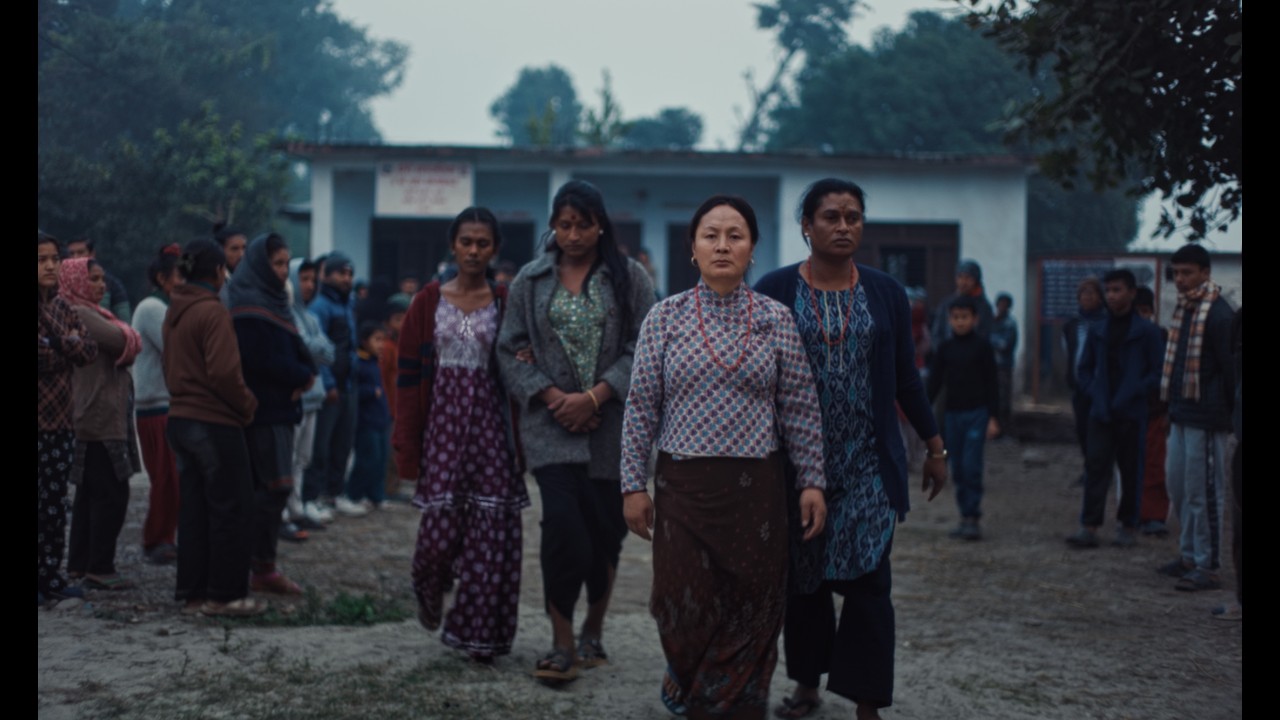
Pirati runs a household of transgender women in a small Nepali village where wild elephants roam the forests. When her adopted daughter Apsara vanishes, Pirati must pursue answers through police indifference and community silence — all while concealing a secret: she's in love with the local drummer, a violation of her community's celibacy vows.
The genius move? Shah cast Pushpa Thing Lama, not a professional actress but a social activist with decades of trans rights advocacy in Nepal. Variety's Siddhant Adlakha wrote that "Lama sheds any sense of artifice — a woman whose convictions are as compelling as her desires, her vulnerabilities and even her hypocrisies." That last word stings. Pirati enforces celibacy on her daughters while conducting her own romance. Shah doesn't soften this. He sits with it.
The supporting cast:
- Aliz Ghimire as Apsara (the missing daughter)
- Aashant Sharma as the drummer
- Sanjay Gupta as MJ, the married rickshaw driver
- Umesha Pandey as a mysterious local matriarch
The film's in Nepali with subtitles — no dubbing in the festival cut, which is the right call for a film this dependent on vocal texture. There's a scene where Pirati instructs a sister to "use your deep voice" while calling Apsara's family. It lands like a gut punch.
The Visual Language: What Shah Does With Space and Light
Abinash Bikram Shah arrives at feature filmmaking without a prior feature on his résumé. What he brings instead is formal intelligence — the kind of director who thinks in images before dialogue. The opening sequence alone: torchlight figures moving through forest thickets to drive wild elephants away from crops. He establishes a visual grammar and returns to it throughout. Bodies in low light. Ritual as survival. The boundary between civilization and wilderness as something constantly negotiated.
I keep coming back to the hand gestures. The pronounced clapping with fingers curled outward — traditionally used to mock trans women across South Asia — gets reframed throughout as something multivalent: celebration, warning, shame, solidarity. That single recurring image does more analytical work on the social position of the Kinnar than a dozen expository scenes could manage.
Where to Watch (and When)
Not tonight. The film premiered at Cannes on May 14, 2026, in the Un Certain Regard section. Its global distribution path is still being charted by world sales agent Best Friend Forever (Brussels).
Here's what we know:
- Festival circuit: Expect Toronto International Film Festival in September 2026 as a likely stop for North American distribution.
- European release: France and Germany will move faster, given co-production partners Les Valseurs and Die Gesellschaft DGS.
- India: A theatrical release through a specialized distributor seems probable before any OTT window opens — possibly through PVR Cinemas' art-house programming or MAMI Film Festival later in 2026. Netflix India, Prime Video India, SonyLIV, JioCinema, and Zee5 have all been silent so far. Given the current political sensitivity around trans representation, that silence might hold for a while.
Movie OTT's where-to-watch tracker updates as distribution deals get announced. Check there for streaming availability once platforms confirm rights.
Films That Prepare You for This One
If you're trying to place Elephants in the Fog in a context you already know:
Pariah (Dee Rees, 2011) — Another debut feature centered on a marginalized community navigating self-determination through intimate family drama. Similar tonal restraint.
Super Deluxe (Thiagarajan Kumararaja, 2019) — A South Asian trans narrative woven into genre storytelling with authentic casting. This is probably the most useful touchstone for Indian audiences. Super Deluxe collected over ₹100 crore worldwide on a modest budget and sustained a theatrical run for 50+ days in Tamil Nadu alone, proving there's real commercial appetite on the subcontinent for trans narratives told with complexity rather than caricature. That box-office performance is the reason anyone arguing "there's no market for this" in India is working from outdated assumptions.
Kiran (Farrukh Fazilov, 2022) — Central Asian setting, trans protagonist navigating conservative social structures. Festival-circuit drama in a similar register.
Start with Super Deluxe if you want a recent South Asian reference point. Then watch Elephants in the Fog when it lands.
Why the Mystery Works
What's striking is how few films actually do what this one does: place a transgender woman at the center of a genre narrative — in this case, a missing-person mystery — without the genre mechanics overwhelming the character work. Apsara's disappearance is real and propulsive. But it functions as pressure. A way of testing Pirati's relationships and loyalties rather than as the point itself.
The mystery pulls you forward. The character work keeps you there.
The Production and the Politics
This is a Nepal-France-Germany-Brazil-Norway co-production. That tells you something about how hard it was to finance a story like this anywhere singularly. Underground Talkies Nepal, Les Valseurs, Die Gesellschaft DGS — producers had to reach across continents.
Cinematography by Noé Bach. Editing by Andrew Bird and Paris J. Ludwig. Score by Frédéric Alvarez. These aren't names you'll know unless you track festival circuits, but the craft is meticulous. Most coverage of this film has focused on its social relevance, which is fair, but the more revealing thing is that Shah has made a structurally classical film — the kind of slow-burn pacing that worked for Apichatpong Weerasethakul's early features or Asghar Farhadi's About Elly — and then filled that classical frame with bodies and voices that mainstream cinema has almost never centered. The radicalism isn't in the form. It's in who gets to inhabit the form.
Shah wrote the script with Sandeep Badal. The dialogue was developed with the cast — which, given how much of the cast is non-professional, suggests a collaborative process rather than actors interpreting a fixed text. That's how you get performances like Lama's, where every gesture feels earned rather than acted.
What Happens Next
World sales are ongoing through Best Friend Forever. Movie OTT is tracking distribution timelines as deals get announced across regions. An Indian theatrical release in the festival window seems likely — probably September through November 2026. That would be followed by an OTT window six to twelve months later, assuming any major streamer moves quickly.
Hard to say if that will happen. The film's international profile — Cannes Un Certain Regard, European co-production, emerging director — works in its favor. The political climate in India works against it.
Watch for Toronto announcements in September. That's where Cannes titles typically pick up North American distribution. When a platform does move on this, Pushpa Thing Lama's name will already be in serious awards-circuit conversation. Abinash Bikram Shah is a director worth tracking through the rest of the festival year.
The Bottom Line
Elephants in the Fog runs 103 minutes. It premiered May 14, 2026, at Cannes. No streaming platform has confirmed rights yet — but streaming will come, and when it does, it's worth clearing your evening. This is the kind of cinema that algorithms struggle to surface and platforms tend to bury. Don't let that happen.
Watch the official trailer: