Everytime Review: Sandra Wollner's Grief Drama Arrives Too Late to Land Its Punch
TL;DR: Austrian director Sandra Wollner's third feature Everytime premiered at Cannes 2026 in Un Certain Regard. It's a 121-minute family drama starring Birgit Minichmayr, shot by Aftersun cinematographer Gregory Oke. No confirmed streaming home yet — but Movie OTT is tracking distribution across all regions as deals emerge.
Sandra Wollner's Everytime is the kind of film that makes critics reach for comparisons they don't quite have words for. A 121-minute Austrian-language family drama about grief, absence, and the way loss reshapes everyone it touches — but the real story is simpler: it works best in theory, stumbles in practice, and doesn't find its footing until you're already three-quarters through.
The Hollywood Reporter's Jordan Mintzer nailed it at Cannes: "So subtle that it's hard, at times, to discern much of a plot, this delicately made tale of grieving and recovery doesn't resonate until it ultimately does so in a big way. But when that happens, it can feel like too much, too late."
That's not a dismissal. It's a diagnosis.
The Plot: What Actually Happens (And What Doesn't)
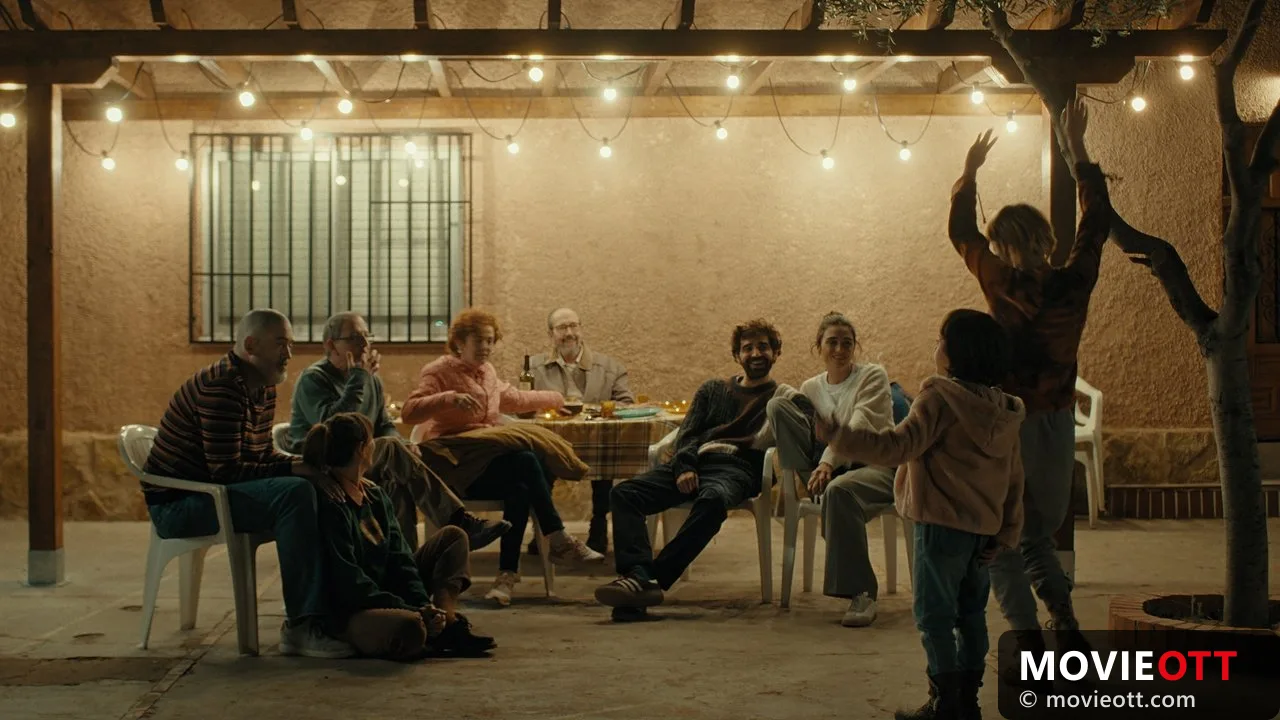
Ella — played by Birgit Minichmayr, one of German-language cinema's most respected actresses — lives in Berlin with her two daughters. Jessica (Carla Hüttermann) is a teenager. Melli (Lotte Keiling) is younger. Jessica's boyfriend Lux (Tristan López) rounds out the core family unit.
Then Jessica dies. Wollner never explains how or why. No car crash. No overdose. Just: she's gone. The ambiguity is deliberate, and it sets the tone for everything that follows.
What Everytime actually does is track the months after. How Ella moves through the house. What the surviving family members don't say to each other. The third act pivots to Tenerife, and suddenly much of what felt slow and shapeless in the first two hours clicks into focus — which is exactly when you realize the film has already lost half its audience.
Honest assessment: this structure works for some viewers and feels punishing for others. No middle ground.
Why This Matters: The Gregory Oke Connection and What Cinematography Can Do
Here's what's interesting. Gregory Oke shot Aftersun for Charlotte Wells — that film's woozy, warm-yet-melancholy visual texture was central to why it landed emotionally. He's doing something similar here, according to reports from Cannes. Widescreen work. Rich detail. The kind of cinematography that makes ordinary moments (a woman standing in a kitchen, a drive through suburban streets) feel weighted with something you can't quite name.
The thing is, cinematography alone can't carry a film that's structurally reluctant to move. Oke's eye is excellent. Wollner's patience with scenes — her willingness to let moments breathe — is admirable. But admiration isn't the same as connection. Most coverage has framed the Oke reunion as a selling point, a stamp of visual credibility; the more honest read is that his presence exposes the gap between what the film looks like and what it feels like, because Aftersun married that same visual grammar to a script that knew when to turn the knife, and Everytime keeps the blade sheathed for about forty minutes too long.
Minichmayr brings serious presence to Ella. She's worked with everyone worth working with in the German-language cinema world. Her casting signals that this isn't experimental provocation — it's genuine dramatic work, trying hard to do something true about how families fracture.
Sandra Wollner's Track Record: What Everytime Tells Us About Her as a Director
This is Wollner's third feature. Her second, The Trouble With Being Born (2021), put her on the international map — a film that used the premise of a child android to examine memory, grief, and the deeply uncomfortable spaces between what we remember and what's real. It's still on MUBI, if you want to experience what Wollner does best: provocation wrapped in genuine formal intelligence.
Everytime is a slight pivot. Less genre-bending. More recognizable as straight drama. But it follows her pattern: slow reveal, elliptical structure, an ending that recontextualizes everything that came before. If you watched The Trouble With Being Born and felt frustrated by its pace, I'd warn you. Everytime plays the same game, just with less conceptual scaffolding to hold onto.
That said, there's something almost stubborn about Wollner's commitment to her vision. She doesn't make films for platforms or algorithms. She makes films that require patience, and then she makes you feel like you wasted that patience for the first 80 minutes, before the 20 minutes that follow earn it back.
Critical Consensus: What the Reviews Actually Say
Mintzer's assessment — "too much, too late" — is probably the most honest summary of what happened at Cannes. The Hollywood Reporter positioned Everytime as belonging to the Berliner Schule movement, citing Angela Schanelec as a formal touchstone. That's a generous reading. It's also a reading that immediately tells you whether you'll connect with the film. If you know who Schanelec is and you've watched her work, you already know if Everytime is for you.
(Schanelec's I Was at Home, But... won the Silver Bear for Best Director at Berlin in 2019 and still split audiences down the middle — genuinely beautiful and genuinely alienating for anyone expecting conventional dramatic scaffolding. Same wavelength here.)
Mintzer also invoked Hitchcock's line about slices of life versus slices of cake — suggesting Everytime "could have probably used more cake." That's fair. The film earns its ending, but it makes you work so hard to get there that the reward feels less like catharsis and more like relief that it's finally over.
Where to Watch (And When): Distribution Status as of Now
As of the Cannes 2026 premiere, Everytime has no confirmed streaming deal. Full stop.
Charades is handling international sales. The most likely home? MUBI, given that Wollner's previous film lives there and MUBI has become the de facto platform for Un Certain Regard acquisitions in English-language markets. But that's educated guessing, not confirmation.
Here's the realistic timeline:
- Weeks after Cannes (June–July 2026): Sales market produces acquisition announcements. Watch for MUBI first.
- Late 2026: Theatrical release in Germany and Austria (standard for Austrian arthouse before streaming).
- Early 2027: US and UK streaming windows (if MUBI acquires), following the theatrical run by 3–6 months.
For Indian audiences, the wait could stretch longer. Austrian arthouse cinema doesn't move fast through the Indian distribution pipeline. MUBI India is the logical landing spot — they've expanded their Cannes-adjacent acquisitions and they're one of the few platforms consistently picking up Un Certain Regard titles for Indian subscribers. But Netflix India and Prime Video India are less likely fits given the film's pace and language. No regional dubs have been announced, and honestly, that's the right call for this film. Subtitles are the only way it should exist.
Movie OTT's platform tracker will have confirmed availability the moment a distribution deal closes across any region. If you're hunting for it, that's the place to check back.
What to Watch First: A Viewing Order That Actually Makes Sense
If you're thinking about taking Everytime on, don't start there.
Start with The Trouble With Being Born (available on MUBI now). It's shorter, more conceptually grounded, and it'll teach you Wollner's language — her visual patterns, her willingness to withhold, her trust in viewers to fill gaps. If that film clicks for you, Everytime is a natural next step. If it doesn't? Save yourself two hours.
The film also invites comparison to Aftersun (2022), Charlotte Wells' debut. Same DP (Oke). Similar structure (grief, memory, elliptical storytelling). Similar emotional wavelength. Wells' film is more accessible — A24 gave it a proper release, it earned BAFTA nominations, it found audiences in multiplexes. If you connected with Aftersun and you're willing to go slower, Everytime is worth trying.
But here's the honest thing: Aftersun knows how to break its own spell. Everytime keeps the spell intact even after it stops working. That's a meaningful difference.
For Indian Viewers: What You Need to Know About Timing and Platforms
Look, if you're in India and you want to watch Everytime, the realistic timeline is late 2026 at the earliest — probably not until early 2027.
The Austrian-language film will almost certainly reach MUBI India first, if it acquires at all. MUBI India has the infrastructure for subtitled content and the subscriber base that actually watches Un Certain Regard titles. Netflix and Prime Video could surprise — they've both picked up unexpected arthouse acquisitions before — but it'd be against their pattern for German-language family dramas with 121-minute runtimes.
What's worth noting: The Trouble With Being Born, Wollner's previous film, took about nine months to reach MUBI India after its international premiere. Everytime could follow a similar arc, but festival timing and sales velocity matter. Charades is a solid sales agent, which could accelerate things.
The thing is, there's no rush. The film's thematic concerns — family, memory, loss — don't have an expiration date. Waiting until 2027 means you'll have better access to reviews, to word-of-mouth, to other viewers' actual experiences. That's worth something when you're considering a two-hour investment in a film that doesn't make things easy.
The Third Act: Where Everything Clicks (Maybe Too Late)
I'm not going to spoil what happens in Tenerife, but the third act is where Wollner finally lets the emotional framework snap into place. The first two hours feel like watching someone arrange furniture in a room you don't quite understand. The last 20 minutes explain the room.
The problem is structural, not thematic. By the time that explanation arrives, you've already decided whether the film is working for you. And for plenty of viewers — maybe most viewers — it won't have been.
That's not a failure of craft. Wollner's film is competently made, well-acted, and visually assured. It's a failure of pacing, of trust, of the faith that audiences will sit with ambiguity long enough to earn clarity. Some filmmakers pull it off. Some don't. Wollner doesn't quite.
But the ending is strong enough that it'll haunt people who made it that far. That's the play. That's always been the play.
What Happens Next: How to Track This Film's Distribution
Distribution for arthouse cinema moves in stages. Charades is working the market right now. Acquisition announcements typically come within weeks of Cannes screenings. For Everytime, watch for news in June or July 2026.
If you want real-time updates as deals confirm — region by region, platform by platform — Movie OTT has the live tracking system that updates the moment a streaming home is announced. They've got coverage across India, the US, the UK, and most major English-language markets. Bookmark it if you're seriously waiting for this one.
The film's word-of-mouth narrative is still being written. Slow burns can build audiences over months if critics keep talking about them. Everytime has enough craft and enough of an ending to sustain that conversation. Whether that conversation translates to actual viewership is an open question.
But that's the thing about Cannes Un Certain Regard selections: they're not made for opening weekends. They're made for the long haul.
Watch the official trailer: