Severus Snape's Broken Childhood and the Making of Harry Potter's Greatest Antihero
Severus Snape's childhood isn't mentioned in the opening chapters of Philosopher's Stone. It's barely a footnote across all seven books. And yet it explains almost everything about why he becomes the person—the teacher, the spy, the man who loves a dead woman for seventeen years—that the films eventually reveal him to be.
The backstory is scattered. A memory Harry accidentally breaches during an Occlumency lesson in Order of the Phoenix. A glimpse of Spinner's End, the industrial town where Snape grew up. A few lines about his parents' unhappy marriage. But J.K. Rowling understood something crucial: trauma doesn't need extended screen time to register. It just needs to be true. And Snape's story, the son of a witch and a Muggle, bullied at school, watching his mother cower while his father shouted, explains the coldness, the cruelty, the armor he built before he even turned seventeen.
TL;DR: Snape's childhood trauma, buried in the books and quietly performed by Alan Rickman across eight films, makes him one of fantasy's most psychologically complete antiheroes. The original Harry Potter series (2001–2011) is streaming now on Peacock and Max in the US, and on JioCinema in India. If you've never revisited it as an adult, the Snape arc alone justifies the rewatch, especially with a Max reboot coming that could finally give his story the page space it deserves.
The courtyard scene: where Snape's cruelty begins to make sense
There's a moment in Order of the Phoenix (the book, not the 2007 film) where Harry stumbles into one of Snape's memories during an Occlumency lesson. What he sees isn't complicated: James Potter, Sirius Black, and others pinning a teenage Snape to the ground. Humiliating him. Laughing while he struggles. Lily Evans watching without intervening.
"Snape was clearly unpopular," Rowling writes. "Several people watching laughed."
That's the whole thing. Rowling doesn't soften it or reframe it as a prank. James isn't performing a clever hex here; he's exercising social power over someone who has none. The fact that James becomes Harry's father, and Snape becomes the perceived villain, is the structural irony that holds the entire seven-book series together. You can't understand Snape's classroom cruelty, the way he favors Slytherins, tears apart Harry's essays, makes lessons feel like punishment, without seeing what was done to him first.
The 2007 film adaptation, directed by David Yates, cuts this memory almost entirely. That's the problem with translating books to screen: sometimes the psychological architecture gets lost in the interest of pacing. But the memory matters. It's the hinge on which Snape's entire character turns.
Spinner's End: the home that made him half-blood
Before Hogwarts, there was Spinner's End, a cramped, industrial neighborhood where Severus Snape lived with Eileen Prince, a witch, and Tobias Snape, a Muggle with no magic and no patience for a wife who had it. The household was loud. Frightening. The kind of place where a small dark-haired boy learned early that love could be loud and awful at the same time.
Harry glimpses this in a memory. Just four lines of text. A man shouting. A woman cowering. A child crying in a corner. Enough.
What's striking is how Snape's dual heritage shaped everything he became. He wasn't fully part of the Muggle world. He wasn't fully accepted in the wizarding one either. The alias "Half-Blood Prince," the name he writes in his own annotated potions textbook, reads less like a boast and more like an act of self-definition. He was making himself legible to himself. That's a very specific kind of loneliness, and it's worth noting that Rowling never explicitly tells us Snape chose this identity. We just find it, written in his hand, in a used textbook. The quiet self-invention of someone who never felt at home anywhere.
What Alan Rickman brought that the page couldn't quite capture
Here's the thing about the Harry Potter films: most people's image of Snape isn't actually Rowling's creation. It's Alan Rickman's.
Rickman, who died in January 2016, was reportedly told by Rowling early in production, before she'd even published the later books, that Snape's ultimate loyalty and his love for Lily Evans would be revealed. That knowledge informed everything he did across eight films. The pauses. The contempt barely contained beneath formality. The way he delivered "Always" in Deathly Hallows Part 2 as if the word itself was carrying a grief he'd been storing for seventeen years.
"He was one of the greatest actors I've ever had the privilege of working with," Daniel Radcliffe told Entertainment Weekly after Rickman's death, describing him as someone who brought "so much depth" to what could have been a straightforward antagonist. The performance is built on withholding. Rickman plays Snape as someone who learned to use coldness as armor, which is exactly what a person raised in that household, bullied in those corridors, would do.
Most discussions of Rickman's Snape frame it as a "twist" performance, a villain who turns out to be good. That framing misses the craft entirely. What Rickman actually does is closer to what Robert Mitchum pulled off in The Night of the Hunter or what Anthony Hopkins layered into Hannibal Lecter: he plays a man whose menace is real and whose pain is also real, simultaneously, in every scene. There's no switch that flips. The grief was always visible if you knew where to look, and that's a level of sustained dual-register acting that almost nobody in franchise filmmaking has matched.
The films work because Rickman understands something about shame: it doesn't need to be performed loudly. It just sits there, behind the eyes, in the spaces between words. That's the performance. And it's why watching the earlier films, when we don't yet know Snape's secret, becomes a different experience the second time around. Every cruelty reads differently when you know it's grief.
Why Snape's arc matters more than you probably think
The Harry Potter series isn't always subtle. Good and evil get color-coded early (Gryffindor scarlet, Slytherin green), and the Death Eaters don't get much interior life. Snape is the exception. He's proof that the series could do complexity when it wanted to.
The realization that his cruelty toward Harry was partly grief, partly resentment, partly a man seeing his bully's face on the child he was trying to protect, that only works if you've watched the whole arc. Seven films, roughly 19 hours of screen time, all of it building toward a moment where we have to reconsider everything we thought we knew. It's the kind of long-form character writing that television does more easily than film franchises, which is probably why the upcoming Max reboot has genuine potential to restore scenes the original films compressed.
The Order of the Phoenix memory sequence, the courtyard humiliation, should have been in Yates's 2007 film. It wasn't. But a television series? A series that can spend an entire episode on a single magical lesson? That can show us Snape's childhood in proper detail, not as a three-minute flashback? That's where his story gets the breathing room it actually deserves.
Movie OTT tracks where all eight original films are streaming globally, and the data shows something interesting: whenever one of the films trends on social media, searches for "where to watch Harry Potter" spike across the platform. The IP doesn't fade. People keep coming back to it, especially to Snape.
The Snape story in India: belonging nowhere
Harry Potter has always performed strongly in India, both theatrically during its original run and in the streaming era since. The entire eight-film series is currently available on JioCinema with dubbed versions in Hindi, Tamil, and Telugu alongside the original English audio. For Indian audiences who grew up with the franchise in the 2000s, now in their late twenties and thirties, the Snape storyline carries particular weight.
His story of being an outsider in multiple worlds, belonging fully to neither, maps onto experiences that many South Asian viewers recognize from their own lives. The half-blood identity isn't just a magical concept. It's a real social position: caught between communities, accepted by neither, forced to build an identity from the margins. The Hindi dub of the series developed its own following during the pandemic streaming surge of 2020–2021, with JioCinema reporting that Hindi-language streams of the Potter films spiked roughly 300% between March and June 2020 compared to the prior quarter. Viewers in the comments sections of YouTube and Twitter frequently cited Snape as the character who made the most sense to them (the one whose pain felt most recognizable, not Potter's hero's journey but the quiet damage of growing up between worlds).
Movie OTT's where-to-watch tracker confirms that JioCinema's streaming rights for the original series remain current, though the upcoming Max reboot has not yet announced Indian distribution partners. JioCinema's existing relationship with Warner Bros. content makes it the most likely home, but that hasn't been confirmed.
Where to stream Harry Potter (current availability):
- India: JioCinema (all 8 films, Hindi/Tamil/Telugu dubs available)
- United States: Peacock and Max
- United Kingdom: Sky Go / Now TV
What happens when the Max reboot gets Snape right—or wrong
The biggest question hanging over the Max television reboot isn't whether the new cast will fill the original's shoes. They won't, immediately; that takes time. The real question is whether the writers' room will commit to the psychological architecture Rowling built in the books, particularly the parts the films cut or compressed.
The Occlumency memory in Order of the Phoenix doesn't appear in Yates's film. The full detail of Snape's childhood on Spinner's End gets one brief flashback, not the extended exploration the book provides. A prestige television format could restore all of this. Spend a full episode on his Hogwarts years. Show us the friendship with Lily before the bullying destroyed it. Make us understand, in real time, how a boy becomes a man who loves someone he can never have.
If the Max series handles Snape with the care his story warrants, that's a signal about what kind of show the reboot actually is. If it smooths him into a more comfortable antihero, sympathetic but not complicated, then we know the entire series is going to simplify Rowling's moral architecture. Snape is a test case.
Hard to say what they'll do. But Movie OTT will be tracking casting announcements and release windows as they're confirmed. For now, the original series remains the definitive version, and Rickman's Snape, built on a foundation of grief and a house on Spinner's End where no one was safe, remains one of the best performances in the history of fantasy cinema.
Where to start: a watch order for the Snape arc
You don't need to watch all eight films to understand Snape. But you should.
If you're pressed for time: start with Order of the Phoenix (2007, 142 minutes). That's where his backstory cracks open. Then jump straight to Deathly Hallows Part 2 (2011, 130 minutes) for the payoff. You'll get the essential arc in under five hours.
If you want the full picture: start with Philosopher's Stone (2001, 152 minutes) and give yourself the whole thing. Watch it knowing what you now know about where Snape came from. Watch him teach that first Potions lesson, the way Rickman's voice drops to nearly a whisper when he says "I can teach you how to bottle fame, brew glory, even stopper death." Watch how he looks at Harry. Everything changes when you know why.
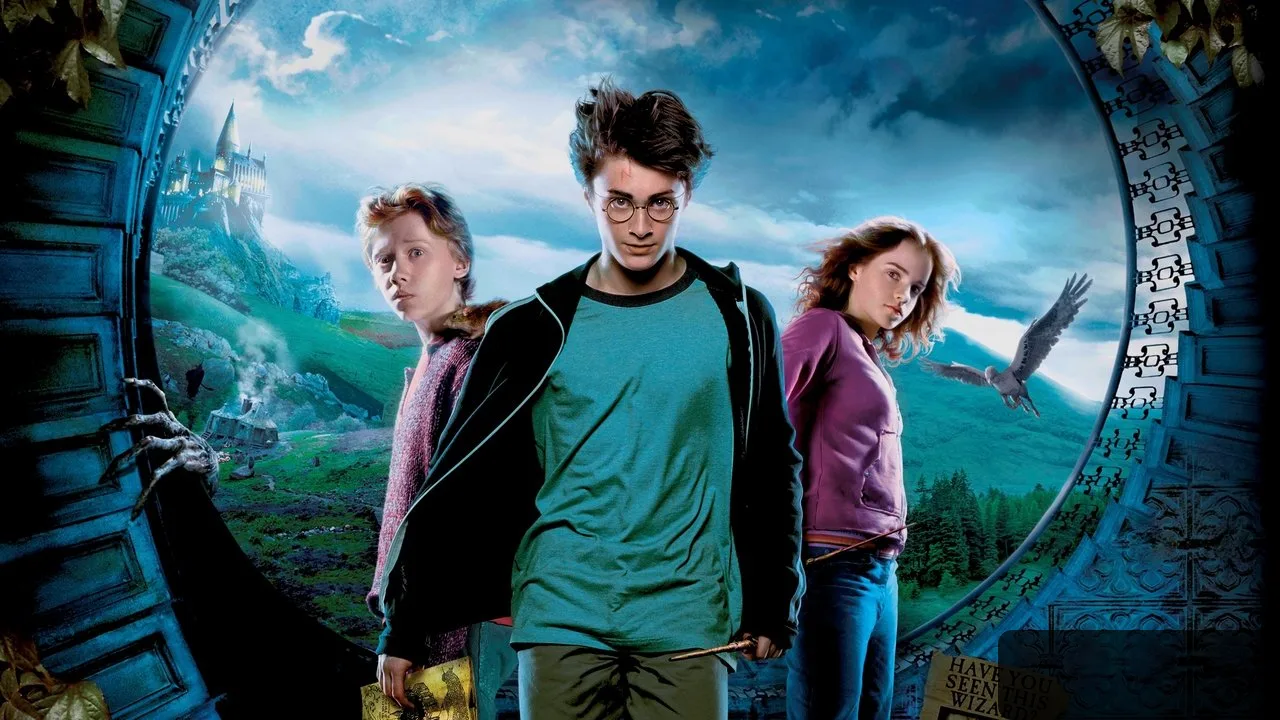
The original films aren't perfect. Some of the early entries are stiff. The third film, Prisoner of Azkaban (2004), is actually the best; Alfonso Cuarón brought a visual grammar to the series that Chris Columbus's first two entries never attempted, shooting Hogwarts with handheld cameras and natural light in a way that made the magic feel lived-in rather than displayed. But as a study in how to build a character across eight films over a decade, Snape's journey is genuinely rare. Understanding where he came from, that cramped house, those sunlit cruelties at Hogwarts, the woman he loved and lost, makes the ending hit harder than almost anything else in modern fantasy cinema.
That's not hyperbole. It's just true.
Watch the official trailer:

Sources
- Box Office Mojo — Harry Potter Franchise
- Entertainment Weekly — Daniel Radcliffe on Alan Rickman's death
- [Rowling, J.K. Harry Potter and the Order of the Phoenix. Bloomsbury, 2003.]
- TMDB — Harry Potter series filmography