Huma Qureshi Is Done Waiting for the Right Parts — So She's Making Them
TL;DR: At Cannes 2025, actor Huma Qureshi is promoting two wildly different films: "Toxic," a Yash-led blockbuster directed by acclaimed Malayalam filmmaker Geethu Mohandas, and "Baby Do Die Do," a noir thriller she co-produced in which she plays a deaf-mute assassin who communicates entirely in Indian Sign Language. Both are targeting 2025 releases; streaming platforms haven't been confirmed yet, but Movie OTT is tracking OTT availability as deals firm up.
On the Croisette in May, Huma Qureshi sat down with Variety and said something most actors never quite articulate: she's stopped auditioning for the roles that don't interest her.
This is her fourth time at Cannes. She's been to Berlin twice, Toronto once, Busan. Venice and Sundance are still on the list. But this year she arrived without a competition film and left having made the more interesting case — not as a performer waiting to be cast, but as a producer deciding what gets made.
Two films. Two completely different bets on what her career looks like next.
Why "Toxic" Matters (and Why a Malayalam Director Matters Even More)
"Toxic" stars Yash, the lead of the "KGF" franchise, which grossed over $125 million worldwide. It's directed by Geethu Mohandas, a filmmaker whose 2012 debut "Liar's Dice" won the National Film Award for Best Direction and was India's official Oscar submission. The distance between a quiet road film about a missing woman and a Yash blockbuster is genuinely enormous.
Qureshi calls it her "Barbie moment" — that's what Greta Gerwig did when she went from "Lady Bird" to $1 billion. A precise, intimate director suddenly stepping into spectacle. "To just call it a spectacle film would be doing an injustice to it," Qureshi told Variety. "It has layered storytelling, very interesting characters — all wrapped in a big blockbuster package."
The conceit is clever: every character carries some version of the toxicity named in the title. Nobody's appointed victim or judge. Qureshi plays Elizabeth.
Here's what actually matters, though. The producers are planning a western theatrical release. That's rare. Not impossible, but rare enough that when it works, it changes what films can get greenlit next. Qureshi knows this. "When we manage to do that, it will be amazing for all of us in the film," she told Variety, "but it's going to open so many more opportunities for films to have that kind of theatrical release as well." That's not marketing language. That's someone thinking about infrastructure.
The trade coverage positions Mohandas's jump to a Yash vehicle as a curiosity. The real story is structural: after "Liar's Dice" and "Moothon" (which premiered at Toronto 2019 and drew strong notices for Nivin Pauly's performance), Mohandas has spent over a decade building credibility in arthouse circuits without a single Hindi-language credit. "Toxic" isn't just a scale jump. It's a language jump, an industry jump, and a bet that a director known for ambiguity can hold a mass audience that expects resolution. That combination almost never gets attempted.
Release date: Not yet confirmed, but likely late 2025 or early 2026.
The Deaf Assassin Film She Actually Produced Herself
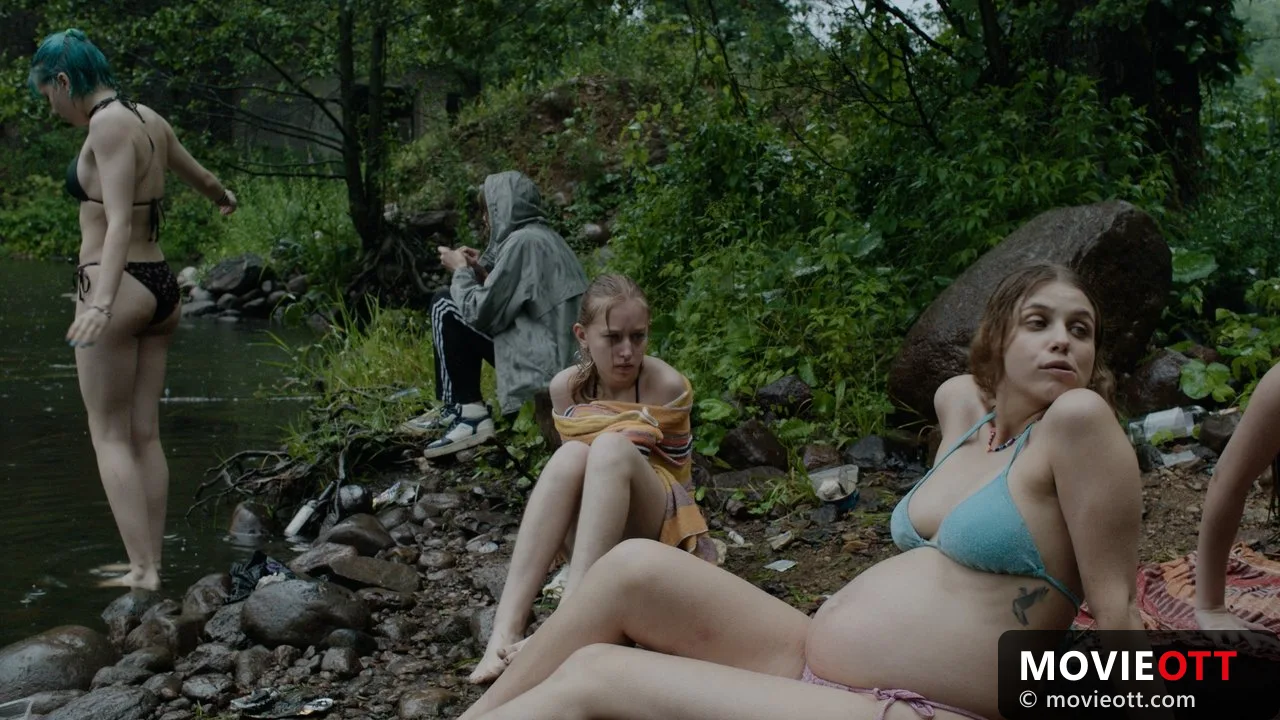
"Baby Do Die Do" is the other film. It's directed by Nachiket Samant, a newer name in Hindi cinema, and set in Mumbai's criminal underworld — think noir atmosphere, not Bollywood spectacle.
Qureshi plays Baby Karmakar, a deaf-mute assassin. She learned Indian Sign Language (ISL) for the role. Not as window dressing. As a full performance instrument. The kind of commitment that forces every emotional beat onto the face and hands because dialogue isn't an option.
She co-produced it through Saleem Siblings, a banner she runs with her brother, actor Saqib Saleem. This is their first feature together.
Movie OTT is tracking this one for its July 2025 theatrical release in India, with OTT windows likely to follow 4–8 weeks later — though the streaming platform hasn't been officially announced. Given the indie production model, it could land on any major Indian platform: Netflix, Prime Video, Hotstar, SonyLIV, JioCinema, or Zee5.
Why She Won't Play "the Impoverished Brown Woman With a Problem"
Here's the part that explains everything about why she's producing now instead of waiting.
"I also don't like playing these kind of impoverished brown woman with a problem, kind of, who needs to be rescued," she told Variety. She wants roles that are "more territorial agnostic" — work that doesn't require her to occupy a fixed ethnic function in someone else's cultural story.
That's not new criticism from a South Asian actor aiming at Western markets. What's different is the production angle. She's not waiting for better offers. She's building her own slate, using the festival circuit as creative exchange, not promotional tour. A filmmaker once sent her a script written for a white woman and asked what might or might not land in India. She said she genuinely enjoyed that conversation — the kind where you're treated as a creative collaborator, not a casting option.
What most write-ups skip: Qureshi isn't the first Indian actor to voice this frustration, but she may be the first to back it with a self-financed film where the lead character can't speak a single line of English or Hindi. That's not a protest. That's a proof of concept.
She's Also Heading Into Season 5 of "Maharani"
In between the two films, Qureshi is filming Season 5 of "Maharani", the SonyLIV political drama where she plays a semi-literate rural woman who becomes chief minister.
The show has consistently outperformed its English-language coverage. Why? "When it released, a lot of English media kind of ignored it because they didn't get it," Qureshi said. The Hindi-language specificity — the writing that speaks directly to the audiences it respects — is exactly what gave it reach. That's not a niche success. That's a different success than the one critics in English were expecting.
Seasons 1–4 are streaming now on SonyLIV. Season 5 doesn't have a premiere date yet.
Where to Watch What You Can Right Now
- "Maharani" (Seasons 1–4): SonyLIV, available now
- "Toxic": Theatrical release planned; OTT platform unconfirmed (likely Amazon Prime Video or Netflix, given Yash's KGF deal structures, but nothing's official yet)
- "Baby Do Die Do": July 2025 theatrical release in India; OTT details pending
For tracking all three as release windows firm up — especially when streaming deals get announced — Movie OTT has India-specific availability across all the major platforms. Worth bookmarking if you're following any of these projects.
The One Thing Worth Flagging About "Baby Do Die Do"
If the film uses Indian Sign Language subtitles or accessibility options for hearing-impaired viewers, that's a detail worth watching for. Qureshi learning ISL isn't a gimmick — it's a performance choice that changes what the film owes its audience.
Hard to say if accessibility will be built in. But the fact that she learned the language, rather than faking it, suggests the filmmakers care about specificity. That usually means they'll care about access too.
What Comes Next
"Baby Do Die Do" is tight for a July release if no trailer's dropped yet — expect a teaser within weeks.
"Toxic" doesn't have a confirmed date, but the western theatrical push suggests late 2025 at earliest, more likely 2026.
"Maharani" Season 5 is in production with no premiere window announced.
For exact OTT availability as deals get locked in, Movie OTT will have the current picture across Indian and international platforms — they track Netflix, Prime Video, Hotstar, SonyLIV, JioCinema, and Zee5 as announcements land.