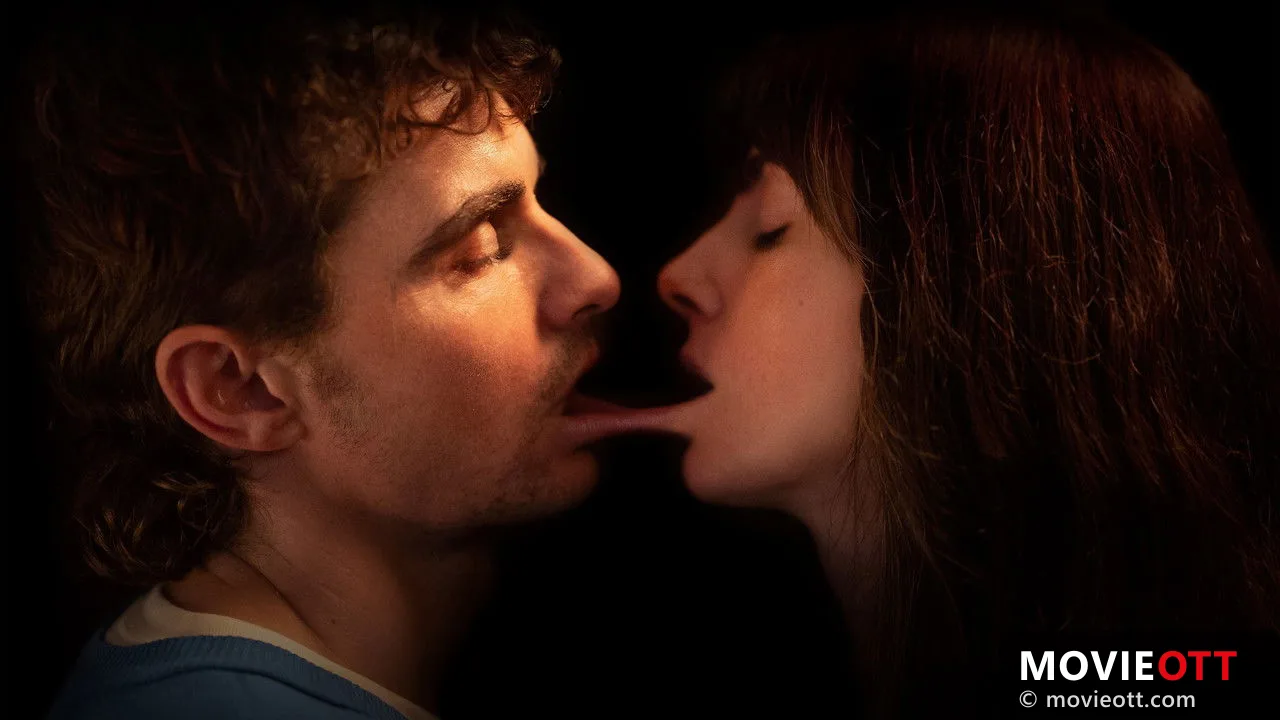
I See Buildings Fall Like Lightning Wins Cannes Directors' Fortnight Audience Award
Clio Barnard's I See Buildings Fall Like Lightning just took the People's Choice Award at Cannes' Directors' Fortnight — and that matters more than it sounds. It's not a critic's prize. It's the audience-voted honour backed by the Fondation Chantal Akerman, named after the Belgian filmmaker whose Jeanne Dielman, 23, quai du Commerce sits in the Sight & Sound all-time top three. The cash component is €7,500. Small number, outsized signal.
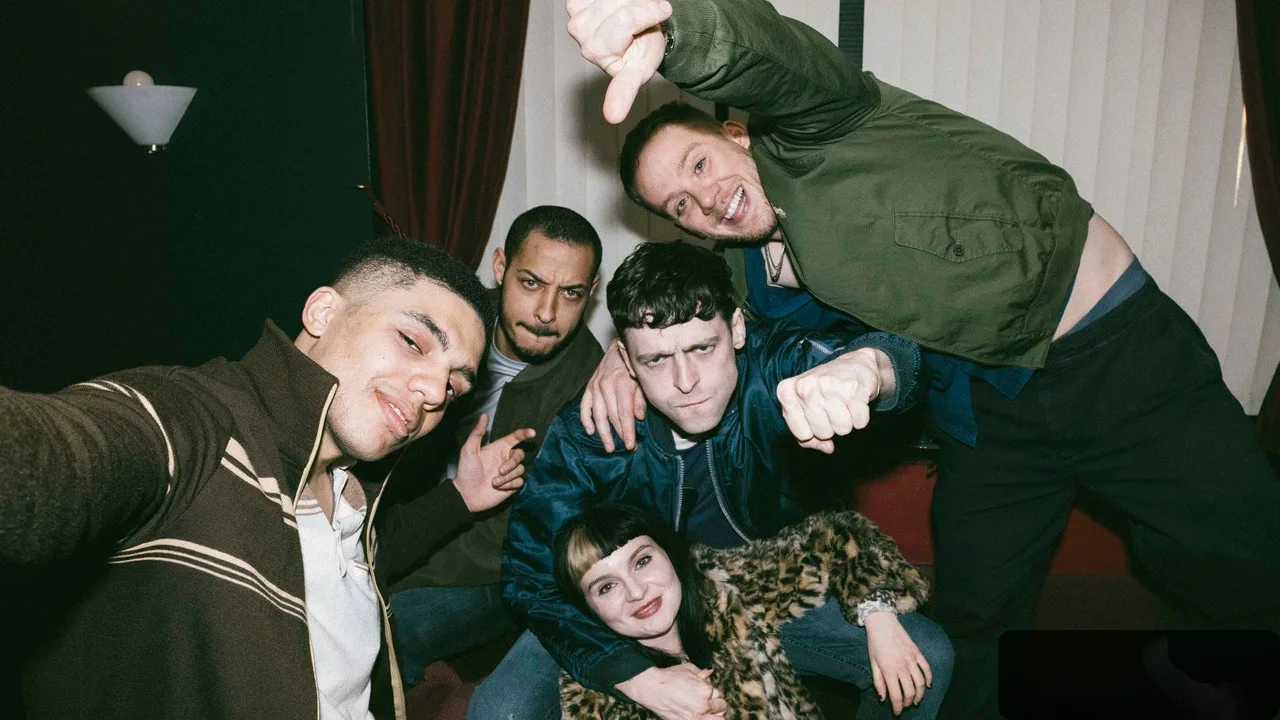
Here's what you need to know right now: The film follows five childhood friends from Birmingham — Patrick, Shiv, Rian, Oli, and Conor — now thirty, watching the futures they imagined at seventeen quietly slip away. It stars Anthony Boyle, Joe Cole, Jay Lycurgo, Daryl McCormack, and Lola Petticrew. UK distribution is locked through Curzon Film. Streaming availability in India and the US is still being finalized, but you can track updates on Movie OTT's where-to-watch tracker.
Why This Isn't Just Another Social-Realist Win
Here's the thing nobody mentions: Directors' Fortnight People's Choice wins have a documented track record of actually moving theatrical dollars. Barnard's own The Selfish Giant (2013) won the Europa Cinemas Label at the same sidebar — and that €5-million film got a real international run. The pattern repeats. A festival audience award functions as a conversion signal for buyers who were watching but hadn't yet committed.
This matters because I See Buildings Fall Like Lightning isn't some high-concept tentpole. It's a working-class ensemble drama about constrained opportunity in post-industrial Britain. Without that audience validation, the acquisition conversation is tougher. With it? Buyers are already moving.
Honestly, what's striking about Barnard as a director is that she doesn't aestheticize poverty. That sounds obvious until you actually sit through a lot of British social realism — the Ken Loach template, the early Shane Meadows work — where the grey skies can tip into misery tourism. Barnard does something harder. She finds the texture of ordinary life without making it feel like a documentary about suffering. Ali & Ava (2021) did this with color and music in ways that felt almost formally transgressive for the genre. Warm interiors cutting against industrial exteriors. A kitchen radio treated like a thriller weapon. She earned a BAFTA nomination for that one.
The Cast and Creative Team — Why This Lineup Matters
Director: Clio Barnard (The Selfish Giant, Ali & Ava, Dark River)
Screenplay: Enda Walsh (wrote Hunger and Die My Love)
Cast: Anthony Boyle, Joe Cole, Jay Lycurgo, Daryl McCormack, Lola Petticrew
Producer: Tracy O'Riordan for Moonspun Films
UK distributor: Curzon Film
World sales: Charades
The casting is the theme here. Boyle comes off significant stage work. Cole built his profile through Peaky Blinders and Black Mirror. McCormack broke through with Good Luck to You, Leo Grande (2022). Petticrew's been steadily escalating her independent film CV. Lycurgo appeared in Titans. Five performers with divergent career trajectories playing characters with diverging futures — that's not accidental.
Enda Walsh as screenwriter is analytically interesting. He's primarily a theatre writer, and his film work trends toward stylized, pressurized language — characters who talk in ways that feel hyperreal and slightly off-kilter. Pairing that voice with Barnard's visual restraint creates productive tension. Whether it resolves into something coherent or slightly fractured is the question the Cannes audience apparently answered with a vote.
The Story: Five Friends, One Tower Block, Shrinking Options
Patrick, Shiv, Rian, Oli, and Conor grew up together in a Birmingham tower block. They skipped school together. They built the specific, unspoken grammar of childhood friendship — the kind you only get from proximity and shared boredom. Now they're thirty.
And the futures they imagined are quietly disappearing.
Not a single catastrophic event. Not one villain. Just the slow arithmetic of constrained opportunity in post-industrial Britain, playing out across five different trajectories. That's the engine of the film. Adapted from Kieran Goddard's novel, it's about what Barnard has described — according to Cannes coverage — as "the gap between the life you imagined and the life you ended up in." Not as tragedy, but as something most people recognize from their own thirties.
That framing is smart commercially because it positions the film not as a protest document or political statement. It's pitched as recognition. Broader audience than The Selfish Giant was targeting.
Where to Watch It — and When
UK: Curzon Film will handle theatrical distribution, likely beginning in late 2026 with a standard 90-day window before streaming availability.
North America: No distributor confirmed yet as of publication — but that gap will almost certainly close within weeks. The People's Choice win functions as a price signal in the acquisition market. Buyers now have data: audiences voted for this.
India and international: This is where it gets a bit uncertain. Charades handles world sales. Based on their historical placements, here's the likely picture:
- MUBI India is the probable early-window home — MUBI has been the default for Cannes Directors' Fortnight winners in India, typically appearing within 3–6 months of their festival debut
- Netflix India occasionally picks up Curzon Film-adjacent British titles, though less reliably
- Amazon Prime Video India acquires British social realist films occasionally, usually with stronger commercial hooks
Runtime and a confirmed streaming platform haven't been announced yet. That's not unusual for a title still in its festival window. Movie OTT tracks availability across all major Indian platforms in real time — bookmark the title page and check back as distribution deals clarify post-Cannes. They'll have the latest picture.
For Indian audiences, the more relevant comp isn't the British social-realism canon at all — it's Kanu Behl's Agra (2023), which premiered at the same Directors' Fortnight and landed on MUBI India within five months, pulling strong engagement numbers on a film about stalled ambition in a cramped family home. That acquisition pipeline is the template here, and it suggests I See Buildings Fall Like Lightning could follow a nearly identical trajectory to Indian screens.
How Barnard Built to This — Her Five-Film Arc
Clio Barnard's career is short by auteur standards but dense. Five features, each rooted in the north of England. Each building on the last.
The Arbor (2010) was a documentary-hybrid about Bradford playwright Andrea Dunbar. The Selfish Giant (2013) won the Europa Cinemas Label — the film that put her on the international map. Dark River (2017) was more psychologically interior, starring Ruth Wilson. Ali & Ava (2021) was the warmest thing she'd made, which is probably why it connected.
Working from Goddard's novel with Walsh's adaptation, I See Buildings Fall Like Lightning extends her formal intelligence into ensemble territory — five characters instead of one or two, multiple futures instead of a single trajectory. It's a natural escalation for a director who's learned how to find lyricism in constraint.
Most trade coverage frames this win as validation of Barnard's artistic consistency. The more interesting question is whether it marks the ceiling or the floor of her commercial reach — because every prior Barnard film topped out below £1 million at the UK box office, and an ensemble cast with this much combined streaming-era visibility (Cole alone has tens of millions of cumulative views across Peaky Blinders seasons) should, on paper, break that pattern. If it doesn't, the problem isn't the director. It's the theatrical infrastructure for mid-budget British drama, full stop.
Her next project hasn't been announced. At her pace — roughly one feature every three to four years — we're looking at 2029 or 2030 for feature six.
The Festival Win and What Happens Next
The Fondation Chantal Akerman prize — €7,500 — goes directly to Barnard as director. Symbolically that matters (it's a director's award, not a distributor's). Financially it barely moves the P&L. What actually moves dollars is the market signal: audiences voted for this.
UK distribution via Curzon Film is confirmed. World sales via Charades are active. A North American deal and confirmed streaming commitment in major territories — that's the two missing pieces that will define how widely this film travels in the next twelve months.
Expect announcements within 30–60 days. Festival audience awards operate as price signals in acquisition rooms, and buyers who were circling have just gotten the data point they needed to move.
For the most current streaming availability across the US, UK, India, and other territories, Movie OTT has the updated picture — check there as deals close.